Short answer
Expect a professional vehicle cleanup to begin with confirming the vehicle is released, then an inspection that follows fluid into seats, tracks, carpet, and vents. Technicians remove contaminated porous parts, clean and disinfect hard surfaces with suitable registered products, handle waste through a regulated route, treat odor, reassemble, and walk you through what was replaced before returning the keys.
Before anyone touches the vehicle
If police, a medical examiner, or a coroner were involved, the vehicle must be released before cleanup starts. A reputable provider will ask about this at the first call and will wait for confirmation. Starting early can interfere with an investigation and create problems for you later.
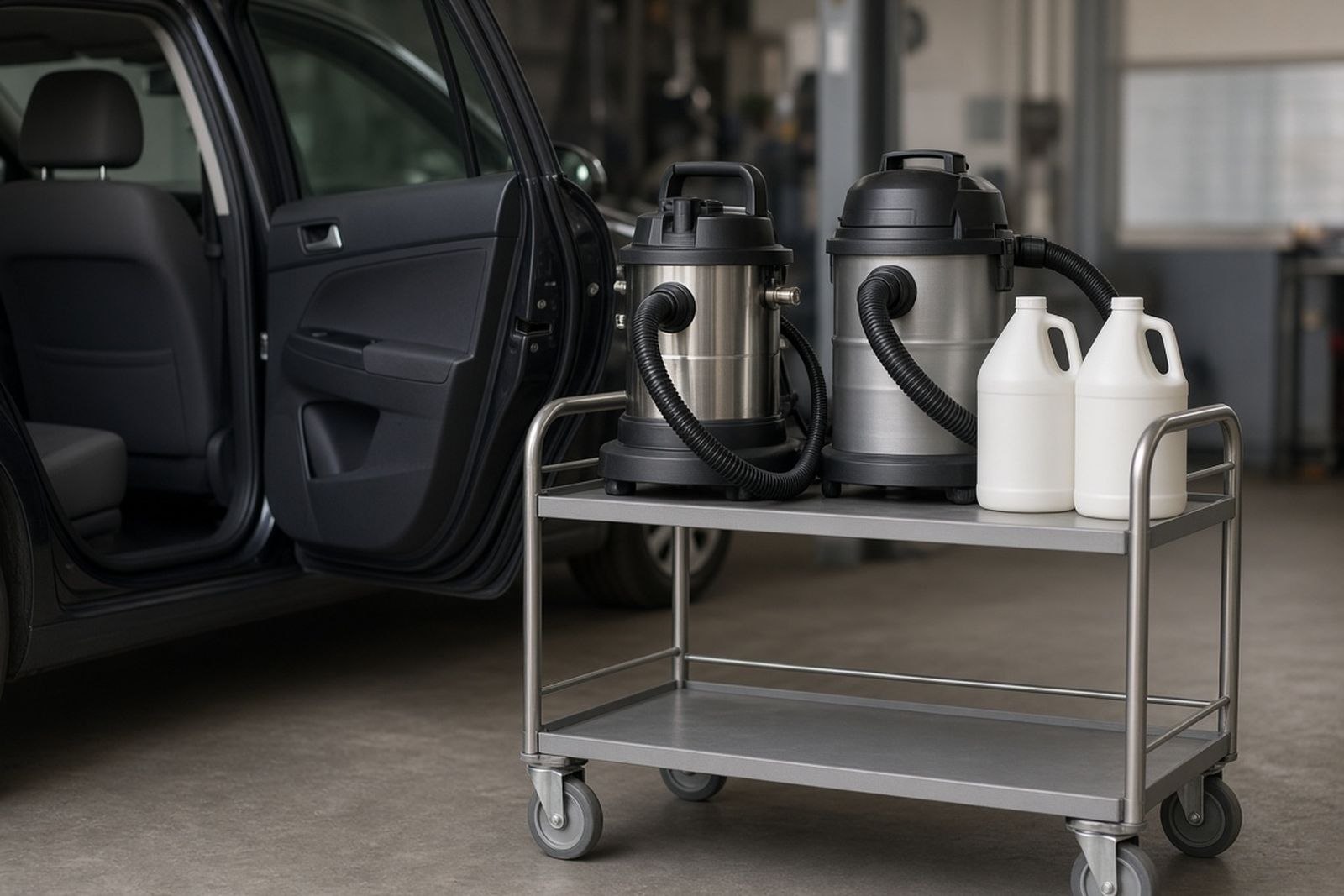
Next comes logistics. The provider will ask where the vehicle is, whether it runs, and whether it can be driven or must be towed. Many providers work on site in a driveway or lot. Others prefer to bring the vehicle to a controlled facility where they have lighting, drainage, and space to lay out removed parts.
If insurance is involved, the provider may ask whether an adjuster wants to inspect first. Photograph the interior before anything is moved, and let the adjuster know when the vehicle will be taken apart.
You will also be asked what you want kept. Personal items in untouched areas can be removed and cleaned or returned. Items in contaminated areas may be cleaned if possible or listed for disposal with your approval.
Tracing how far contamination went
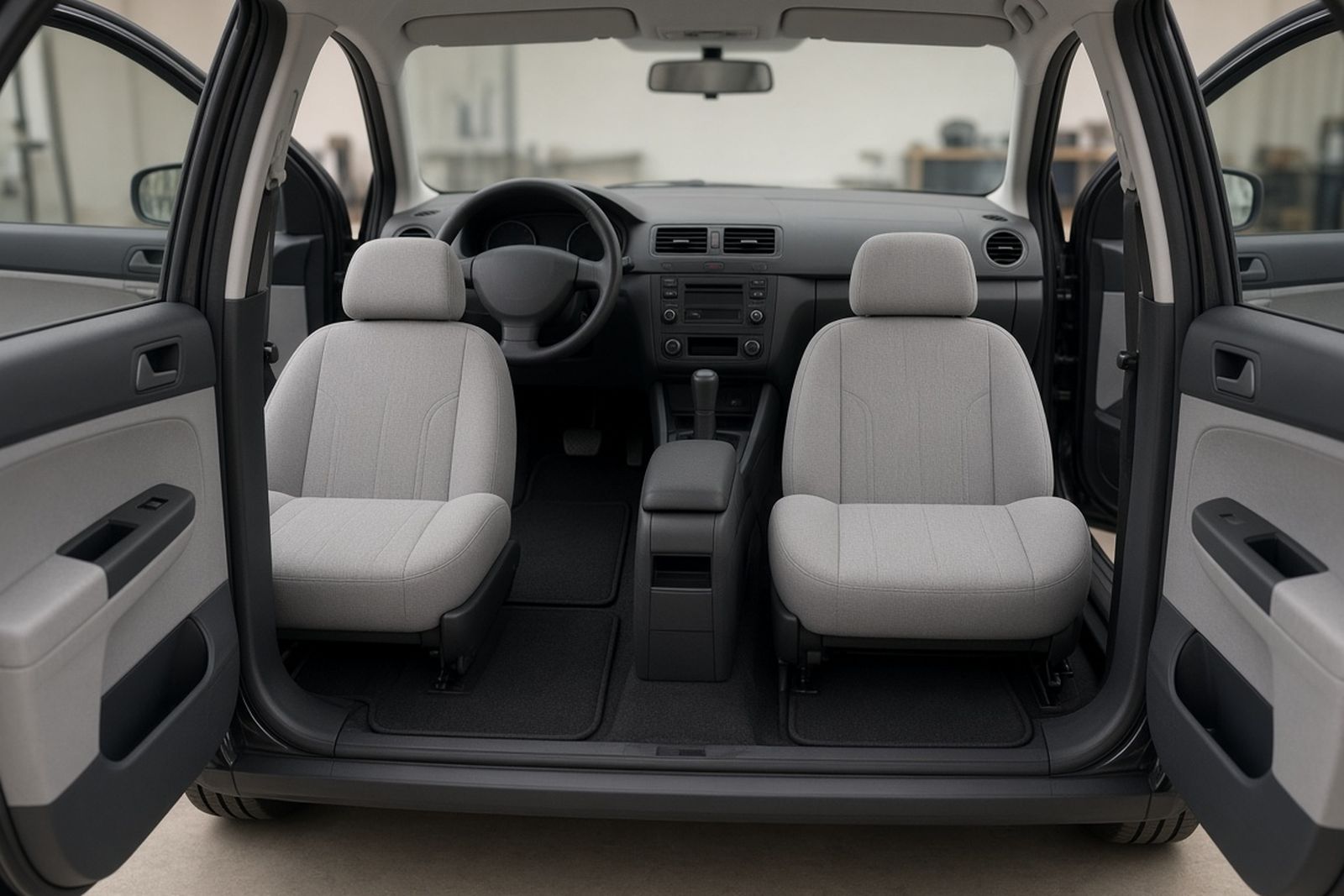
A vehicle cabin is small, but it hides a lot. Fluid runs downhill and follows gaps. It passes through seat perforations into foam, drips along seat rails, soaks into carpet backing, and collects in low spots on the floor pan.
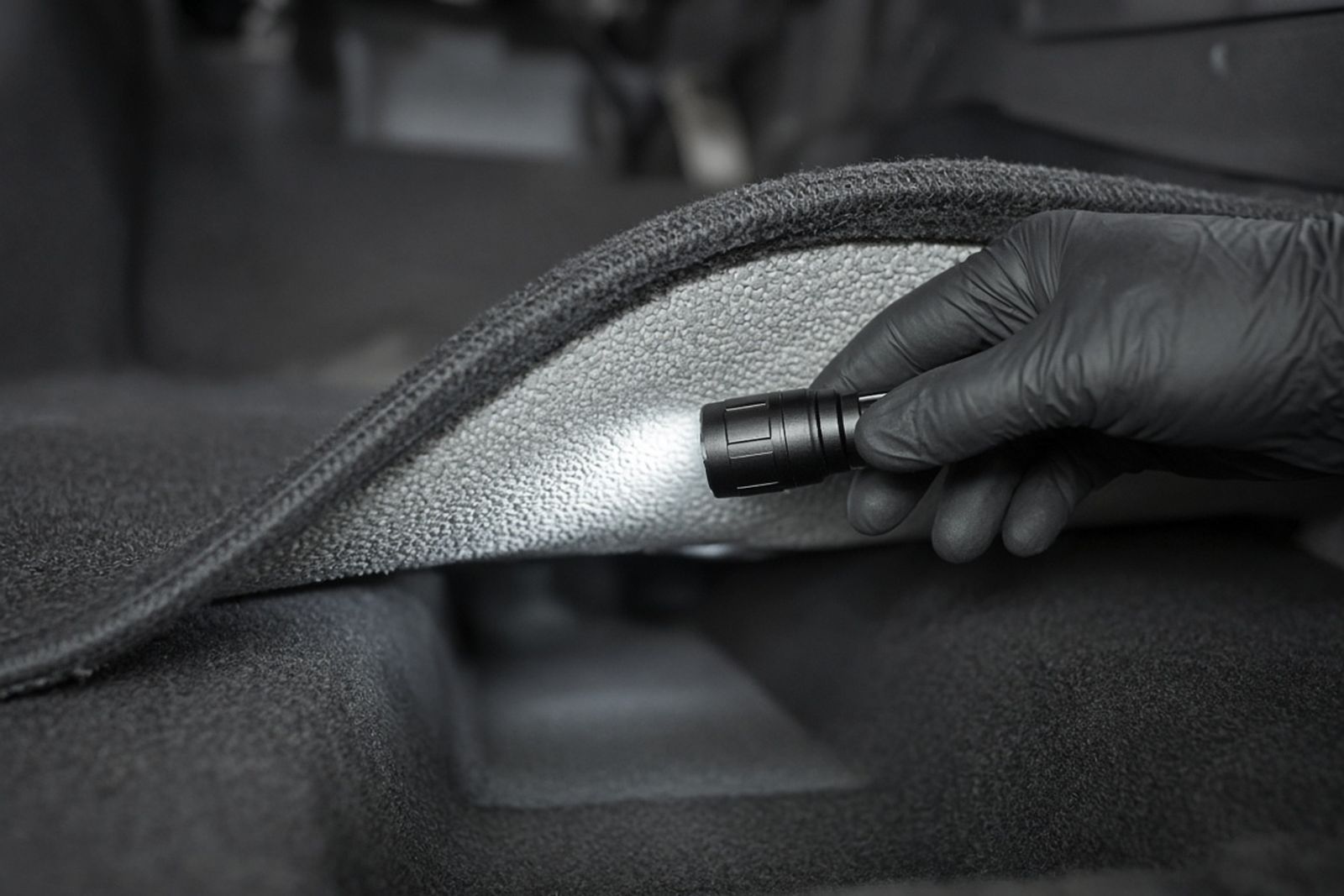
The technician will look under and between seats, pull back carpet edges, inspect seat belt webbing and retractors, and check vents and the cabin air filter. Lighting and magnification help find small droplets on textured plastic.
Contamination also spreads through contact, carried by hands, gloves, and tools. That is why technicians look at door handles, steering wheels, shifters, and buttons even when the obvious stain is in the back seat.
After inspection, you should receive a written scope that names each component and whether it will be cleaned, replaced, or disposed of.
Which parts come out, and what happens to them?
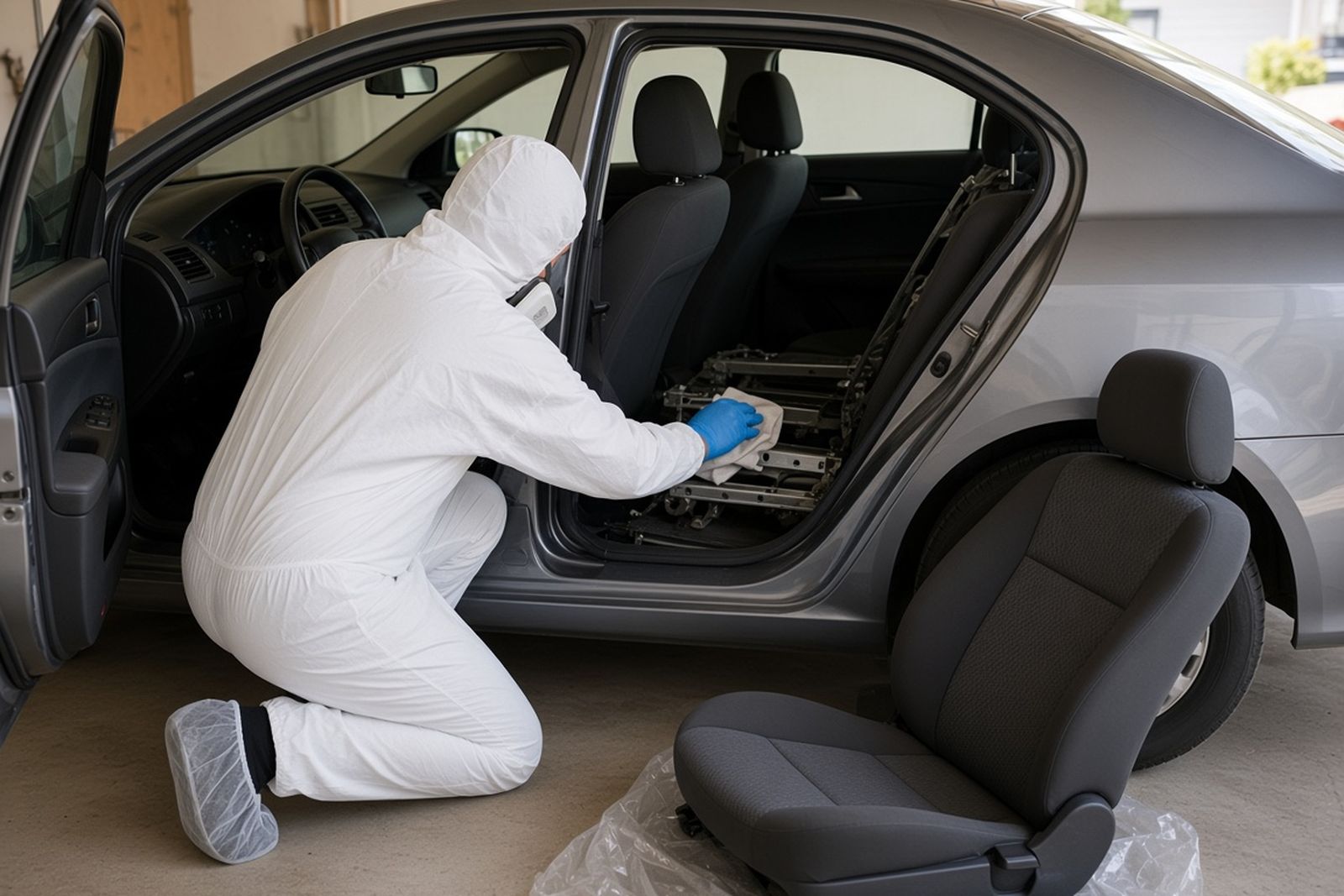
Porous materials that absorbed fluid are usually removed because they cannot be reliably verified clean. Hard, sealed materials are usually cleaned and disinfected in place.
Removed parts are packaged as regulated waste where required and handed to a licensed transporter. You should not be asked to take contaminated parts home or put them in household trash.
Leather and vinyl seats sit in a middle ground. Their outer surface can often be cleaned, but seams, stitching holes, and perforations let fluid pass into the foam underneath. A technician may remove a leather seat cover to check the foam before deciding whether the whole seat can stay.
Ask the provider to keep removed parts on site until you or your adjuster have seen them, if that matters for your claim. Once they are packaged and shipped for treatment, they are gone.
- Seat cushions, foam, and fabric covers that fluid penetrated
- Carpet sections and the padding or sound insulation under them
- Seat belts that absorbed fluid, replaced with proper parts
- Cloth door inserts, headliner sections, or cargo area felt, if reached
- The cabin air filter, replaced as a routine step
- Hard plastics, glass, metal, and sealed vinyl or leather, usually cleaned in place
Cleaning and disinfecting hard surfaces
Cleaning and disinfection are two separate steps. Cleaning removes visible soil and organic material. Disinfection kills pathogens on the cleaned surface. A disinfectant applied to a dirty surface does not work well, so cleaning always comes first.
Technicians choose products based on the contaminant and on the materials in the vehicle. The product should be registered for the organisms of concern, such as bloodborne pathogens or norovirus, and it must also be compatible with automotive plastics, electronics, and finishes.
Every disinfectant has a label contact time, meaning the surface must stay wet for a set period. Expect technicians to work methodically, panel by panel, rather than spraying and wiping quickly.
The metal floor pan receives special attention once carpet is out. Fluid can sit in seams and around drain plugs, and those areas are cleaned, disinfected, and dried before anything is reinstalled.
Vents and the smell
Cabin air systems pull air from inside the vehicle and push it through ducts and vents. If aerosolized material or odor entered that system, it can keep circulating after the seats are clean.
Technicians usually replace the cabin air filter, clean accessible vent surfaces, and may treat the HVAC system with a product or process suited to it. Some providers run the system during treatment so the air path is reached.
Odor treatment follows cleaning, not the other way around. If the source is gone and surfaces are clean, a short treatment usually finishes the job. If the smell persists afterward, that often points to a missed area rather than a need for stronger treatment.
Ask what treatment method will be used and whether the vehicle must sit closed or be aired out afterward before anyone drives it.
If the vehicle sat closed in warm weather for a while before cleanup, expect odor work to take a little longer. Heat drives odor into headliners, seat backs, and trim that were never touched by fluid.
What a complete job includes
A complete job ties each step to what the inspection found. After an unattended death in a parked SUV, for example, fluids commonly reach the driver's seat foam, the carpet under the driver's area, the seat track, and the driver's seat belt.
A scope for that kind of finding calls for removing the driver's seat, carpet, and pad in the front footwell, replacing the belt, cleaning and disinfecting the floor pan and all hard surfaces in the front cabin, replacing the cabin air filter, and treating odor.
Work like this often takes a few days, largely because a replacement seat cover and belt must be ordered. Along the way, the family can receive photographs at each stage if they want them. At handback, the technician shows what was replaced and hands over the waste documentation, which matters whether the family keeps the vehicle or sells it.
Reassembly, handback, and timing
Reassembly is where care matters as much as cleaning. Seats with airbags, occupancy sensors, or heating elements must be reconnected correctly. A good provider will confirm that no warning lights appear on the dashboard after reinstallation.
Before handback, expect a walk-through. The technician should show you what was removed, what was replaced, and what was cleaned. You should receive photographs, the invoice, and waste documentation.
Ask about any follow-up. If odor returns once the vehicle sits in the sun, or a warning light appears, you should know whom to call and whether a return visit is included.
Take your time on this walk-through. It is fine to sit in the seat, open every door, and ask questions before signing off.
Timing depends on scope and parts. A small job on hard surfaces may take a few hours. A job that requires removing seats and carpet usually takes longer, and ordering replacement parts can add days or more, especially for older or less common models.
Ask the provider for a realistic estimate that includes parts ordering, not just labor. If you have rental reimbursement coverage, let your carrier know the expected timeline.
For fleet vehicles, ask whether the provider can prioritize getting the vehicle back in service and whether any temporary measures, like a replacement seat cover, are appropriate while parts arrive.
Weather can play a role for on-site work. Cleaning, disinfection contact times, and drying all go better in dry, moderate conditions, and some providers will reschedule outdoor jobs in heavy rain or extreme cold.
What should I watch for during the process?
Be cautious of any provider that quotes a price without inspecting or reviewing detailed photos, or that plans only to shampoo and deodorize after a significant fluid incident. Those approaches can push contamination deeper.
Ask whether the technicians are trained under OSHA's bloodborne pathogens standard and how the company handles regulated waste. Ask for the scope in writing before work begins.
If the incident involved a suicide, the provider should treat the situation with discretion and never share details beyond what is needed. If you are struggling, the 988 Suicide and Crisis Lifeline is available by call or text at any hour.