Short answer
A vehicle biohazard cleanup can take a few hours for a small, surface-only incident, or much longer when fluid reached seat foam, carpet, or belts. The biggest delays usually sit outside the cleaning itself: waiting for law enforcement or the medical examiner to release the vehicle, insurance inspections, towing, and ordering replacement parts. A final odor check under warm conditions can add time at the end.
What sets the length of the job
Think of a vehicle cleanup as a chain of steps, only some of which involve cleaning. The hands-on work may be the shortest link. Release holds, adjuster visits, towing, parts ordering, and verification often take longer than removing and disinfecting the affected areas.
The nature of the incident sets the scope. A small amount of blood on a vinyl seat and a rubber floor mat is a very different job from a situation where fluid soaked through a cloth seat, ran under the carpet, and sat in summer heat for days. The first can be finished in one visit. The second involves partial disassembly and replacement parts.
Vehicle type matters too. Pickup cabs, sedans, SUVs, vans, buses, and patrol cars all come apart differently. Older or less common models can be harder to source parts for, which stretches the schedule without adding any labor.
Location also plays a role. A vehicle parked in a private driveway can often be worked on where it sits, while one in a public lot, a crowded apartment garage, or a tow yard may need to be moved before technicians can set up safely and privately. Each move adds scheduling steps.
Before work starts: release holds and insurance
If the incident involved a crime, a death, or a serious crash, police or the medical examiner may hold the vehicle for their work. Cleanup cannot begin until the vehicle is formally released. There is no standard length for these holds, and the provider cannot shorten them.
Crashes are common enough that this situation arises often. NHTSA reported that police recorded an estimated 6.18 million traffic crashes in the United States in 2024, up from 6.14 million in 2023. Most do not involve biohazards, but those that do frequently pass through a tow yard or impound lot first.
Once released, the vehicle may need to be towed to the provider's facility or cleaned where it sits. Ask the tow yard about storage fees, because those can build up while you wait for paperwork or insurance decisions.
While you wait, avoid opening the vehicle to retrieve belongings unless the investigating agency permits it and you have been told it is safe. Keeping doors shut preserves the scene, protects you from exposure, and limits odor spreading into untouched areas.
It can. Many auto insurers want an adjuster to see the vehicle, or at least detailed photos, before interior components are removed. If an adjuster is coming, the provider should wait so evidence of the damage is preserved.
You can help by photographing the interior before anything is moved, sharing the provider's written scope with the carrier quickly, and asking the adjuster whether they need to inspect in person. Delays often come from missing information rather than from the carrier's decision itself.
Coverage depends on your policy and the circumstances, and a provider cannot promise what your insurer will approve. Confirm with your carrier before work begins so there are no surprises on the timeline or the bill.
The hands-on cleaning
Surface-only jobs, where fluid stayed on hard or sealed materials, are the quickest. Technicians clean, disinfect with a registered product at the label contact time, and check nearby areas for spread. That may be done within a single work session.
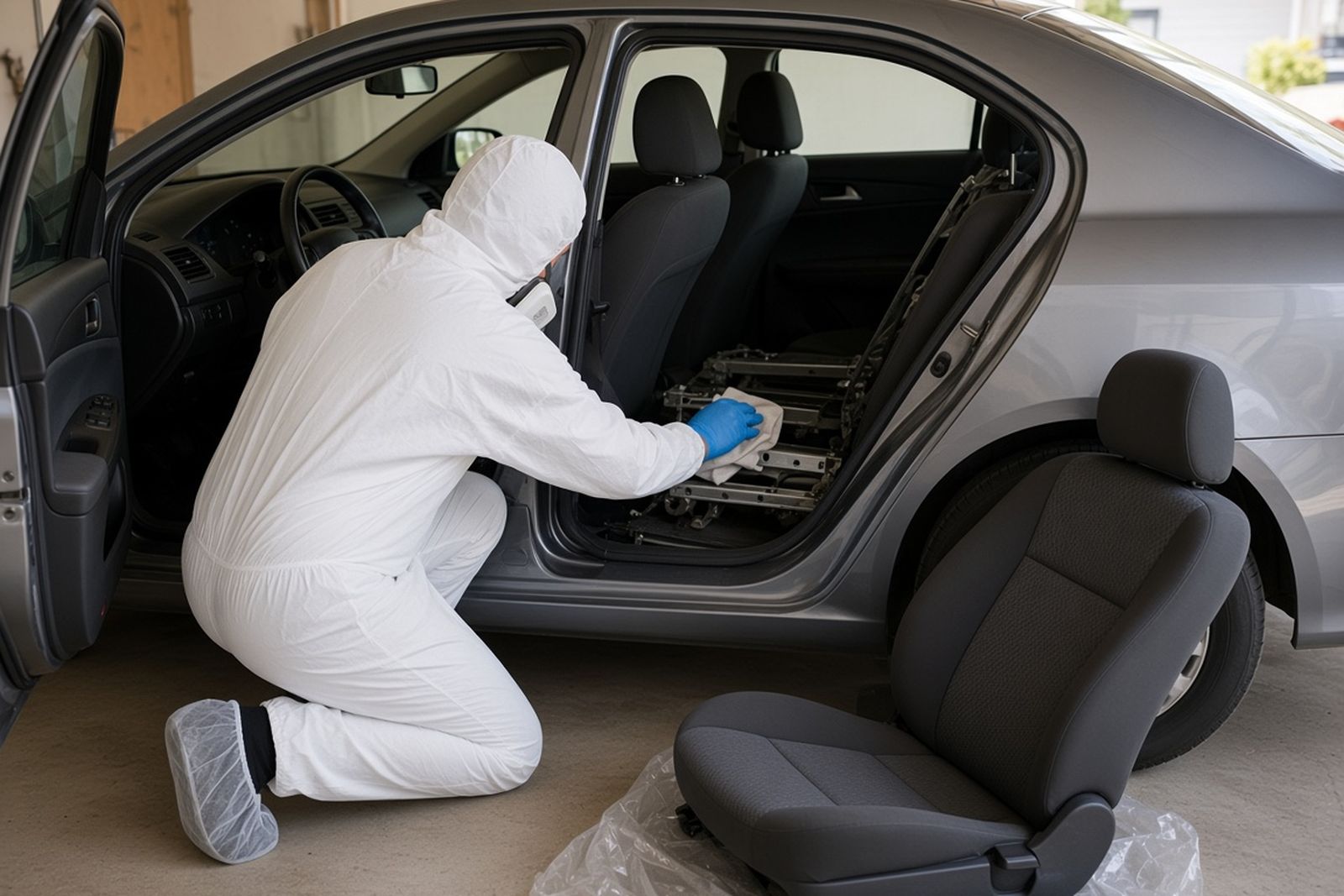
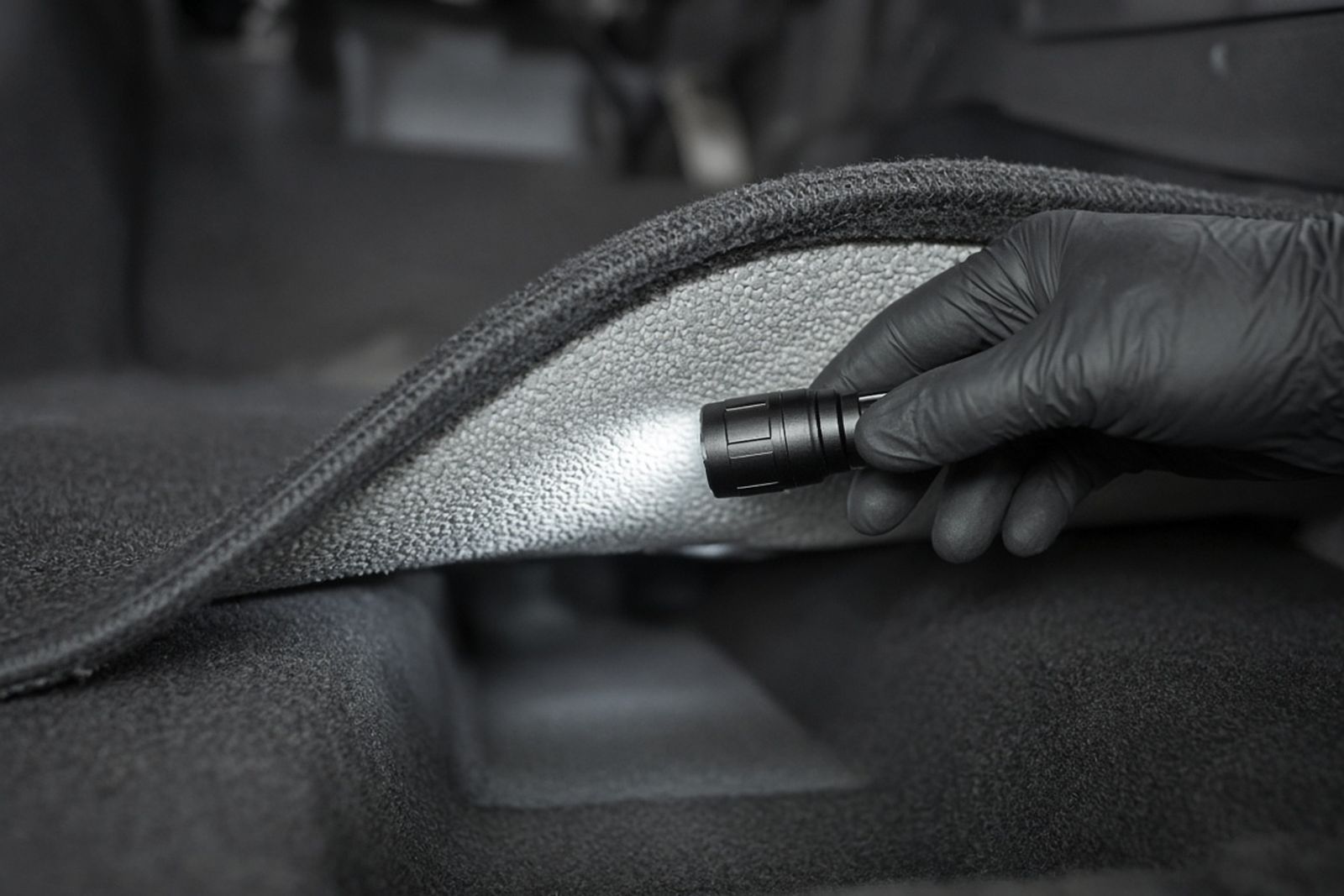
When porous materials are involved, the work expands. Seats come out, carpet is lifted, trim panels are removed, and the floor pan is cleaned and dried. Each component must be handled, packaged if contaminated, and documented. A thorough interior teardown often takes a full workday or more.
Drying is easy to underestimate. Carpet backing, sound insulation, and the steel floor pan need to be dry before reinstalling anything, or odor and corrosion can follow. Humid weather or a cold shop can stretch drying time.
Larger vehicles take proportionally longer. A cargo van, box truck, school bus, or motor coach has more floor area, more seating, and more hidden cavities than a passenger car. Crews may need extra technicians or additional days to work through every row and compartment.
- Inspection and scope: identifying every affected component
- Removal: seats, carpet, trim, and any saturated parts
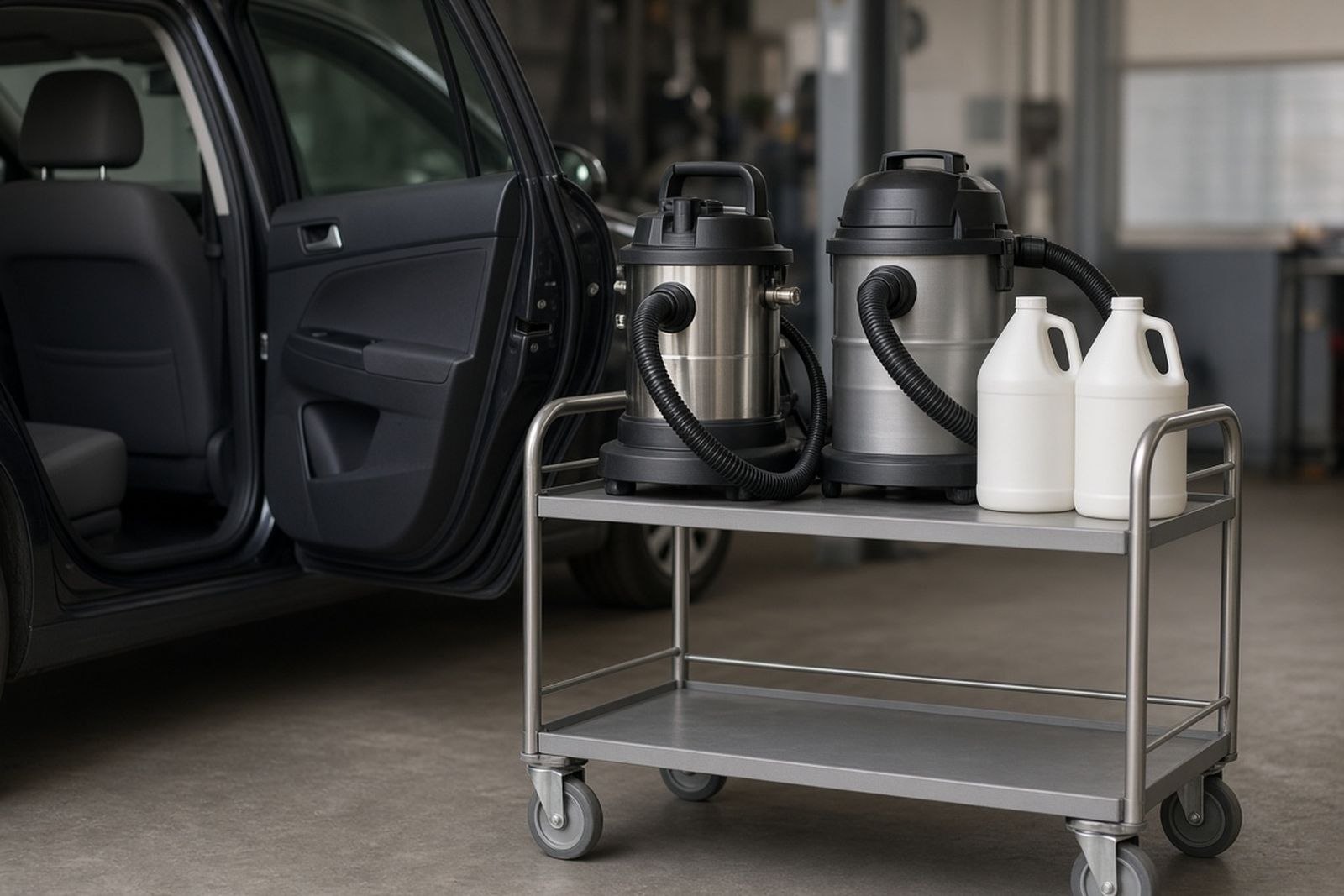
- Cleaning and disinfection: every exposed surface, at label contact time
- Drying: floor pan, seams, and any remaining materials
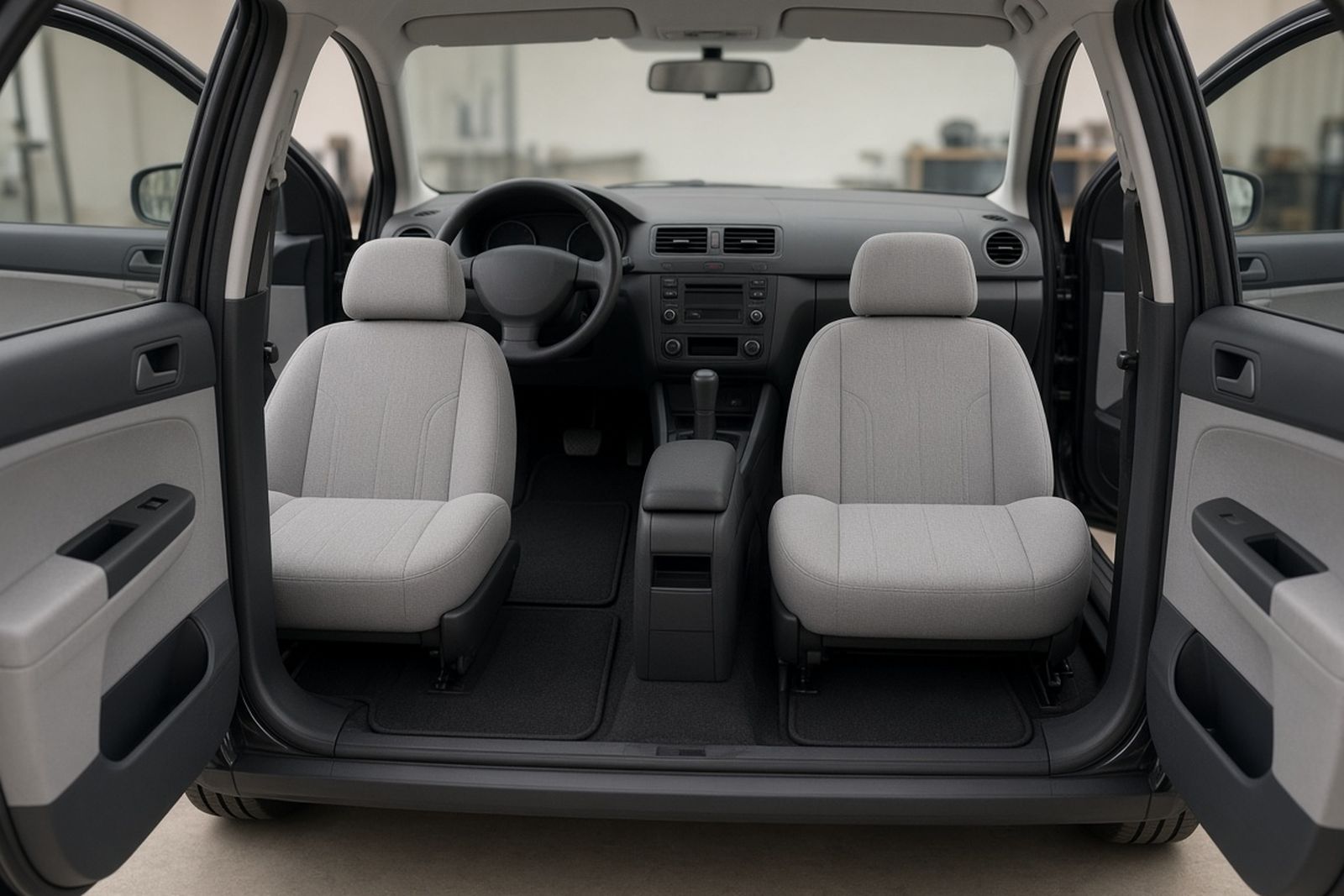
- Reassembly: reconnecting seats, sensors, and trim
- Odor treatment and verification
Why replacement parts take so much of the timeline
Parts are often the single largest delay. Seat foam, seat covers, carpet sets, headliners, and seat belts are specific to each make, model, year, and trim level. Some are stocked locally, while others ship from a regional warehouse or the manufacturer.
Seat belts and components tied to airbags or occupancy sensors should be replaced with proper parts rather than improvised, which may limit sourcing options. For older vehicles, a provider may locate used components in good condition, which can be faster but requires careful inspection.
Ask the provider to give you a separate estimate for parts lead time. If you have rental reimbursement, that estimate helps your carrier plan coverage for the full period, not just the labor days.
Sometimes the provider can reinstall clean components while waiting for a few back-ordered pieces, or fit a temporary cover over a replaced seat frame. Ask whether a partial return is safe and appropriate for your vehicle, especially if you depend on it for work.
Odor treatment and the final check
Odor treatment and the final check usually add a little time. Once the source is removed and the cabin is clean, odor treatment addresses what remains in the air, in the HVAC system, and on untouched surfaces like headliners. Some methods require the vehicle to sit closed for a period, followed by airing out.
Verification is where timing really matters. A car that smells fine in a cool shop may smell different after a few hours closed in the sun. Many providers leave the vehicle sealed in warm conditions, then open it with fresh noses before returning the keys.
The HVAC system is a common reason odor lingers. If the smell only appears once the air conditioning or heat is turned on, the vents, ducts, or evaporator may need another treatment. That is usually a matter of hours rather than another full teardown.
If odor returns after pickup, a short return visit is common. Ask in advance whether that is included.
A realistic timeline, start to finish
The timeline below follows a composite fleet job, simplified for illustration. A delivery van in a small company's fleet is involved in a collision in which the driver is injured and bleeds onto the driver's seat, door panel, and floor. Police document the scene, and the van is towed to an impound lot.
The fleet manager contacts a provider right away but learns the van cannot be released for a few days. During that wait, the provider reviews photos from the tow yard and prepares a draft scope. The insurer schedules an adjuster to see the van at the lot.
Once released, the van is towed to the provider's shop. Inspection confirms fluid in the driver's seat foam, the carpet under the pedals, and the belt. The seat, carpet section, and belt are removed and packaged for disposal, the cab is cleaned and disinfected, and parts are ordered the same day.
The cleaning itself takes one long workday. The parts arrive later in the week. Reassembly, a warning-light check, and an odor test in the sun follow. The fleet manager later notes that most of the out-of-service days were spent on the release hold and the parts shipment, not the cleanup.
Can fleet or commercial vehicles be prioritized?
Commercial operators often need vehicles back quickly. Many providers offer priority scheduling, faster parts sourcing, or on-site service at a depot. Ask what is realistic before you commit.
Ambulances, patrol cars, and transit vehicles may follow their own decontamination protocols between routine calls. A significant biohazard event, though, may still need deeper cleaning than a routine wipe-down, so plan for that when estimating downtime.
Keep a checklist of the documents your organization needs to return a vehicle to service, such as the provider's completion record, waste manifest, and any internal sign-off. Having those ready avoids paperwork delays after the work is done.
Keeping the process moving
Call early, even while a release hold is in place. Share photos, the vehicle's year, make, model, and trim, and whether it runs. Ask your insurer promptly about inspection and coverage. Decide what personal items you want returned so the technician can set them aside.
Ask for a written timeline with separate estimates for the release wait, cleanup labor, parts, and verification. That breakdown makes it easier to see where delays come from.
If the incident involved a suicide or another painful loss, it is fine to let the provider handle every step without you present. The 988 Suicide and Crisis Lifeline is available by call or text if you need support. The provider should also tell you where the removed parts will go and give you the disposal records.