Short answer
A defensible vehicle cleanup scope breaks the cabin into components, records what each one showed on inspection, and states whether it will be cleaned, disinfected, or removed and replaced, with the reason. It also sets the order of work, names who approves changes, and defines how the vehicle will be checked before return. This hypothetical SUV example shows each step and the records it produces.
Why the scope must be defensible, and the situation in this example
Vehicle cleanups involve more parties than most people expect. The registered owner or estate, a lienholder or leasing company, an auto insurer, a tow yard, sometimes a medical examiner or police agency, and eventually a buyer or the next driver. Each of them may ask what was done to the vehicle and why.
A scope that ties each task to a specific finding answers those questions in advance. It also protects the family from being charged for work that was not needed and protects the provider from disputes when an adjuster asks why a seat was replaced instead of cleaned.
The example below is hypothetical. It is written to show reasoning and documentation, not to describe any real vehicle, cost, or claim outcome.
A man in his sixties dies of natural causes while sitting in the driver's seat of his mid-size SUV, parked in the far corner of a large shopping center lot. He is found several days later during warm weather. The medical examiner's office holds the vehicle briefly, then releases it to a tow yard.
His daughter is the executor of his estate. The SUV still has a loan balance, so the lender has an interest in it. The daughter has not decided whether to keep the vehicle, sell it, or let the insurer decide whether it is worth repairing.
She contacts a vehicle biohazard provider and asks for a written plan she can share with the insurer and the lender, and she makes clear that she does not want to see the vehicle or detailed photos herself.
Inspection, component by component
Before touching anything, the technician confirms the release paperwork with the tow yard and asks the insurer whether an adjuster wants to see the vehicle first. The adjuster asks for photos and a written inspection report rather than a site visit.
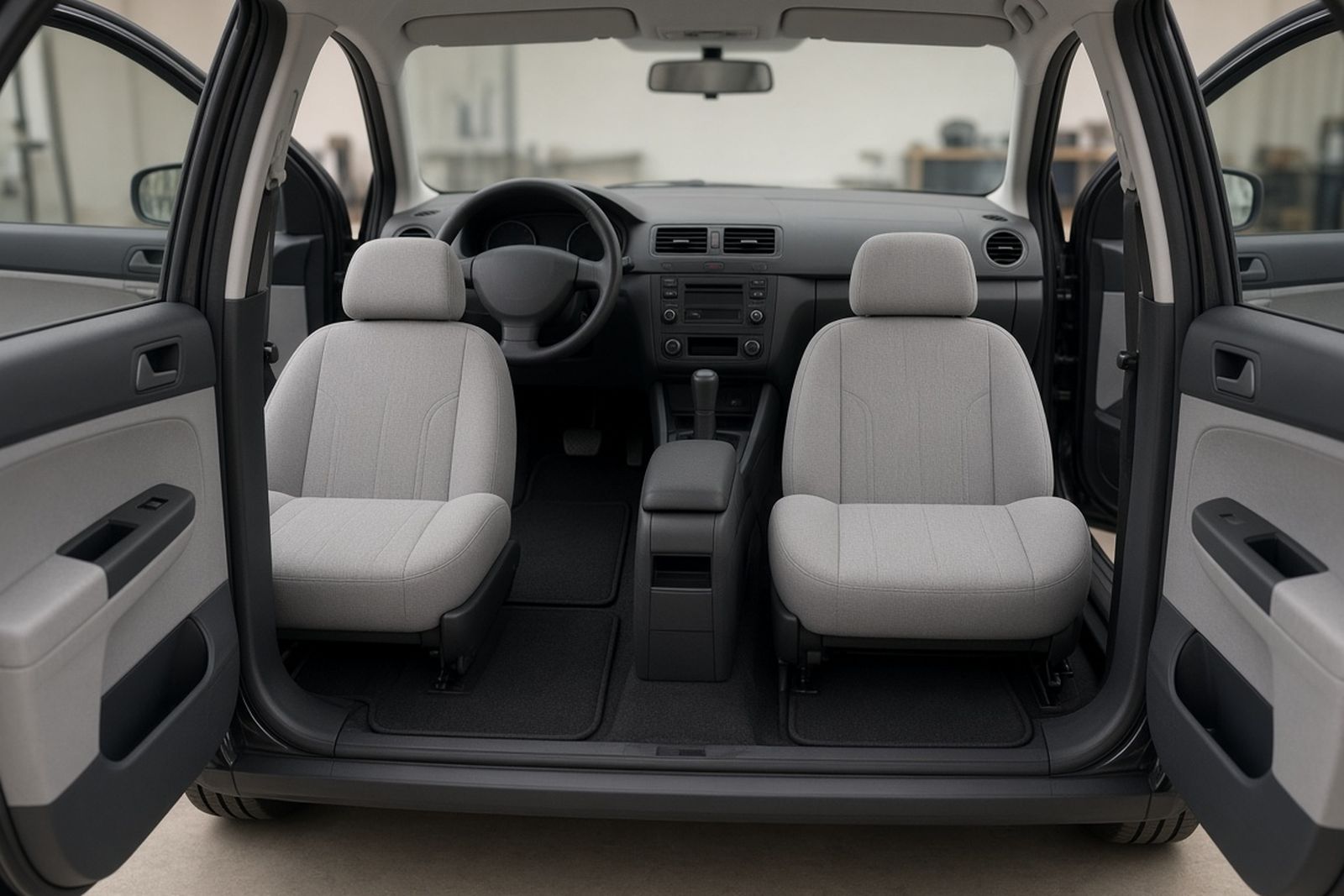
The technician wears appropriate protective equipment and opens the SUV in a covered bay. He photographs each area of the cabin before disturbing it, working from the least affected areas toward the driver's seat. The daughter's wish is noted in the file, so photos go only to the insurer and the lender.
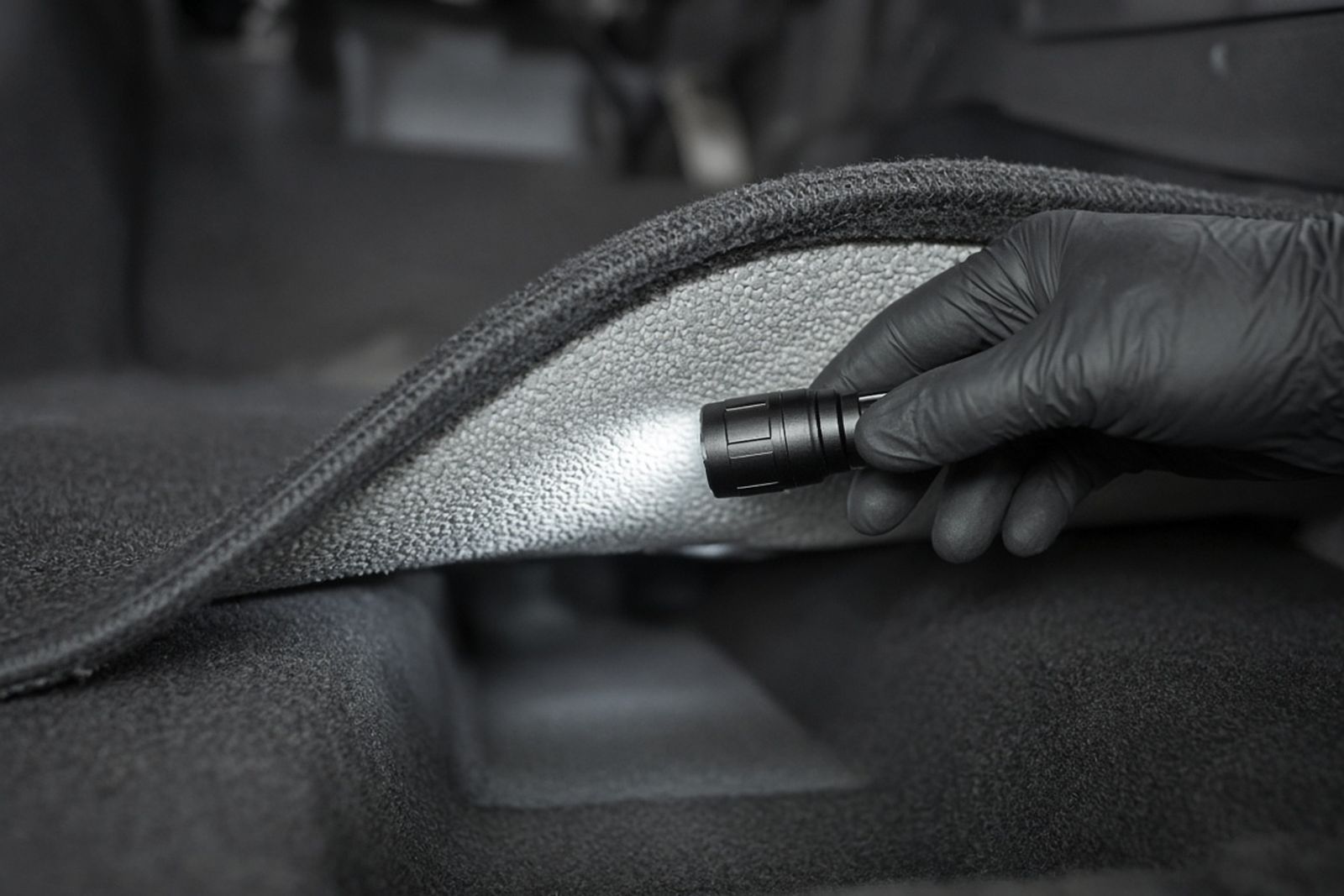
He uses a flashlight and, where helpful, lifts floor mats and trim edges to see how far fluid traveled. He notes the direction the vehicle was parked, since slope can send fluid toward one side, and checks whether the HVAC fan was set to recirculate, which can draw odor and aerosols into the ducts.
He also records the vehicle identification number, mileage, and the condition of the exterior. Those details seem unrelated to cleanup, but they tie the report to one specific vehicle and help the lender and insurer match it to their files.
Rather than describing the interior as one mess, the technician lists each component and records what he saw. That list becomes the skeleton of the scope.
Infection risk from dried residue is one reason for care. Some bloodborne viruses stay infectious on dry surfaces for long periods. That does not mean every surface is dangerous, but it does mean no component should be assumed safe because it looks dry.
- Driver seat cushion, back, and foam: saturated; fluid reached the frame and seat track
- Driver seat belt webbing and retractor area: stained; webbing cannot be cleaned reliably
- Driver-side carpet and padding: saturated to the floor pan
- Center console and armrest: surface contamination on hard plastic, fabric armrest lid stained
- Driver door panel and switches: surface contamination on hard trim
- Front passenger seat and rear seats: no visible contamination
- Headliner: no staining, but odor noted
- HVAC: recirculation on; cabin air filter to be replaced, vents to be inspected
Turning findings into tasks
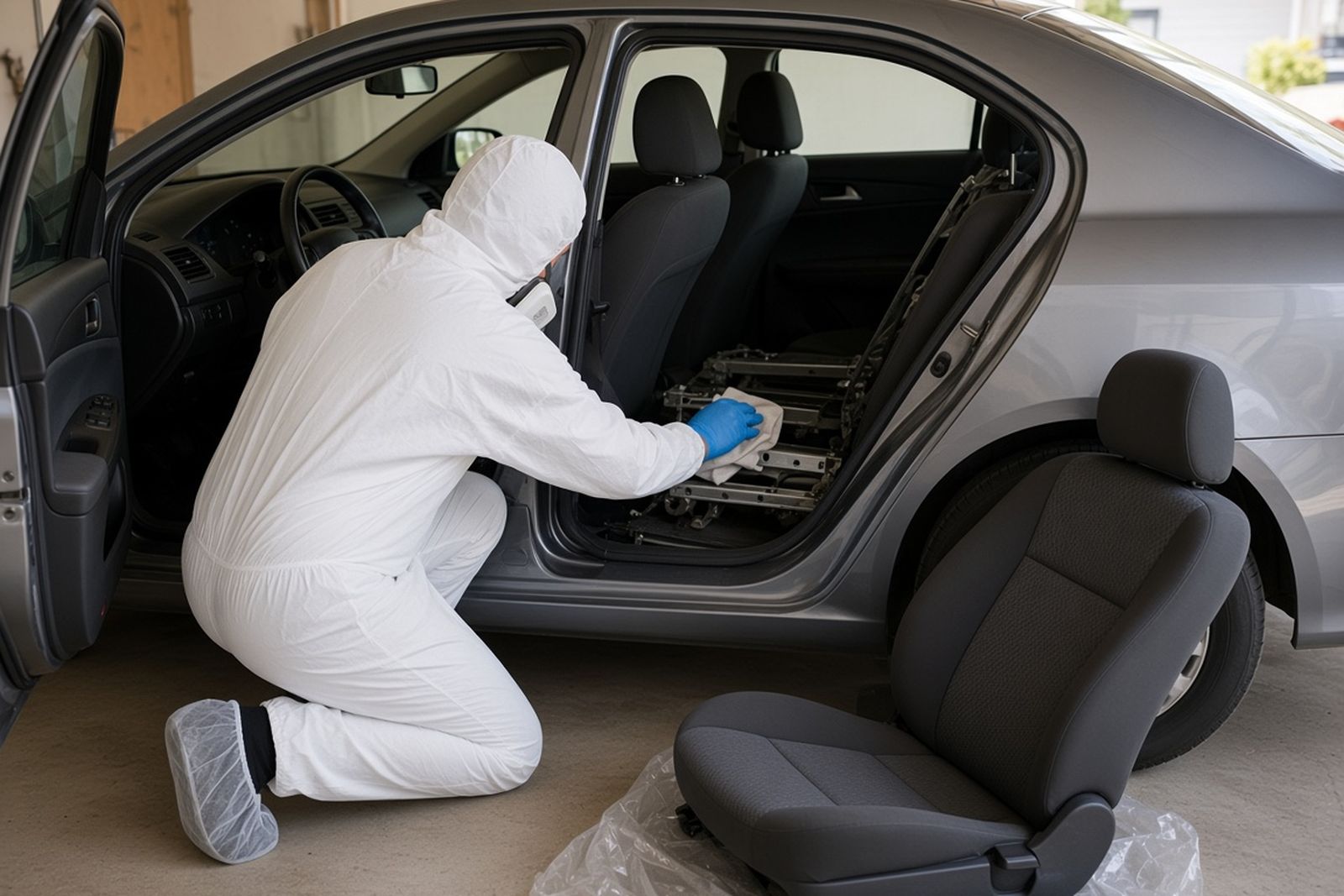
Each component gets a decision and a reason. The driver seat, belt webbing, carpet, and padding are removed and replaced because fluid saturated them through their full depth, and the belt is a safety component that should not be cleaned and reused after contamination. The fabric armrest lid is replaced. Hard console and door surfaces are cleaned and then disinfected.
The floor pan under the driver area is cleaned, disinfected, dried, and checked for corrosion. The seat track and mounting points are cleaned and inspected before a new seat is installed. The seat's occupancy sensor and airbag wiring are handled following the manufacturer's service procedure, and the scope notes that a qualified technician will confirm no warning lights after reassembly.
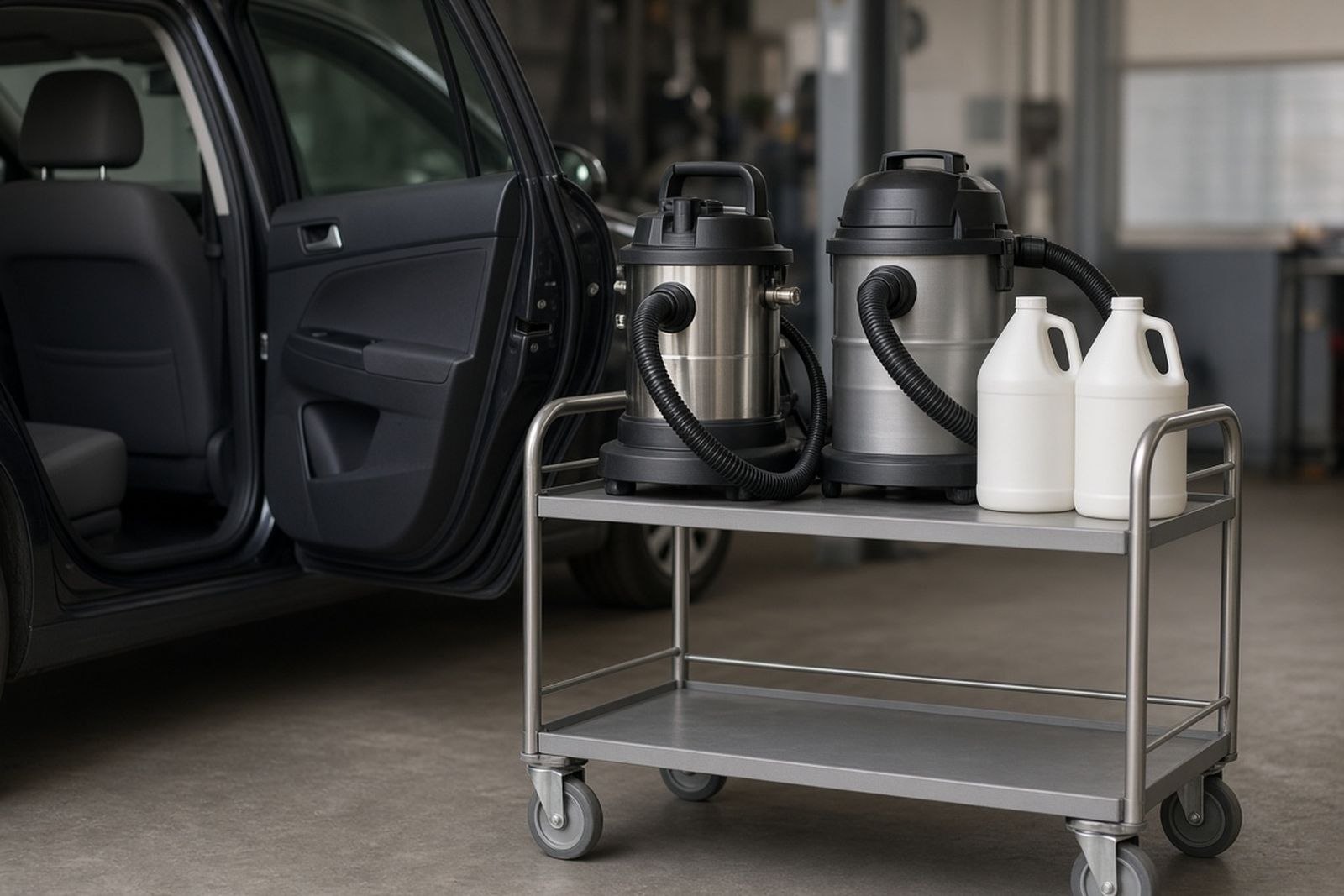
The unaffected passenger and rear seats are cleaned and treated for odor rather than replaced. The headliner is cleaned and deodorized. The cabin air filter is replaced, and the vents and accessible ducts are treated. The scope calls for a registered disinfectant with claims against bloodborne pathogens, and the provider commits to following the chosen product's label contact time.
The scope sets the order of work: removal, cleaning, disinfection, drying, parts installation, reassembly, odor treatment, and verification.
Handling changes once work begins
Vehicle interiors hide things. Once the driver's carpet comes out, the technician may find that fluid ran under the center console into the passenger footwell padding, something that could not be seen during inspection.
The scope includes a change process. Work in the new area pauses, photos go to the insurer, and the executor receives a short written addendum describing the finding and the proposed task. In this example, the passenger-side padding is added to the removal list after she approves by email.
This approach keeps the record intact. When the adjuster reviews the final invoice, each added item has its own photo and approval date.
The change process also covers the opposite case. If the technician finds that a component on the removal list is less affected than expected, such as carpet padding that stayed dry at its rear edge, he documents that too and trims the scope. A defensible plan moves in both directions based on evidence.
One more decision point sits with the insurer. If the combined cost of parts and labor approaches the value of the vehicle, the adjuster may declare it a total loss. The scope makes that decision easier by giving the adjuster a clear, itemized picture early, before money is spent on parts that may never be installed.
Defining the finish line
The finish line is defined before work begins. The scope lists four checks: visual inspection of every treated area under strong light, confirmation that the floor pan is dry before carpet goes back in, a dashboard check with no warning lights after the new seat and belt are installed, and an odor check after the SUV sits closed in the sun for several hours with the HVAC run on both heat and cooling.
The technician also swabs several hard surfaces before and after cleaning to document the reduction in organic residue. Those readings are included in the report with their locations.
If odor remains during the sun test, the scope commits to further investigation, starting with the vents and the headliner, before any additional deodorizing product is applied.
The final record, and lessons that carry over
At completion, the executor receives a report she can forward without opening the photos herself. It contains the component list with findings, the scope with the approved addendum, a parts list with part numbers, the disinfectant used and its registration information, the verification results, and the waste records for removed components.
The insurer uses the report to settle the claim. The lender receives confirmation that the vehicle was professionally restored. If the executor sells the SUV, she can give the buyer a factual summary of the work without personal details.
The provider also returns a small envelope of personal items found during the work, such as a pair of reading glasses and a notebook, after cleaning them where possible. Those were set aside and logged at the start.
Treat the cabin as a set of components, not a single space. Record findings for each one before deciding what to do with it. Give every decision a reason. Write down the order of work and the finish line. Plan for surprises with a simple approval process.
The same framework works for a crash with injuries, a medical event in a work truck, or an incident in a rideshare car. It is especially helpful when several parties need to agree, because it replaces opinions with a shared record.
If the loss involved a suicide, families deserve the same care and privacy, and support is available through the 988 Suicide and Crisis Lifeline by call or text. Disposal of contaminated seats, carpet, and belts may be regulated, and the provider's waste records close that loop.