Free vehicular biohazard cleanup tool
Vehicular Biohazard Cleanup First 24 Hours Planner
Tell the planner a few facts about the situation and get an ordered list of who to call, what not to touch, and what to photograph.
The first day after an incident in a vehicle is when things are most likely to get worse. Someone may drive the car to a detail shop without saying what happened. A family member may start pulling out floor mats with bare hands. Or the vehicle may sit closed in the sun while everyone waits for a call back. This planner asks about your situation and gives you a step-by-step list for the next day. Have police or a medical examiner released the vehicle? Does anyone still need to use it? Is there a strong odor? Might there be needles, other sharp objects, or drug items? Were pets involved? Is it a rideshare, rental, lease, or fleet vehicle?
The results are careful on purpose. If the vehicle has not been released, nothing is touched. If a death happened, the planner sends you to the network's resources on unattended deaths and to a cleanup provider before any cleaning. In other cases, it tells you how to lock up the vehicle. It tells you where to park it and why shade matters. It covers what not to touch, what to photograph, and who to tell in what order. It also tells you what to say to a provider so they bring the right gear. And it flags times when calling for emergency help is the right step. Examples are when blood gets into someone's broken skin, or someone is stuck by a needle. Nothing here replaces emergency services or medical advice.
How to use it
- 1Answer each question honestly, including the ones about vehicle type and who owns it. Those change who must be told.
- 2Follow the list from the top. Finish the safety and lock-up steps before any record-keeping or cleanup.
- 3Photograph everything the planner lists before anything is moved. Keep the photos together, with the date and time noted.
- 4Use the list of who to tell, in order. Print or save the plan so anyone else involved can follow the same steps.
Prefer to ask a person?
Your request is sent to the follow-up inbox. A coordinator can reply by email. Not for emergencies; call 911 first if anyone is in danger.
Plan the first 24 hours
Vehicular Biohazard Cleanup: first 24 hours planner
Answer a few questions and the planner orders the next steps. It does not dispatch help and cannot replace emergency services.
Your ordered plan (6 steps)
- 1
Keep people and pets out of the affected area
Close the door and keep the area sealed until a qualified provider assesses it.
- 2
Photograph from the doorway before anything moves
Take wide shots first, then closer shots of stains, damage and belongings. Do not step into the area to do it. These photos support insurance and estate records.
- 3
Report the loss to your insurer and get a claim number
Ask the adjuster whether they need to inspect before materials are removed, and whether they have a list of approved remediation providers. Coverage depends on the policy and the cause of loss.
- 4
Call a qualified remediation provider for an assessment
Describe what happened, the rooms involved, and any odor, fluids or sharps. Ask which OSHA standards apply to vehicular biohazard cleanup and for proof of training and insurance before work starts.
- 5
Start a written log
Record who you spoke to, when, and what they said. Keep receipts for lodging, boarding, locks and any emergency purchases.
- 6
Look after the people involved
If a death or violent event is involved, victim assistance programs, hospice bereavement teams and the 988 Suicide & Crisis Lifeline can help. You do not need to manage this alone.
A worked example
Suppose a woman is picking up her brother's pickup truck from an impound lot. He was hurt in a crash but is getting better. The truck can be driven, but there is blood on the driver's seat, the steering wheel, and the floor. In the planner, she answers that the vehicle has been released and that no one needs it right away. There is a mild odor. No needles or other sharp objects are suspected, and no pets were involved. The truck is privately owned, with a loan on it. Her plan tells her not to drive the truck home. It tells her to have it towed instead. If she must drive it, she should cover the seat with a throw-away barrier and wear gloves. Then she should park it in the shade with the windows closed. She should keep the keys where nobody will borrow them. The plan lists photos to take through the open door without leaning in. They are the seat, the floor, the wheel, the belt, and the door panel. The order of calls puts the auto insurer first, then the lender, then a cleanup provider. It includes a short script for each call. It ends with a reminder not to let a body shop start repairs until the cab has been cleaned. Shop staff should not work in a soiled cab.
Numbers behind 24-hour planner decisions
- 7 days
Hepatitis B virus remains infectious on environmental surfaces for at least 7 days.
Read with care: Survival depends on conditions; presence of virus does not guarantee transmission.
Source: CDC (2024)General surface persistence, per CDC clinical guidance
- 6 weeks
Hepatitis C virus can remain infectious on surfaces for up to 6 weeks at room temperature, according to Yale researchers.
Read with care: Laboratory conditions; real-world infectivity in a hot vehicle cabin may differ.
Source: HIV.gov (U.S. Department of Health and Human Services) (2014)Laboratory study, Yale Schools of Medicine and Public Health, published 2014
- 26
Existing decontamination left 26 of 48 sites tracer-positive.
Read with care: Surrogate-virus transfer, not measured patient infection; local workflow.
Source: Valdez et al. (2015)EMS field experiment using seeded bacteriophage as a microbial surrogate.
- 18.5%
18.5% of all samples contained at least one targeted clinically important pathogen.
Read with care: Detection of selected pathogens is not measured patient transmission.
Source: Schaps et al. (2026)20 ambulances and 27 clinicians from two US agencies; 941 samples, 2021–2022.
These figures are public research and agency data, not this network's own job records. Keep each number with its population, year and limits; none of them predicts cost, timing or outcome at a specific property.
First 24 Hours Planner questions for vehicular biohazard cleanup
Why does parking in shade matter?
Because heat inside a closed vehicle speeds up germ growth. It also drives odor chemicals deeper into the foam, fabric, fabric ceiling, and ducts. A car that sits in full sun for a day or two can go from a cleaning job to a parts replacement job. Shade, and a window opened a crack if it is safe, slow that process while you arrange an assessment. Do not run the fan or the air conditioning.
Someone has to drive the car tomorrow. What are my options?
The safer answer is that no one drives it until it has been checked. That is especially true for children, older relatives, or anyone with a weak immune system. If driving it cannot be avoided, the planner lists the least you should do. Use throw-away seat covers and gloves, and keep the air system off. It also notes that this is only a short-term fix. For a rideshare or fleet vehicle, driving it with passengers before sign-off is not an option.
What if I think there might be needles under the seats?
Do not reach by hand under seats, into door pockets, or between cushions. If there may be needles or other sharp objects, the planner says to leave all contact with the inside to a provider equipped to search for them. If you get stuck by a needle, wash the area and get medical care right away. Tell the provider too, so they can change their approach before they go into the cabin.
The vehicle is a rental or a lease. Who do I call?
The rental or leasing company comes early in the order of calls. Their agreement usually controls who may do work and how the incident must be reported. Many have their own vendors and steps. Call your own insurer as well. Coverage may come from your policy, the rental agreement, or a credit card benefit. Get the company's instructions in writing before you approve anything.
It is a boat or an RV. Does the planner still apply?
Yes. The planner adds steps for RVs. Examples are shutting off the plumbing and holding tank if they were involved, and turning off the roof air unit. It also adds steps for boats. Examples are closing up the cabin, checking whether fluids reached the bilge, and telling the marina if the boat is in a slip. The idea is the same. Close up the space, avoid heat buildup, record what you see, and make your calls before cleaning.
What if more than a day has already passed since the incident?
Use the planner anyway. The steps still apply in the same order. Confirm any release, lock up the vehicle and keep it in shade, and do not clean or shampoo. Photograph the inside and make the calls. A delay may mean more odor or deeper soaking. So tell the provider how long the vehicle has been closed and in what weather. It is never too late to start doing it the right way.
Can I share the planner's steps with someone who is helping me?
Yes. The planner has a copy option. You can paste the steps into a text or email for a family member, friend, fleet contact, or coworker who is making calls for you. Sharing the same list keeps people from making the same calls twice or skipping a step. Add names and phone numbers for the provider, the insurer, and any agency that is looking into the incident as you learn them.
Related community polls
Every count is a real visitor vote; nothing is seeded or padded. One vote per poll per device, and you can change your answer.
If a passenger became ill in your car, what would you most likely do first?
Would you keep driving a vehicle where blood reached the seat foam if it looked clean afterward?
Other vehicular biohazard cleanup tools
Cost Range Estimator
Set the affected area, surface types, severity and extras to see an educational cost range and the factors that move it.
OpenProvider Vetting Checklist
Fifteen questions to ask any remediation provider, a readiness score, and a copyable list of what is still unanswered.
OpenInsurance Claim Organizer
A guided checklist from finding the policy to tracking the carrier decision, with a printable summary of where the claim stands.
OpenWaste & Disposal Classifier
Five questions about the material point to the likely waste category and which authority to confirm the rules with.
OpenDIY or Call a Pro? Risk Check
Eight yes-or-no questions that produce a risk level and explain when professional help is the safer choice.
OpenMore on vehicular biohazard cleanup
Vehicular Biohazard Cleanup services
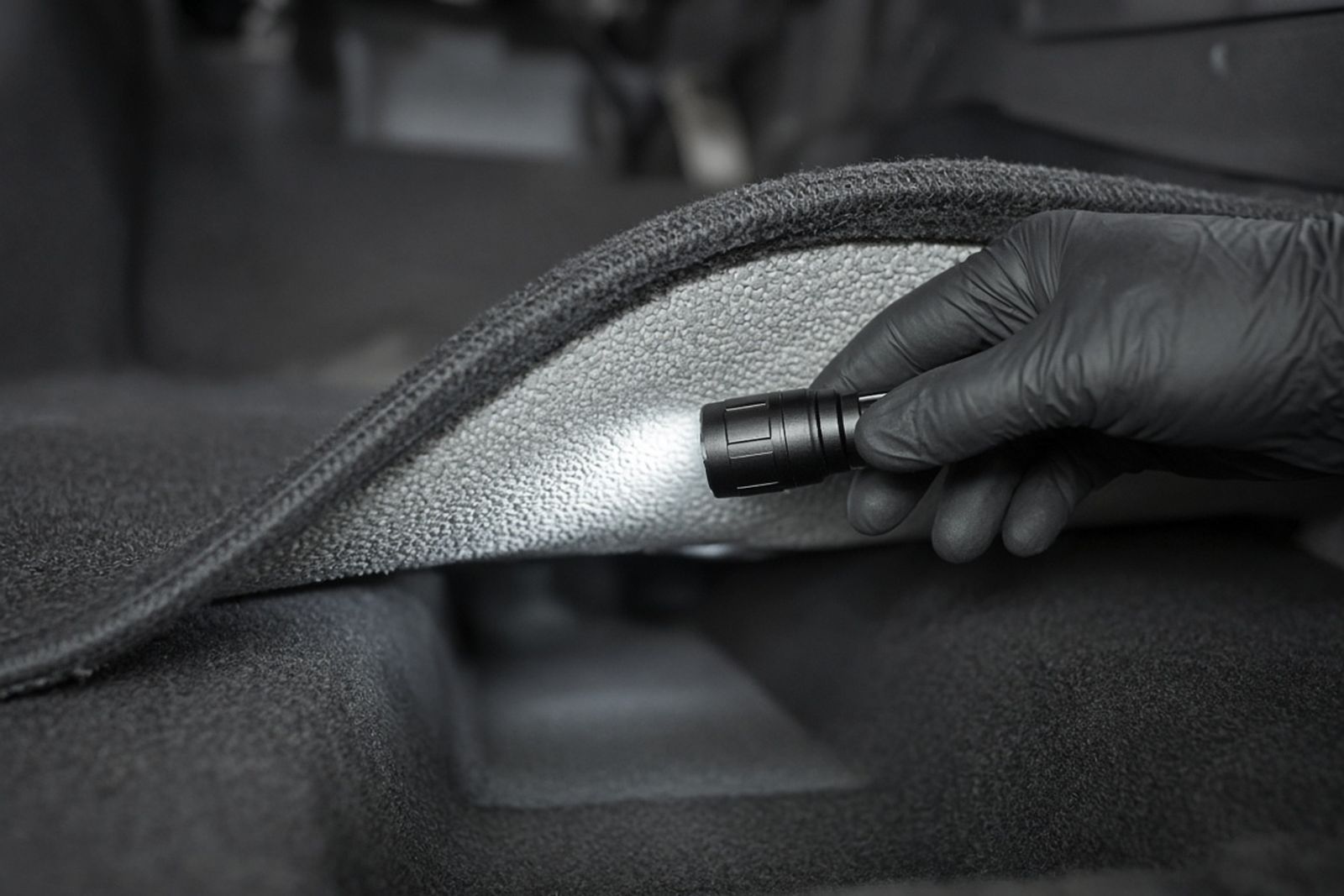
Learn what cleanup of a car, van, RV, or boat involves after blood, illness, or death. It covers checking foam and belts, the air system, and waste.
Costs explained
What drives the price, published cost ranges, and how to read a written quote line by line.
Insurance and payment
Which policies may respond, how to document a claim, and what to do if coverage is denied.
Community polls
See how other owners, rideshare drivers, and fleet managers handled soiled vehicles. Views range from first reactions to total-loss offers and what to tell buyers.
Knowledge quiz
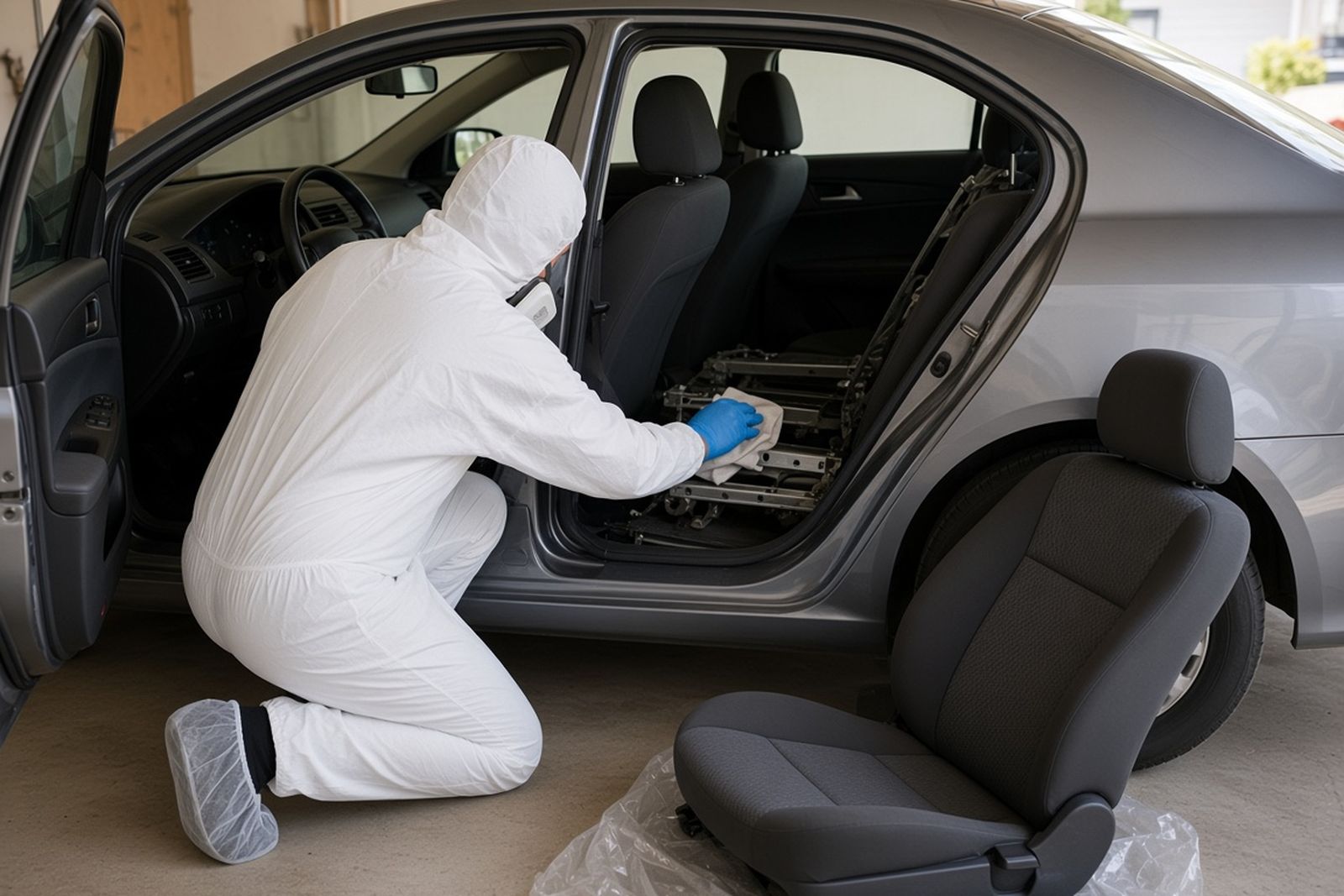
Test what you know about soaked foam, seat belts and airbags, the car's air paths, regulated waste, and when an insurer may total the vehicle.
Articles and resources
Plain reads on rideshare cases, fleet steps, RV and boat cabins, and how heat speeds decay. Learn how to talk with an adjuster about your car or truck.