Vehicular Biohazard Cleanup: Process & What to Expect
Property-specific walkthroughs for vehicular biohazard cleanup: assessment, scope approval, hazard controls, material decisions, documentation, verification, and restoration handoff. Not every phase applies to every incident.
Posts in this category walk through what really happens when a soiled vehicle is cleaned, from the first call to the moment you get the keys back. They explain how a worker checks seat bottoms, carpet padding, and trunk liners. They explain why seats or center consoles may come out, and how cabin filters and fan housings are handled. They also explain why odor treatment waits until soiled materials are gone. You will read about realistic timelines, including the wait for an adjuster and for new parts. Other posts describe what to do in the first hours. Leave the doors closed, park out of direct sun, and keep the keys with one person, so nobody opens the cabin before the assessment.
Get an email reply about vehicular biohazard cleanup
Send a short message to the follow-up inbox. A coordinator can reply by email. This form does not send emergency help; call 911 first if anyone is in danger.
Knowing the order of the work helps you avoid choices you later regret. One example is letting a mobile detailer shampoo seats before the insurer has seen them. It also prepares you for surprises that are common in vehicles, like fluid found under the floor mat or inside a seat track. When you know why each step exists, you can ask better questions about the scope and schedule. Expect the scope to change once panels and seats come out. Ask the provider to call you before adding work. A clear picture of the process also makes it easier to explain things to a lender, an employer, or a rideshare app that is waiting on you.
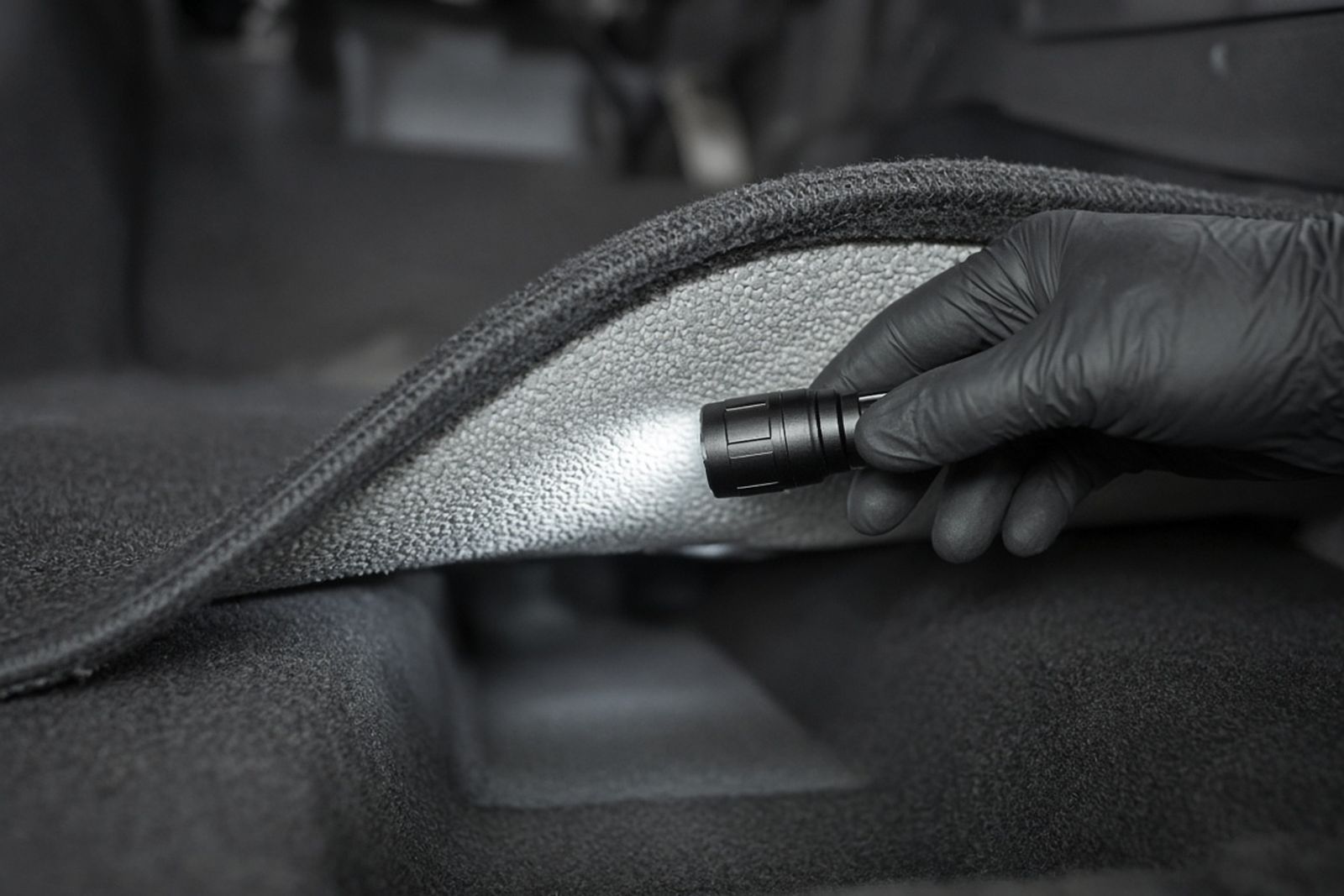
What to Expect During Professional Vehicular Biohazard Cleanup
Vehicle biohazard cleanup means taking the interior apart, not just wiping it down. See each stage, from release and inspection to reassembly and handback.
Expect a professional vehicle cleanup to begin with confirming the vehicle is released, then an inspection that follows fluid into seats, tracks, carpet, and vents. Technicians remove contaminated porous parts, clean and disinfect hard surfaces with suitable registered products, handle waste through a regulated route, treat odor, reassemble, and walk you through what was replaced before returning the keys.
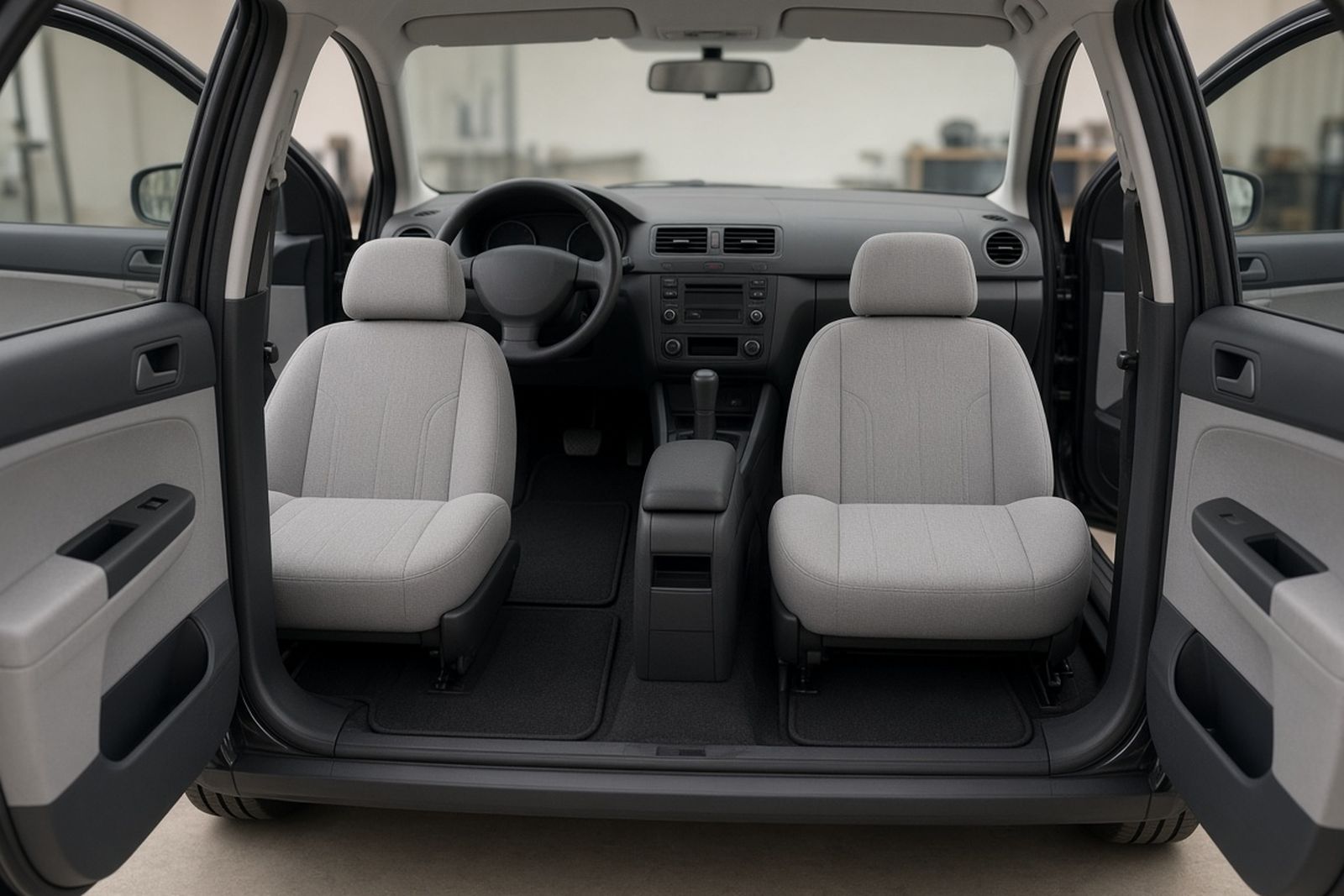
How Long Does Vehicular Biohazard Cleanup Take?
A car cleanup can take hours or stretch across weeks. Learn how release holds, insurance, seat removal, parts orders, and odor checks set the vehicle timeline.
A vehicle biohazard cleanup can take a few hours for a small, surface-only incident, or much longer when fluid reached seat foam, carpet, or belts. The biggest delays usually sit outside the cleaning itself: waiting for law enforcement or the medical examiner to release the vehicle, insurance inspections, towing, and ordering replacement parts. A final odor check under warm conditions can add time at the end.
Urgent Vehicular Biohazard Cleanup: What to Do Before a Provider Arrives
Blood or body fluids in a car, truck, or van? Learn how to park, secure, and document the vehicle safely, and what to avoid until a cleanup crew arrives.
If a vehicle has been contaminated with blood or body fluids, stop using it, park it somewhere secure and shaded, and keep people out. Confirm with police whether the vehicle is being held. Photograph the interior without touching affected areas, do not scrub or shampoo anything, cover exposed skin if you must reach in, and call a vehicle biohazard provider and your insurer.
Sourced figures on process & what to expect
- 7 days
Hepatitis B virus remains infectious on environmental surfaces for at least 7 days.
Read with care: Survival depends on conditions; presence of virus does not guarantee transmission.
Source: CDC (2024)General surface persistence, per CDC clinical guidance
- 6 weeks
Hepatitis C virus can remain infectious on surfaces for up to 6 weeks at room temperature, according to Yale researchers.
Read with care: Laboratory conditions; real-world infectivity in a hot vehicle cabin may differ.
Source: HIV.gov (U.S. Department of Health and Human Services) (2014)Laboratory study, Yale Schools of Medicine and Public Health, published 2014
- 19
An added hydrogen-peroxide wipe protocol left 19 of 48 sites tracer-positive.
Read with care: Surrogate-virus transfer, not measured patient infection; local workflow.
Source: Valdez et al. (2015)EMS field experiment using seeded bacteriophage as a microbial surrogate.
These figures are public research and agency data, not this network's own job records. Keep each number with its population, year and limits; none of them predicts cost, timing or outcome at a specific property.
What research has found
Findings from published studies of people and properties in situations like this one. They describe what researchers observed in a specific group; they are not predictions for your case.
Only four samples were classified as containing pathogens.
Observed transfer patterns implicated responders' hands.
Process & What to Expect: common questions
Do I need to be present while my vehicle is being cleaned?
In most cases, you do not need to stay for the whole job. It helps to be there for the first walk-around. You can point out where the incident happened and agree on which personal items should be taken out. Many providers can send photos as seats and carpet come out. Plan to come back for a final check with the heater and fan running before you accept the vehicle.
Why does the provider want to remove seats that look clean on top?
Fluid often runs through the tiny holes and seams in a seat into the foam. Then it drips down onto the rails and carpet below. The fabric you see may still look fine. Taking out the seat lets the worker see the underside of the cushion and the metal floor. It also exposes wiring and airbag plugs. That is why a careful provider talks about safety parts before unbolting anything.
What should I receive when the vehicle work is finished?
Ask for a final packet. It should list each part that was cleaned, replaced, or thrown away. It should include before and after photos and the disinfectant products used. It should also include papers showing how regulated waste left the site. If safety parts were removed, ask who put them back. Keep this packet with the vehicle's records for insurance, resale, or future questions.
How do I know when the provider is ready to hand the vehicle back?
The provider should tell you that all the steps are done. That means removal, cleaning, disinfecting, drying, putting things back, odor treatment, and any final checks. They should offer a time for a walk-through. Ask for the photos, bill, and waste records before or when you get the vehicle back. If parts are still on order, ask whether this is a partial return or the finished job, so you know what is left.
What should I do if I notice a problem a few days after handback?
Contact the provider right away. Describe what you noticed, such as odor coming back, a warning light, a rattle, or a stain. Send photos if you can. Point to any follow-up terms you got in writing. In the meantime, avoid quick fixes like air fresheners or shampooing, since they can hide the source. A good provider will want to look at it and fix the problem.
Can the provider work with my body shop or mechanic?
Many providers do this often. That is most common when a crash caused mechanical damage or safety parts need to be replaced. Agree on the order of work. The mess inside the cabin usually needs to be removed before repair workers work inside. Ask both businesses to share their scopes, so nothing is done twice or missed. Confirm who will put the seats and belts back in.
Will I be asked to sign anything before work begins?
Usually, yes. Expect a work approval form or agreement. It should point to the written scope, the payment terms, and how changes are approved. You may also sign permission for the provider to talk with your insurer. Read it before you sign, and ask about anything unclear. If a company asks you to sign over insurance money or accept terms before a scope exists, stop and ask questions.
Related community polls
Every count is a real visitor vote; nothing is seeded or padded. One vote per poll per device, and you can change your answer.
If a passenger became ill in your car, what would you most likely do first?
Would you keep driving a vehicle where blood reached the seat foam if it looked clean afterward?
More on vehicular biohazard cleanup
Vehicular Biohazard Cleanup services
Learn what cleanup of a car, van, RV, or boat involves after blood, illness, or death. It covers checking foam and belts, the air system, and waste.
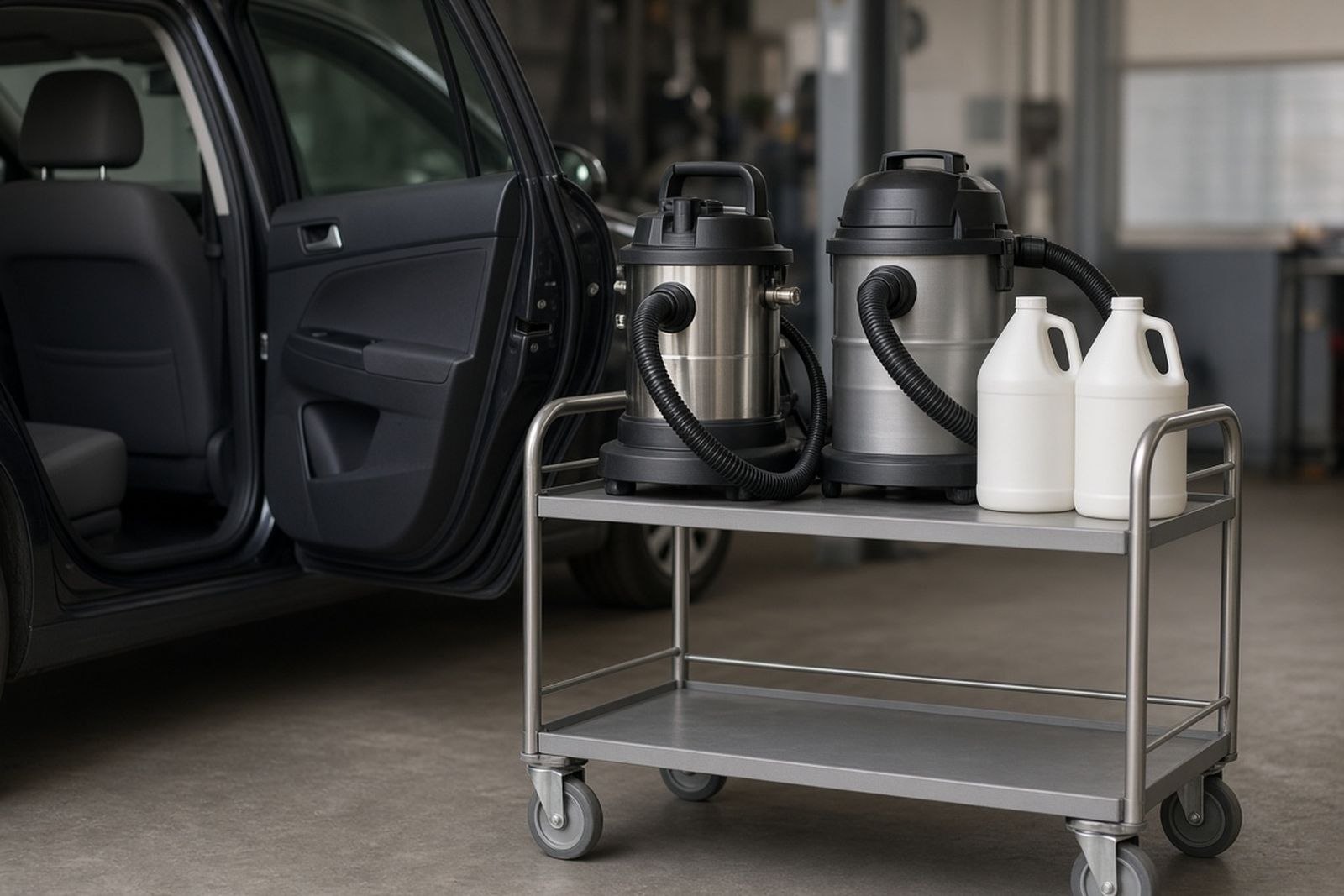
Costs explained
What drives the price, published cost ranges, and how to read a written quote line by line.
Insurance and payment
Which policies may respond, how to document a claim, and what to do if coverage is denied.
Planning tools
Estimate the job for your vehicle, check a provider, organize an auto claim, and plan the first day. Sort removed materials and see whether you should touch the cabin.
Community polls
See how other owners, rideshare drivers, and fleet managers handled soiled vehicles. Views range from first reactions to total-loss offers and what to tell buyers.
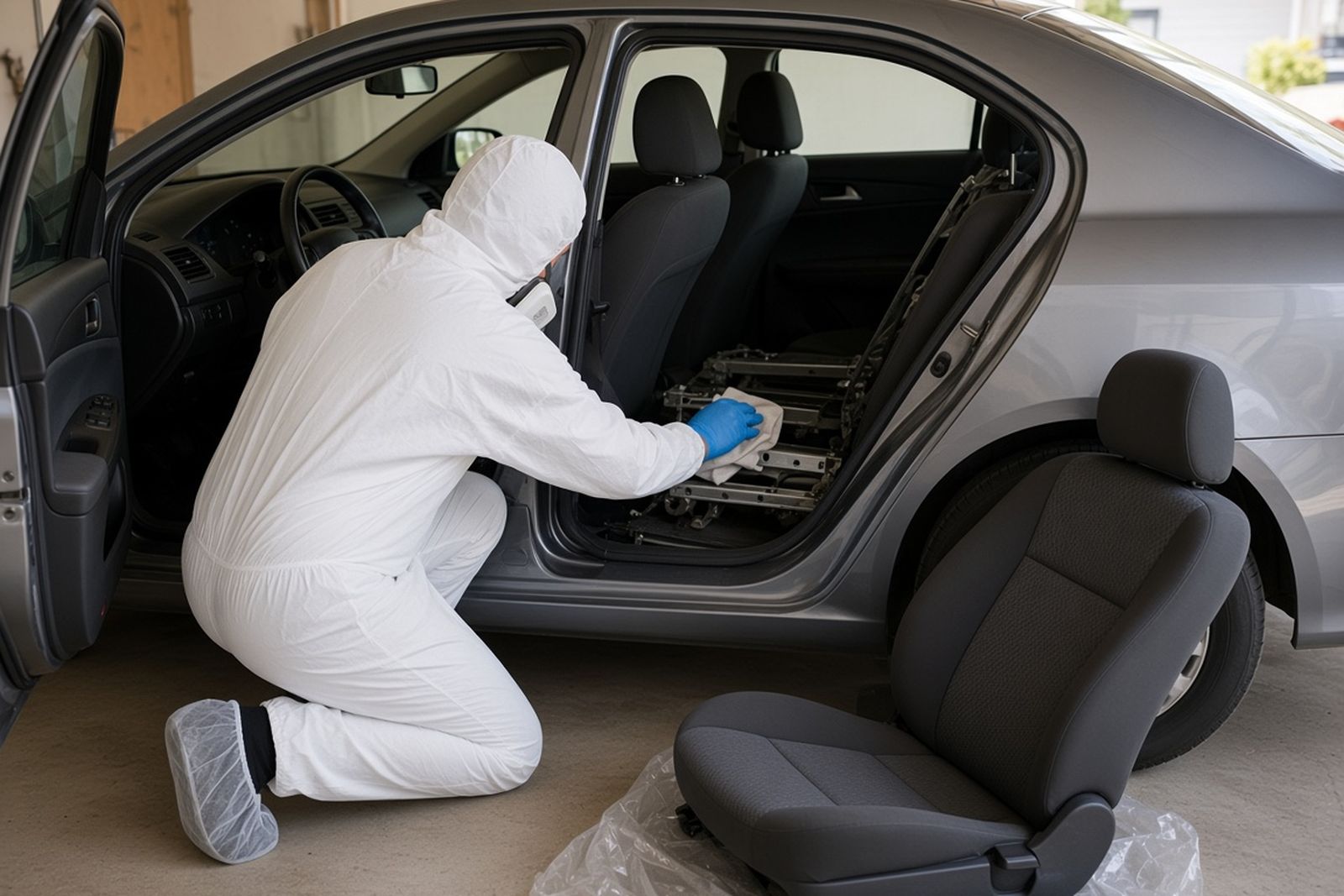
Knowledge quiz
Test what you know about soaked foam, seat belts and airbags, the car's air paths, regulated waste, and when an insurer may total the vehicle.