Short answer
Before cleaning a vehicle after a biohazard event, assess ten risks: bloodborne pathogens, sharps and broken glass, undeployed airbags, battery and high-voltage systems, leaking automotive fluids, chemical fumes in a closed cabin, heat and awkward work positions, the vehicle's location and stability, investigative or legal holds, and the emotional impact on the people involved. Each one shapes how and when the work can safely begin.
Why a vehicle needs its own safety assessment
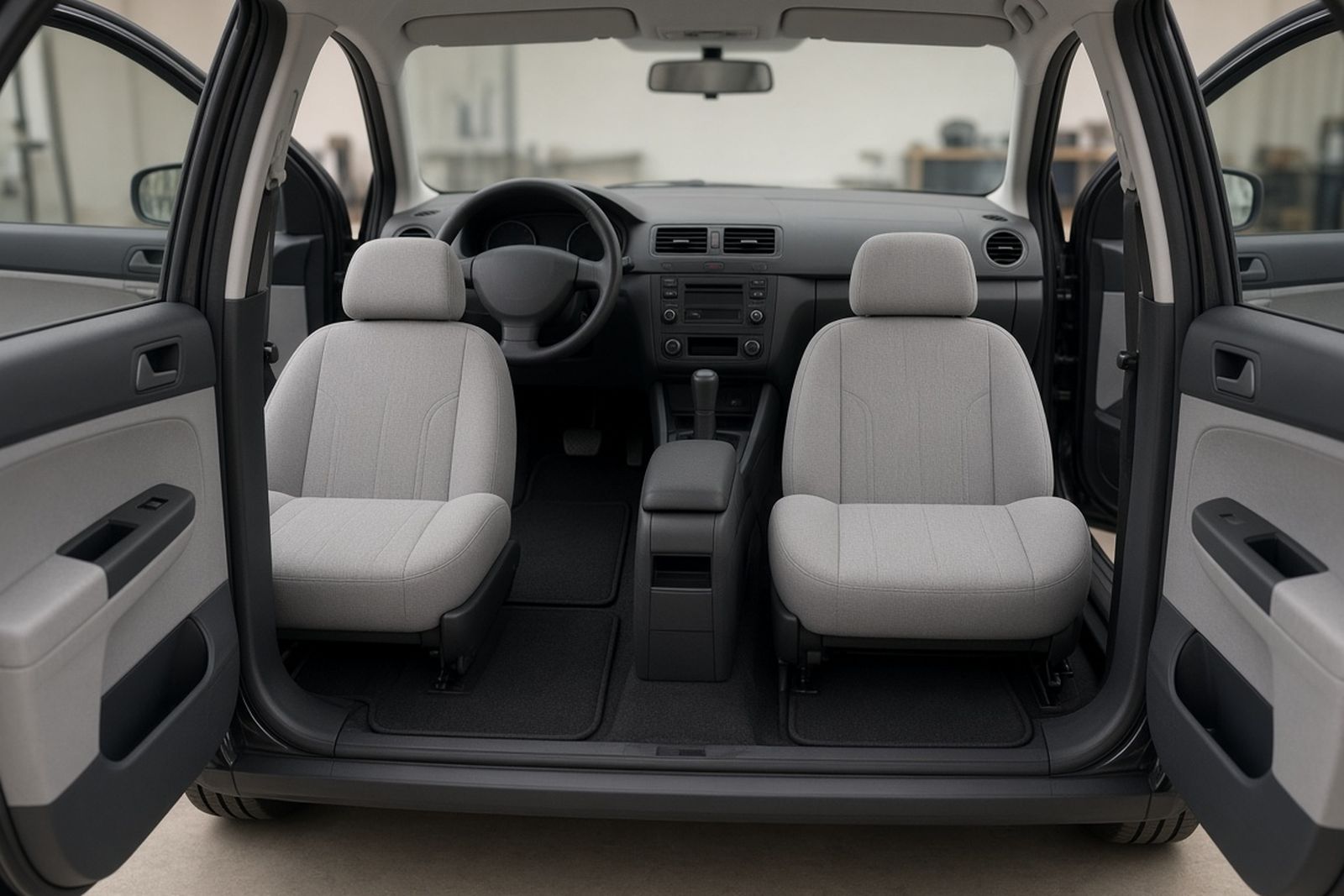
A vehicle is not a small room. It is a machine with stored energy in its airbags, battery, fuel system, and in electric or hybrid models, high-voltage components. After a crash, it may also be damaged, unstable, or parked beside traffic. Add blood or other body fluids, and the hazards stack quickly.
Assessing risks before work starts protects the technicians, the vehicle owner, and anyone nearby. It also protects the vehicle from damage caused by cleaning around systems that should have been disabled first.
The ten risks below are worth reviewing in order, whether you are hiring a provider or checking the plan they give you.
Some of these risks belong to the provider, such as worker protection and airbag procedures. Others, like release holds, insurance inspections, and who should be present, depend on decisions you make as the owner or fleet manager. Reviewing both sides keeps the job from stalling halfway through.
- Bloodborne pathogens and other infectious material
- Sharps, broken glass, and torn metal
- Undeployed airbags and seat belt pretensioners
- The 12-volt battery and high-voltage systems
- Leaking fuel, coolant, oil, or battery fluids
- Chemical fumes in a closed cabin
- Heat, cramped positions, and poor lighting
- The vehicle's location and stability
- Investigative, legal, and insurance holds
- Emotional impact on family members and crew
Risk one: bloodborne pathogens
Risk one is exposure to bloodborne pathogens. Blood and body fluids in a vehicle should be treated as potentially infectious. Technicians need gloves, fluid-resistant clothing, eye protection, and respiratory protection when aerosols or odors are expected. Employers must also maintain a written plan: OSHA's Bloodborne Pathogens standard requires employers to review their written exposure control plan at least annually and retrain exposed workers at least annually, according to its 2024 regulation.
Ask the provider whether their technicians are trained under that standard, offered hepatitis B vaccination, and given a clear procedure to follow after an exposure.
Risk two: sharps and broken glass
Risk two is sharps. After a crash or a violent incident, a cabin may contain broken glass, jagged plastic, torn metal, and sometimes needles or other sharp objects. These can cut through standard gloves. Technicians should wear cut-resistant layers, use tools to pick up fragments, and place sharp debris in rigid containers rather than soft bags.
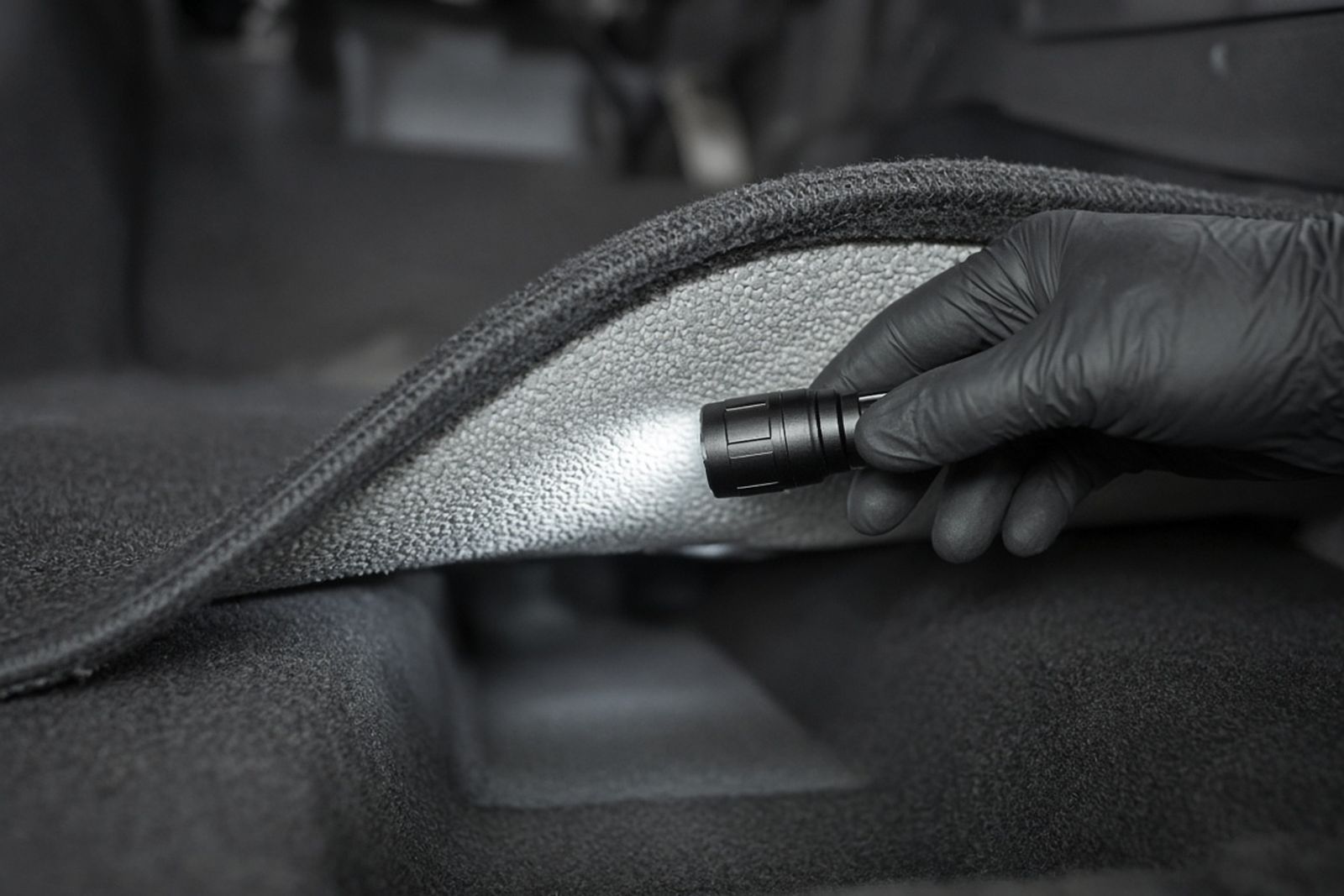
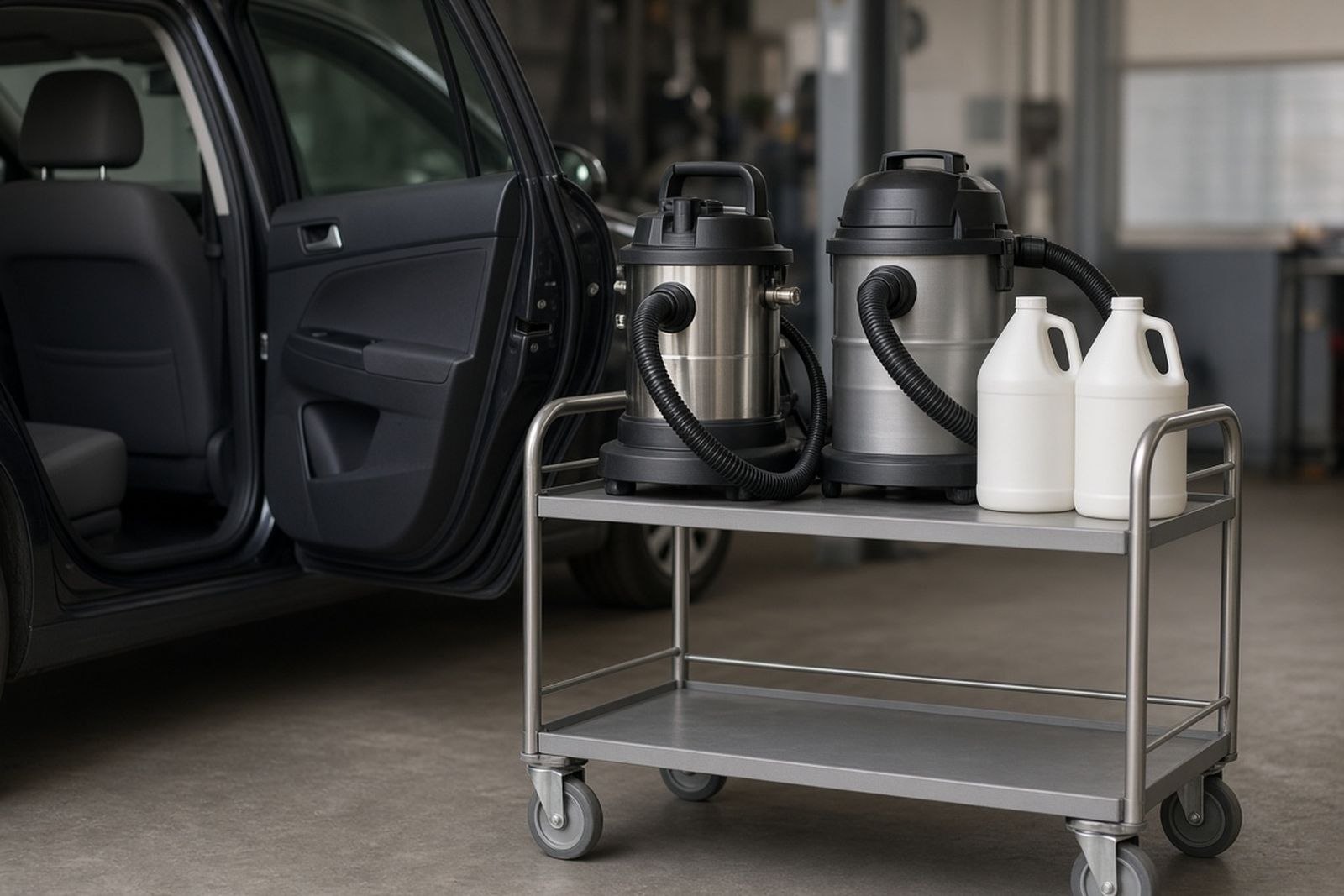
Glass from tempered side windows breaks into many small cubes that scatter into seat tracks, door pockets, and vents. Those pieces may carry blood and are easy to miss. A careful crew vacuums with a filtered unit and checks by hand, with gloves, before reinstalling anything.
Risk three: airbags and pretensioners
Risk three involves supplemental restraint systems. Undeployed airbags in the steering wheel, dash, seats, roof rails, and knee panels can fire if wiring is disturbed or a sensor is triggered. Seat belt pretensioners carry similar stored energy. Technicians should follow the manufacturer's procedure, which usually includes disconnecting the battery and waiting a specified time before unplugging seats or trim.
Risk four: batteries and high voltage
Risk four covers electrical systems. The 12-volt battery can spark and, if damaged, leak corrosive fluid. Electric and hybrid vehicles also carry high-voltage batteries and orange-cabled components that can deliver dangerous shocks and, if damaged, overheat or catch fire.
For any electrified vehicle, ask whether the provider knows the manufacturer's disabling procedure and whether a damaged battery pack has been assessed before interior work begins. A vehicle that has been in a severe crash may need inspection by a qualified technician first.
Risks five and six: leaking fluids and cleaning fumes
Risk five is automotive fluids. After a collision, fuel, coolant, brake fluid, oil, and battery acid may leak onto the ground or into the cabin. Fuel vapors are flammable, coolant is toxic to people and animals, and battery acid is corrosive. These fluids need their own containment and disposal, separate from biohazard waste.
Check for ignition sources before starting work near a fuel leak, and keep drains protected.
Risk six is chemical exposure inside a small, enclosed space. Disinfectants, cleaners, and odor treatments concentrate quickly in a cabin. Technicians should keep doors open, use fans to move air, choose products appropriate for enclosed use, and wear respiratory protection when needed. Ozone or fogging treatments require the vehicle to be empty and aired out before anyone sits inside.
Spills of automotive fluids inside the cabin also change the cleaning chemistry. Some disinfectants should not be mixed with fuel or battery residue, so technicians clean those contaminants first with appropriate products before moving on to disinfection.
Risk seven: heat and work position
Cleaning a vehicle interior means long periods bent into footwells, kneeling on floor pans, and reaching under seats. Protective suits trap heat, and a cabin parked in the sun can become dangerously hot. Poor lighting in tight spaces increases the chance of missing contamination or cutting a hand.
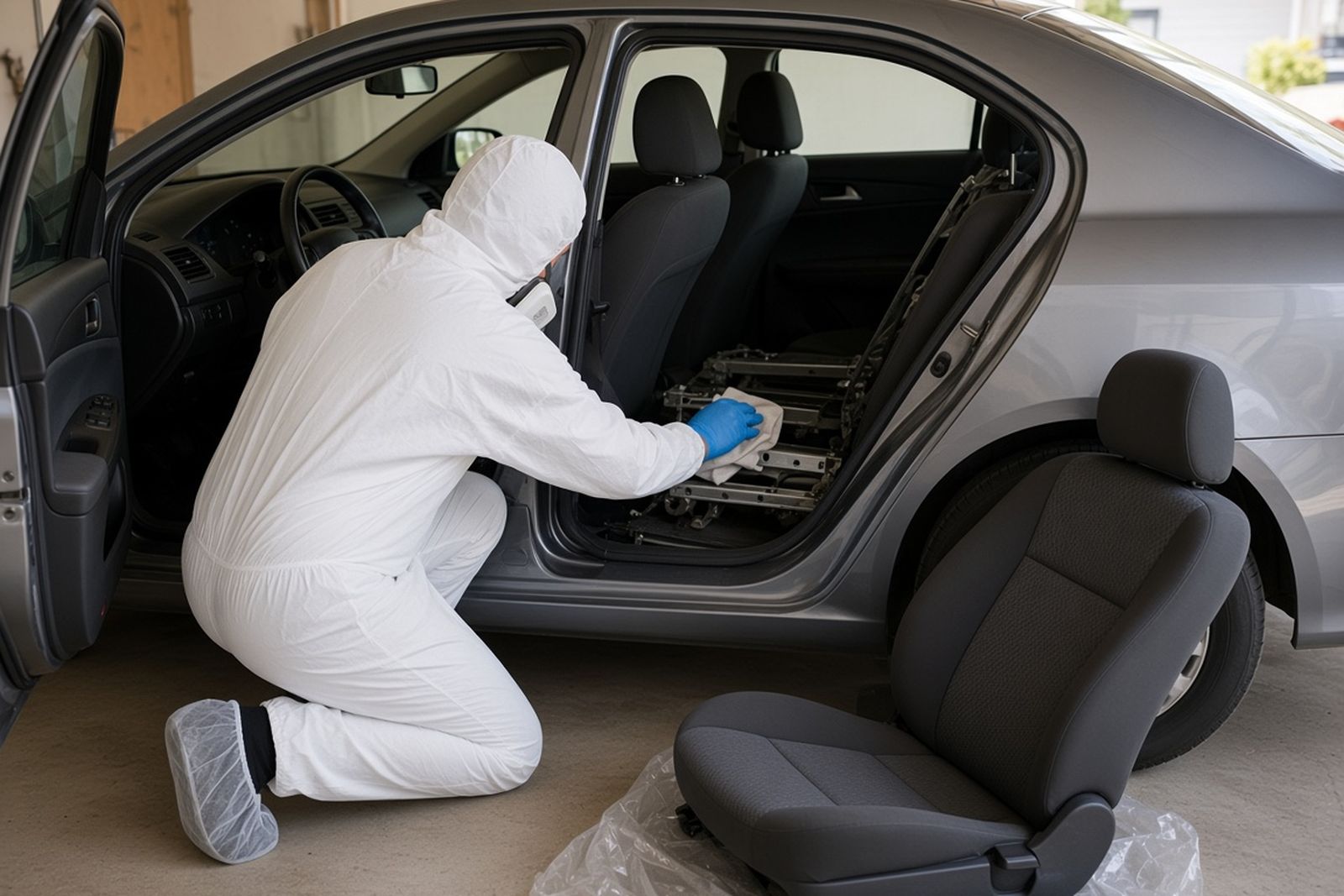
Good providers schedule work in shade or indoors when they can, take regular breaks, use knee pads and portable lighting, and rotate tasks among crew members. Removing seats early often makes the rest of the job safer as well as more thorough.
Heat also affects the vehicle. Warm conditions speed up odor and can cause some disinfectants to dry before the label contact time is reached, so crews may need to adjust how they apply products.
Risk eight: location and stability
Location is a major safety factor. A vehicle in a secure shop is very different from one on a highway shoulder, in a busy parking lot, or in a tow yard with moving equipment. Roadside work is especially dangerous. BLS reported that roadway incidents involving motorized land vehicles killed 1,146 U.S. workers in 2024, the largest subcategory of transportation fatalities.
If cleaning must happen in place, the provider should set up cones, lighting, and a safe working zone, and coordinate with law enforcement if the vehicle is near traffic. Moving the vehicle to a controlled location is often the safer choice.
Damaged vehicles may be unstable. Crushed suspension, flat tires, or a vehicle on its side needs to be secured before anyone climbs inside or works underneath.
Parking lots and garages have their own hazards. Other drivers may not expect people kneeling beside a vehicle, and exhaust from nearby cars can build up in enclosed structures. Ask where the crew will stage equipment and waste so they do not block traffic or emergency exits.
Risk nine: legal and investigative holds
Cleaning a vehicle that is still part of an investigation can destroy evidence and create legal problems. If police, a medical examiner, or a coroner was involved, confirm the vehicle has been formally released before anyone begins.
Insurance adjusters may also need to inspect the vehicle before interior parts are removed. Photograph everything first and ask the carrier whether an inspection is required.
Lienholders and leasing companies sometimes have their own requirements for repairs. Check your paperwork before approving major component replacement.
Keep a record of the release confirmation, including the agency name and the date. If questions come up later with an insurer or a buyer, that record shows the cleanup began only after the vehicle was cleared.
Risk ten: emotional impact
Vehicles are personal spaces, and a cleanup after a death, crash, or violent incident can be deeply painful for family members. Seeing the interior before cleanup, or even watching the work, can be traumatic. It is perfectly reasonable to hand off the keys and let the provider handle everything.
Crews are affected too. Providers should give technicians support and time between difficult jobs. A respectful crew keeps conversations discreet and returns personal items with care.
Tell the provider about any items you want back, such as photos, a child's toy, or a keepsake in the glovebox. They can set those aside, clean them if possible, and return them privately rather than leaving them in plain view.
If the incident involved a suicide, the 988 Suicide and Crisis Lifeline is available by call or text at any hour, for family members and for anyone else who needs support.
How a safety review changes the job
A worked example, not drawn from a real job, shows the difference. A hybrid SUV is involved in a crash on a rural highway. The driver is injured and transported by ambulance, and blood is present on the driver's seat, door panel, and center console. The SUV is towed to a yard after police finish their investigation.
Before cleaning, the provider confirms the vehicle has been released and that the insurer's adjuster has photographed it. A qualified technician checks the high-voltage battery for damage and disables the system according to the manufacturer's procedure. The 12-volt battery is disconnected, and the crew waits the specified time before unplugging the driver's seat, which contains an airbag.
Broken glass is collected into a rigid container. A small coolant leak under the engine is contained separately. The seat, carpet section, and console trim are removed, and cleaning proceeds with doors open and fans running. Because the yard is busy, the crew sets up cones around the work area. Each of these steps came from the safety review, not from the cleaning plan.