Free vehicular biohazard cleanup tool
Vehicular Biohazard Cleanup DIY or Call a Pro? Risk Check
Eight yes-or-no questions that produce a risk level and explain when professional help is the safer choice.
Some vehicle messes are fine to handle yourself. Think of a child's car sickness on a vinyl seat, a few drops from a minor cut on a hard console, or a pet accident on a rubber mat. These can be cleaned with gloves, the right product, and fresh air. Others are not, and the line is not always clear from the outside. This check asks eight yes-or-no questions. Does it involve blood or other body fluids that can carry disease? Did fluid reach foam or carpet? Did the vehicle sit closed in heat? Might needles or other sharp objects be there? Did a death or serious injury happen? Would seats need to come out? Is anyone in the home at higher health risk? Is the vehicle a rideshare, fleet, rental, or leased vehicle?
The result is a risk level and a plain explanation. It tells you why trained help is the safer path in some cases and not needed in others. It is not a judgment of your skills. Even a careful owner lacks what a soaked cabin needs. That includes deep-cleaning machines, the right disinfectants, and knowing how long each must stay wet. It includes the training to work around seat airbags and belt tighteners. And it includes a licensed waste route. A cabin is also a tight space. Stirring up soiled material there puts whatever is in it into the air you breathe. If the check gives a high risk level, it names the factor behind it. Then you know whether the concern is exposure, safety systems, hidden soaking, or a duty to another party.
How to use it
- 1Answer all eight questions as well as you can. When you are unsure, pick the more careful answer.
- 2Read which factors the result points out. They explain what makes your situation risky, not just unpleasant.
- 3If the result says to call a professional, note the reason. It may be exposure, safety systems, hidden soaking, or another party's rules.
- 4Use the result along with the first 24 hours planner and the vetting checklist if your next step is calling a provider.
Prefer to ask a person?
Your request is sent to the follow-up inbox. A coordinator can reply by email. Not for emergencies; call 911 first if anyone is in danger.
Check whether DIY is safe
Vehicular Biohazard Cleanup: DIY or call a pro?
Eight yes-or-no questions. The result is an educational risk level, not a safety clearance.
1. Is there blood, body fluid, or anything that could carry a bloodborne pathogen?
2. Has the material soaked into carpet, padding, a mattress, drywall or a subfloor?
3. Is there a strong or lingering odor?
4. Could needles, broken glass, drug residue or unknown chemicals be present?
5. Does the affected area cover more than a small spot, or more than one room?
6. Will children, older adults, pregnant people or anyone immunocompromised use the space afterward?
7. Do you need documentation for insurance, a landlord, a sale, or an estate?
8. Would you be doing this while grieving, exhausted or under time pressure?
8 questions left to answer.
A worked example
Here is a made-up case. A father's teenage son scraped his knee badly at a game. On the way home, he bled on the vinyl back seat and rubber floor mat of the family SUV. The father runs the check. Blood is involved. But the fluid stayed on hard, sealed surfaces and did not reach foam or carpet. The SUV was cleaned within the hour and never sat in heat. There are no sharp objects, and no one was seriously hurt. No seats need to come out. Nobody in the home has a weak immune system, and the SUV is privately owned. The check gives a low to moderate risk level. It explains that this can be handled at home. He needs gloves, a disinfectant used as its label says, proper disposal of the wipes, and careful hand washing. A neighbor runs the same check for a very different case. A relative's car was found after a week in a hot parking garage, following a fatal medical event. Blood and decay are involved. Fluid reached the foam and carpet, and the car sat in heat. Seats will surely need to come out, and a death happened. The check gives a high risk level. It explains that exposure risk, hidden soaking, seat belt and airbag handling, and regulated waste all make this a job for a trained provider. It also says the family should not open the cabin.
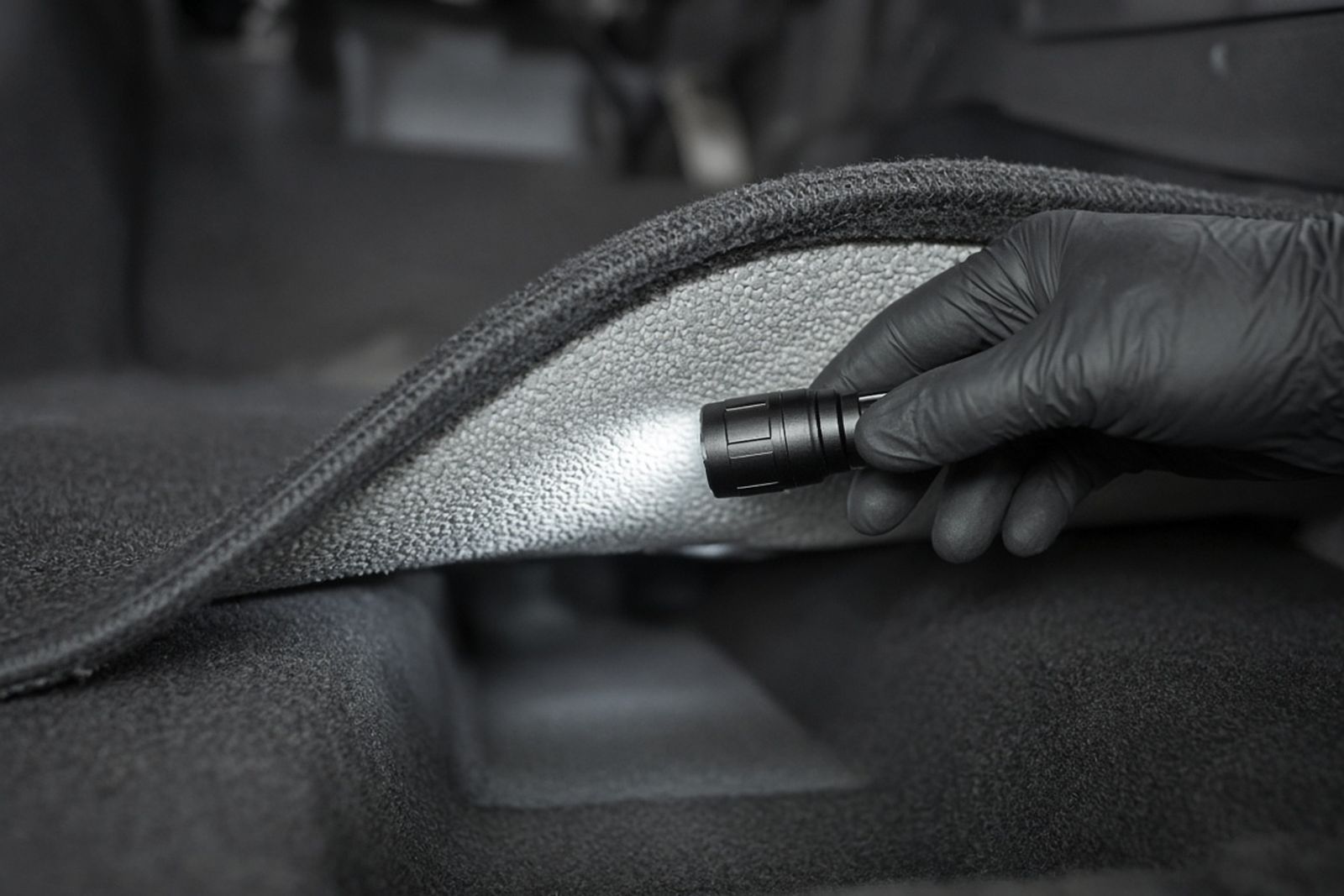
Numbers behind diy risk check decisions
- 1 in 3
About one in three people carry Staphylococcus aureus on their skin or in their nose, according to CDC.
Read with care: Carriage of staph is not the same as MRSA carriage or infection.
Source: CDC (2024)General population, United States
- 52%
The reported contamination rate fell from 52% before disinfection to 8% afterwards.
Read with care: Abstract does not provide sample count; product-specific; contamination is not infection.
Source: Farhadloo et al. (2018)Ambulance cabins and equipment in Qom, Iran, treated with one named disinfectant.
- 2,500
About 2,500 norovirus outbreaks are reported in the United States each year, and the virus can persist on surfaces for days or weeks and resists many common disinfectants.
Read with care: Reported outbreaks undercount true illness burden.
Source: CDC (2024)United States, reported outbreaks per year
- 214
214 of 429 samples grew bacteria.
Read with care: Detection is not infection; small local fleet; most isolates were environmental flora.
Source: Noh et al. (2011)13 Seoul ambulances; 33 sites each, 429 samples.
These figures are public research and agency data, not this network's own job records. Keep each number with its population, year and limits; none of them predicts cost, timing or outcome at a specific property.
DIY or Call a Pro? Risk Check questions for vehicular biohazard cleanup
Why is 'reached foam or carpet' such a heavy factor?
Because no one can confirm soft materials are clean by treating the surface. Shampooing them pushes germs deeper. Fluid in foam means the cushion likely needs to be removed and replaced. That involves seat hardware, sometimes airbag plugs, and a regulated waste route. Those steps are where a home attempt turns into a safety problem and a rule problem. So the check gives that answer extra weight.
I am comfortable removing a seat myself. Does that change the result?
It lowers one concern but not the others. On many vehicles, removing a seat involves airbag and belt tightener plugs. The battery must be unplugged, and certain steps must be followed so the airbag does not go off or set warning codes. Even with that handled, the soiled foam still needs proper disposal. The cabin still needs disinfecting, with each product left wet long enough. The check will still flag exposure and waste factors.
Can I clean the vehicle myself and then pay a pro just for odor treatment?
That order usually fails. Odor treatment works only after the sources are removed. If a home cleaning leaves soaked foam in place, the treatment only hides the problem for a short time. If your check result is moderate, a better split is this. You lock up and photograph the vehicle yourself. A provider checks it, removes what is soaked, and disinfects. Then you decide on odor treatment based on what they find.
The result is low risk, but the smell is not going away. What did I miss?
Most likely, the fluid went somewhere you did not see. It may have gone through a seam into foam, under a mat into carpet padding, or into the car's air path. A smell that stays after a good surface cleaning is a sign of a hidden source. Run the check again and answer yes to fluid reaching foam or carpet. See how the result changes. Then have a provider inspect, instead of adding air fresheners.
Does a rideshare, fleet, rental, or lease vehicle change the answer?
Yes. Those vehicles come with duties to a rideshare app, an employer, a rental company, or a leasing company. Any of them may require a professional cleanup, certain records, or their own vendor before the vehicle goes back into use. Passengers and coworkers will sit in that seat. So the check treats another party's involvement as a reason to favor professional work and records, no matter how small the incident seems.
Should I retake the check if I find more than I expected while cleaning?
Yes. You may lift a mat and find fluid under it. You may notice dampness in a seat, find a sharp object, or smell odor coming from somewhere you did not expect. If so, stop and answer the questions again with what you now know. The result may change from something you can handle to a job for a pro. Stopping partway is sensible, not a failure. It can keep a small job from becoming a bigger one.
Does the result take my own health into account?
Not directly. The questions focus on the incident and the vehicle. You may be pregnant, have a weak immune system, have breathing problems, have open cuts on your hands, or react to cleaning chemicals. If so, lean toward professional help even when the result looks low risk. Ask your doctor or nurse if you are unsure whether handling a mess is safe for you.
Related community polls
Every count is a real visitor vote; nothing is seeded or padded. One vote per poll per device, and you can change your answer.
If a passenger became ill in your car, what would you most likely do first?
Would you keep driving a vehicle where blood reached the seat foam if it looked clean afterward?
Other vehicular biohazard cleanup tools
Cost Range Estimator
Set the affected area, surface types, severity and extras to see an educational cost range and the factors that move it.
OpenProvider Vetting Checklist
Fifteen questions to ask any remediation provider, a readiness score, and a copyable list of what is still unanswered.
OpenInsurance Claim Organizer
A guided checklist from finding the policy to tracking the carrier decision, with a printable summary of where the claim stands.
OpenFirst 24 Hours Planner
Tell the planner a few facts about the situation and get an ordered list of who to call, what not to touch, and what to photograph.
OpenWaste & Disposal Classifier
Five questions about the material point to the likely waste category and which authority to confirm the rules with.
OpenMore on vehicular biohazard cleanup
Vehicular Biohazard Cleanup services
Learn what cleanup of a car, van, RV, or boat involves after blood, illness, or death. It covers checking foam and belts, the air system, and waste.
Costs explained
What drives the price, published cost ranges, and how to read a written quote line by line.
Insurance and payment
Which policies may respond, how to document a claim, and what to do if coverage is denied.
Community polls
See how other owners, rideshare drivers, and fleet managers handled soiled vehicles. Views range from first reactions to total-loss offers and what to tell buyers.
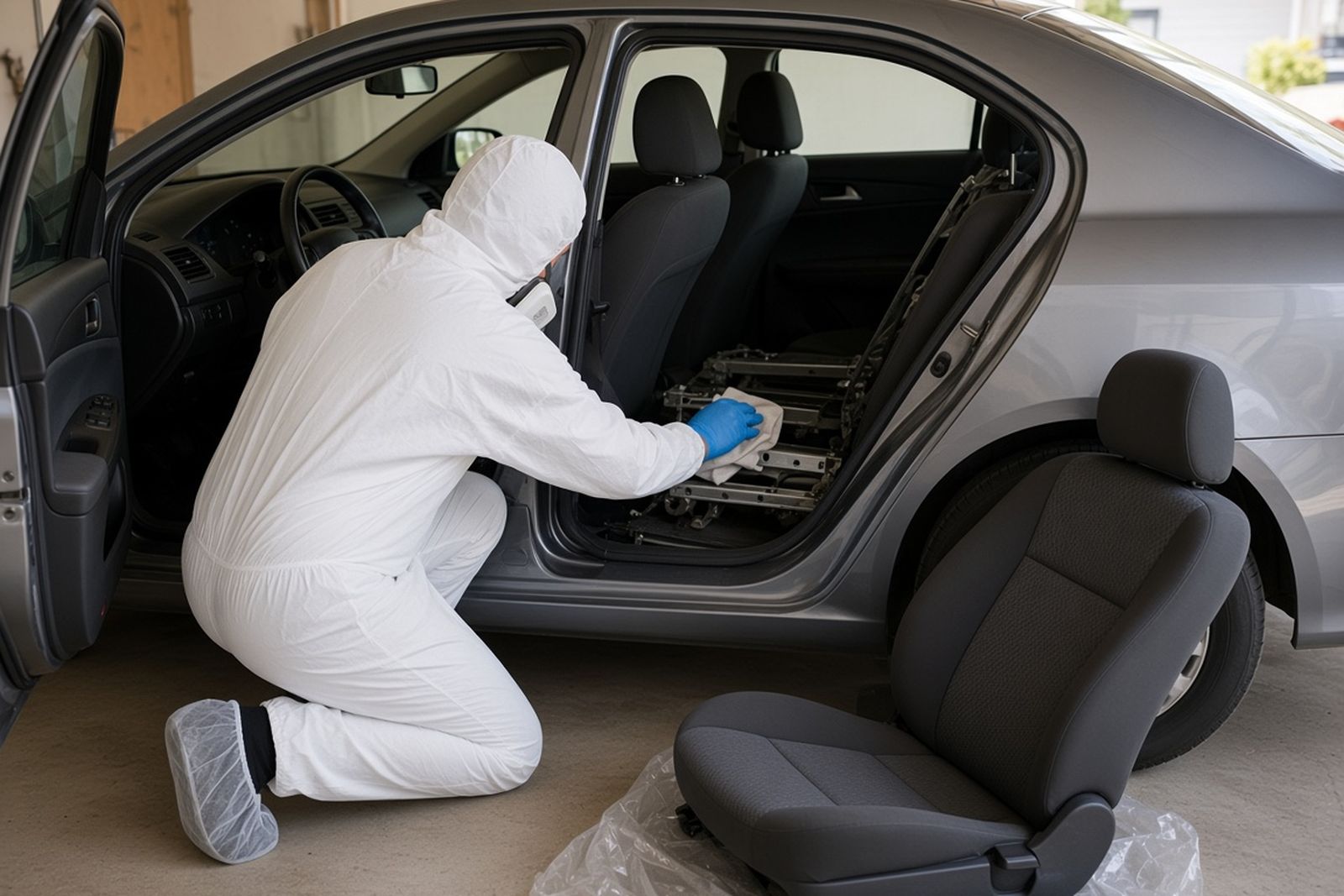
Knowledge quiz
Test what you know about soaked foam, seat belts and airbags, the car's air paths, regulated waste, and when an insurer may total the vehicle.
Articles and resources
Plain reads on rideshare cases, fleet steps, RV and boat cabins, and how heat speeds decay. Learn how to talk with an adjuster about your car or truck.