Vehicular Biohazard Cleanup: Safety
Hazard-assessment articles for vehicular biohazard cleanup, including when bloodborne, chemical, respiratory, sharps, structural, or waste controls may apply. PPE and containment must follow the actual exposure—not a universal checklist.
Safety posts focus on the dangers that come up when someone tries to clean a soiled vehicle without training or gear. They explain why kneeling in a cramped footwell raises the risk of skin contact and splashes. They show how needles or broken glass can hide under seats and between cushions. They explain why airbag and belt tightener parts should not be handled casually. And they describe the protective gear professionals choose after checking the dangers. They also compare doing it yourself with a professional cleanup honestly. Other posts describe the risk of running odor machines in an attached garage. They also explain why the next person to ride in the vehicle deserves the same protection as the crew.
Get an email reply about vehicular biohazard cleanup
Send a short message to the follow-up inbox. A coordinator can reply by email. This form does not send emergency help; call 911 first if anyone is in danger.
This category matters because the pressure to get a vehicle back on the road is strong. That is especially true when it is your only way to get to work. Scrubbing a seat yourself can spread fluids into the foam and expose you to bloodborne germs. Chemical odor products used in a closed cabin can bother your lungs. Knowing the exact risks helps you decide what you can safely do while you wait. Reasonable steps include closing the doors, covering the seat with plastic, and parking away from where children play. Small steps like these protect your family without disturbing what the provider and adjuster need to see.
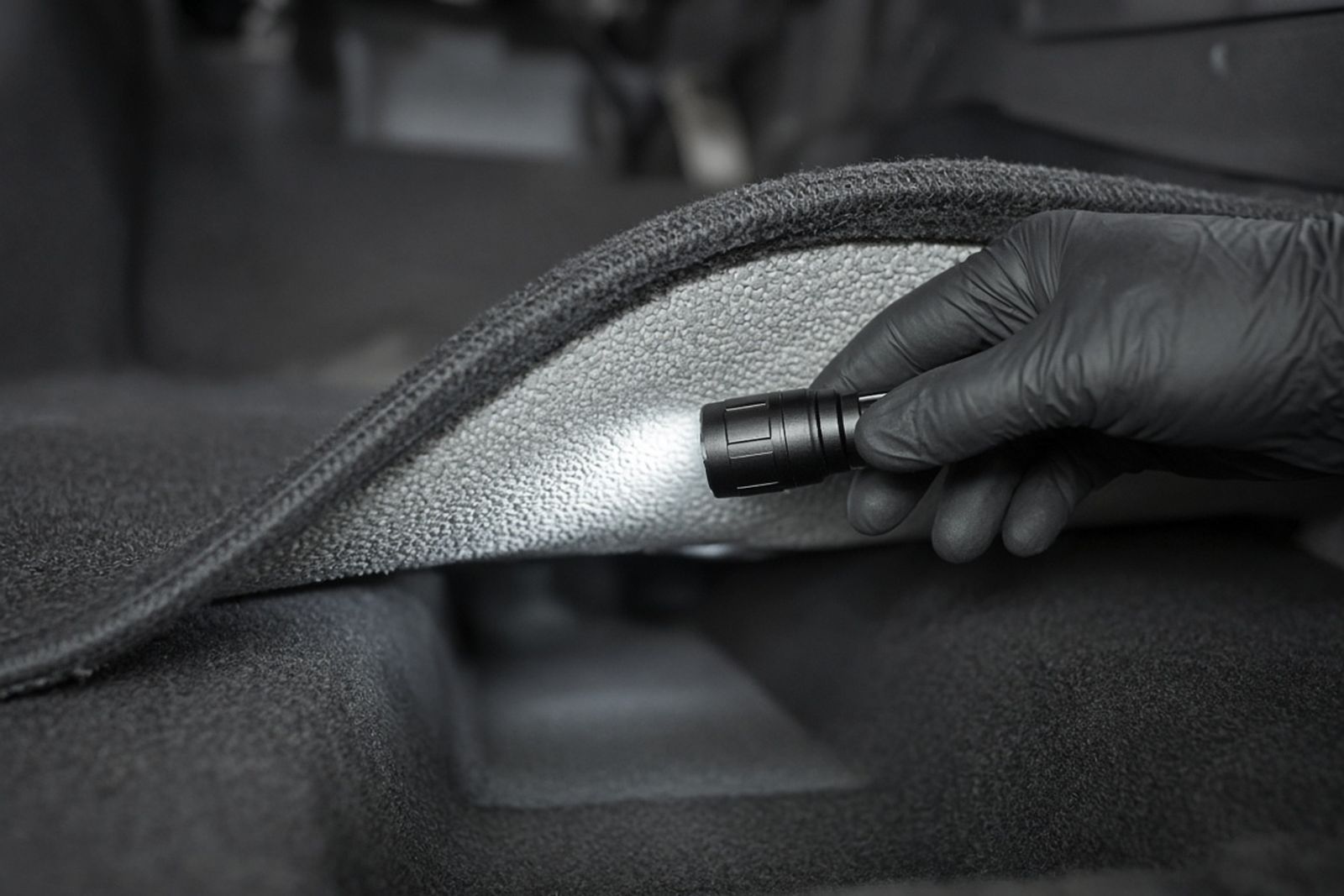
DIY vs Professional Vehicular Biohazard Cleanup: The Critical Differences
A little vomit on a rubber mat is a DIY job. Blood in seat foam is not. Learn where the line falls for vehicle biohazard cleanup and what pros do differently.
DIY vehicle cleanup is reasonable for small, fresh messes on hard or removable surfaces, such as vomit on a rubber floor mat, if you wear gloves and use a registered disinfectant correctly. Professional help is the safer choice when blood or body fluids reached fabric seats, foam, carpet, belts, or vents, when the vehicle sat before cleanup, or when the incident involved a death, serious injury, or crime.
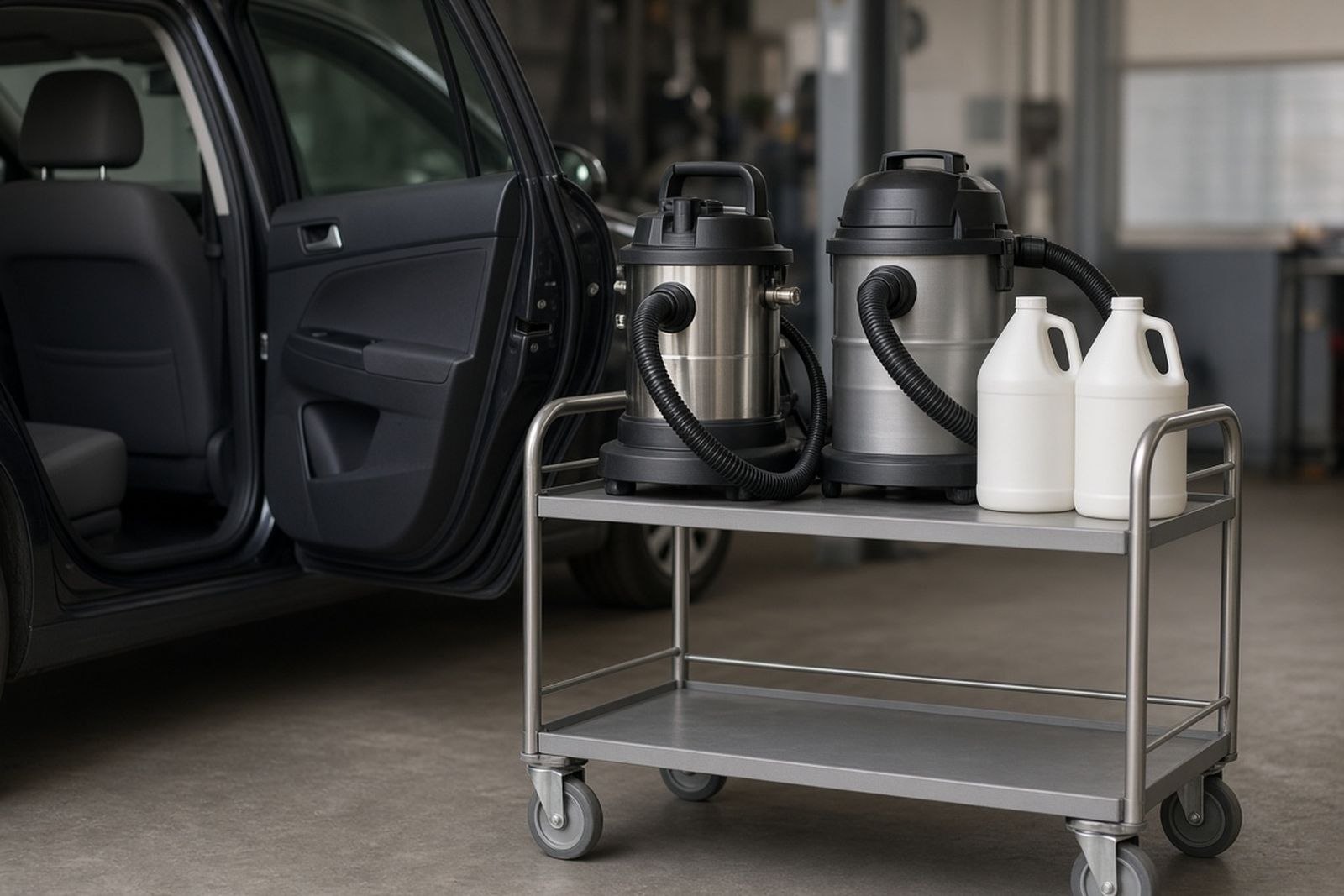
10 Vehicular Biohazard Cleanup Safety Risks to Assess Before Work Begins
Vehicle biohazard work mixes bloodborne pathogens with airbags, broken glass, high voltage, leaking fluids, and roadside traffic. Review ten risks before work.
Before cleaning a vehicle after a biohazard event, assess ten risks: bloodborne pathogens, sharps and broken glass, undeployed airbags, battery and high-voltage systems, leaking automotive fluids, chemical fumes in a closed cabin, heat and awkward work positions, the vehicle's location and stability, investigative or legal holds, and the emotional impact on the people involved. Each one shapes how and when the work can safely begin.
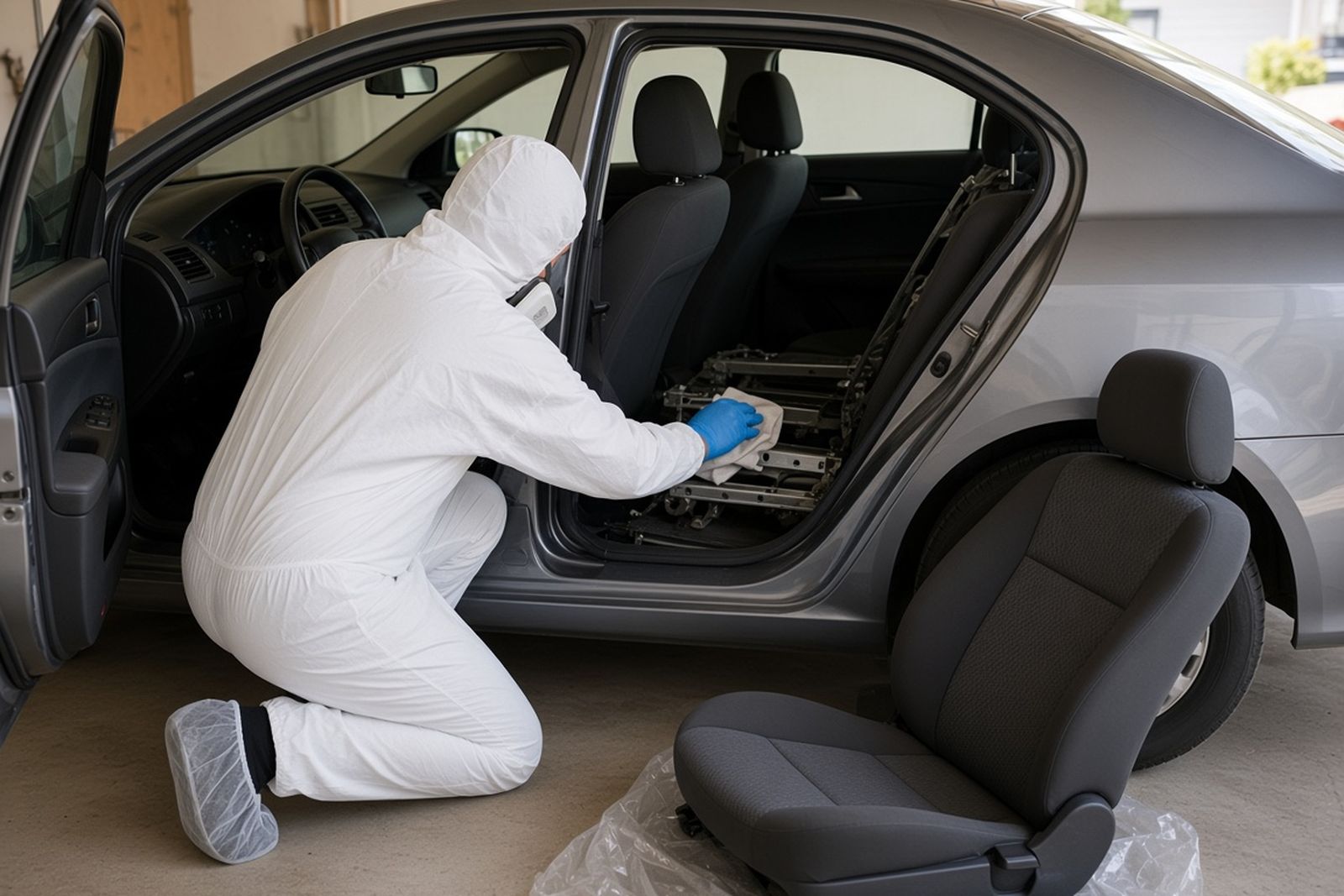
PPE Planning for Vehicular Biohazard Cleanup: Start With the Hazard Assessment
Car and truck cabins mix body fluids, broken glass, hidden sharps, cleaning vapors, and cramped postures. See how a walkaround assessment sets technician PPE.
PPE for vehicle biohazard technicians should follow a walkaround hazard assessment of the specific car, truck, or bus. Most jobs call for layered gloves that resist both fluids and cuts, eye and face protection, fluid-resistant coveralls, and knee protection for cramped work. Respirators become necessary when agitating dried material, removing upholstery, or using strong cleaners and treatments in a closed cabin. Damaged electric vehicles need specialist clearance first.
Sourced figures on safety
- 2,500
About 2,500 norovirus outbreaks are reported in the United States each year, and the virus can persist on surfaces for days or weeks and resists many common disinfectants.
Read with care: Reported outbreaks undercount true illness burden.
Source: CDC (2024)United States, reported outbreaks per year
- 214
214 of 429 samples grew bacteria.
Read with care: Detection is not infection; small local fleet; most isolates were environmental flora.
Source: Noh et al. (2011)13 Seoul ambulances; 33 sites each, 429 samples.
- 1 in 3
About one in three people carry Staphylococcus aureus on their skin or in their nose, according to CDC.
Read with care: Carriage of staph is not the same as MRSA carriage or infection.
Source: CDC (2024)General population, United States
These figures are public research and agency data, not this network's own job records. Keep each number with its population, year and limits; none of them predicts cost, timing or outcome at a specific property.
What research has found
Findings from published studies of people and properties in situations like this one. They describe what researchers observed in a specific group; they are not predictions for your case.
Detected pathogens included MRSA, resistant coagulase-negative staphylococci and Klebsiella pneumoniae.
Cleaning practices varied and were not consistently standardised.
Safety: common questions
Is it safe to drive the vehicle to a cleanup facility myself?
That depends on how bad the mess is and how comfortable you feel. If fluids are limited and covered, some owners drive with the windows open, without touching the affected areas. Arrange a tow instead if fluids reached seats you must sit on. Also tow it if decay is involved or there may be needles or other sharp objects. Ask the provider what it suggests before you move the vehicle.
What should I do if I spot a needle under a seat?
Do not reach for it or try to pick it up with your fingers. Close the vehicle, keep children and pets away, and tell the provider exactly where you saw it. Professionals use tools and puncture-resistant containers to remove sharps. If you were stuck by a needle, wash the area and contact a healthcare provider promptly.
Are home air fresheners harmful after a biohazard spill in a vehicle?
They are not a safety fix. Fresheners cover odor without removing its source. Layering scent over residue can make it harder for a worker to find where germs remain. Some products also leave oily films on surfaces that need disinfecting. Leave the cabin untreated and aired out until the provider has checked it.
Is it safe for children to ride in the vehicle after a professional cleanup?
The vehicle should be ready for all passengers once three things are true. The work is complete, the cabin has aired out, and the provider has confirmed that treatment products have cleared as their labels direct. Ask the provider about child car seats in particular. Some makers advise replacing a seat that was badly soiled. If a child feels anxious about the car, give them time and comfort.
What should I do if I get a cut while near the contaminated vehicle?
Wash the cut right away with soap and running water, and cover it. The cut may have come from something in the vehicle, such as broken glass or a needle. Or blood or fluid may have gotten into it. If so, contact a doctor or nurse right away and explain what happened. Do not wait to see whether symptoms show up. Keep the object sealed up for the provider instead of throwing it away.
Are cleaning product fumes in a closed car a real risk?
Yes. A cabin is small, so fumes build up fast. Mixing products, such as bleach with cleaners that contain ammonia, can release harmful gases. Keep the doors open while you use any product. Never mix products, and let the cabin air out before driving. People with asthma or chemical sensitivity should stay away until the smell has cleared.
Should anyone who is pregnant avoid the vehicle until it is cleaned?
It makes sense for anyone who is pregnant to stay away from soiled areas. Let others handle getting items out and cleaning up. Many cleaning chemicals and odor treatments are also best avoided during pregnancy until the cabin has aired out. If there was any contact with blood or fluids, tell your doctor or nurse. Once the job is done, normal use can usually start again.
Related community polls
Every count is a real visitor vote; nothing is seeded or padded. One vote per poll per device, and you can change your answer.
If a passenger became ill in your car, what would you most likely do first?
Would you keep driving a vehicle where blood reached the seat foam if it looked clean afterward?
More on vehicular biohazard cleanup
Vehicular Biohazard Cleanup services
Learn what cleanup of a car, van, RV, or boat involves after blood, illness, or death. It covers checking foam and belts, the air system, and waste.
Costs explained
What drives the price, published cost ranges, and how to read a written quote line by line.
Insurance and payment
Which policies may respond, how to document a claim, and what to do if coverage is denied.
Planning tools
Estimate the job for your vehicle, check a provider, organize an auto claim, and plan the first day. Sort removed materials and see whether you should touch the cabin.
Community polls
See how other owners, rideshare drivers, and fleet managers handled soiled vehicles. Views range from first reactions to total-loss offers and what to tell buyers.
Knowledge quiz
Test what you know about soaked foam, seat belts and airbags, the car's air paths, regulated waste, and when an insurer may total the vehicle.