Short answer
DIY vehicle cleanup is reasonable for small, fresh messes on hard or removable surfaces, such as vomit on a rubber floor mat, if you wear gloves and use a registered disinfectant correctly. Professional help is the safer choice when blood or body fluids reached fabric seats, foam, carpet, belts, or vents, when the vehicle sat before cleanup, or when the incident involved a death, serious injury, or crime.
Messes you can reasonably handle yourself
Many vehicle messes are unpleasant but manageable. A child gets carsick on a rubber floor mat. A small nosebleed leaves a few drops on a vinyl seat. A pet has an accident on a waterproof cargo liner. If the fluid is fresh, limited in amount, and sitting on a hard or removable surface, a careful DIY cleanup is usually fine.
Removable items help a lot. Floor mats, seat covers, cargo liners, and child seat covers can come out of the vehicle and be cleaned outdoors, washed according to their care labels, or replaced.
The line is crossed when fluid soaks into something you cannot remove or fully reach. Once blood or body fluids pass into seat foam, carpet padding, or belt webbing, surface cleaning leaves contamination behind.
Leather and sealed vinyl sit in between. A small, fresh spot on smooth leather can often be cleaned at home, but perforated or ventilated seats, stitching, and seams let fluid pass into the cushion. If the spot sat on a perforated seat, assume it went deeper than it looks.
Cleaning a small mess safely
Treat any body fluid as potentially infectious. Wear disposable gloves, and add eye protection if there is a chance of splashing. Open the doors for ventilation.
Remove solid material first with disposable towels, then clean the surface with soap and water or a cleaner suited to the material. After cleaning, apply a disinfectant registered for the germs of concern and keep the surface wet for the full contact time on the label. Wipe dry afterward if the label allows.
Some germs are hardy. CDC reports that about 2,500 norovirus outbreaks are reported in the United States each year, and the virus can persist on surfaces for days or weeks and resists many common disinfectants. If vomit is involved, look for a product that lists norovirus on its label.
Bag used towels and gloves, tie the bag, and wash your hands thoroughly. Clean door handles and anything else you touched during the process.
Check your owner's manual before using any product on screens, instrument clusters, or leather. Some manufacturers list specific cleaners to avoid, and a disinfectant that is fine on a kitchen counter may cloud a display or dry out leather.
- Disposable gloves and eye protection
- Paper towels or disposable cloths
- A cleaner suited to the surface
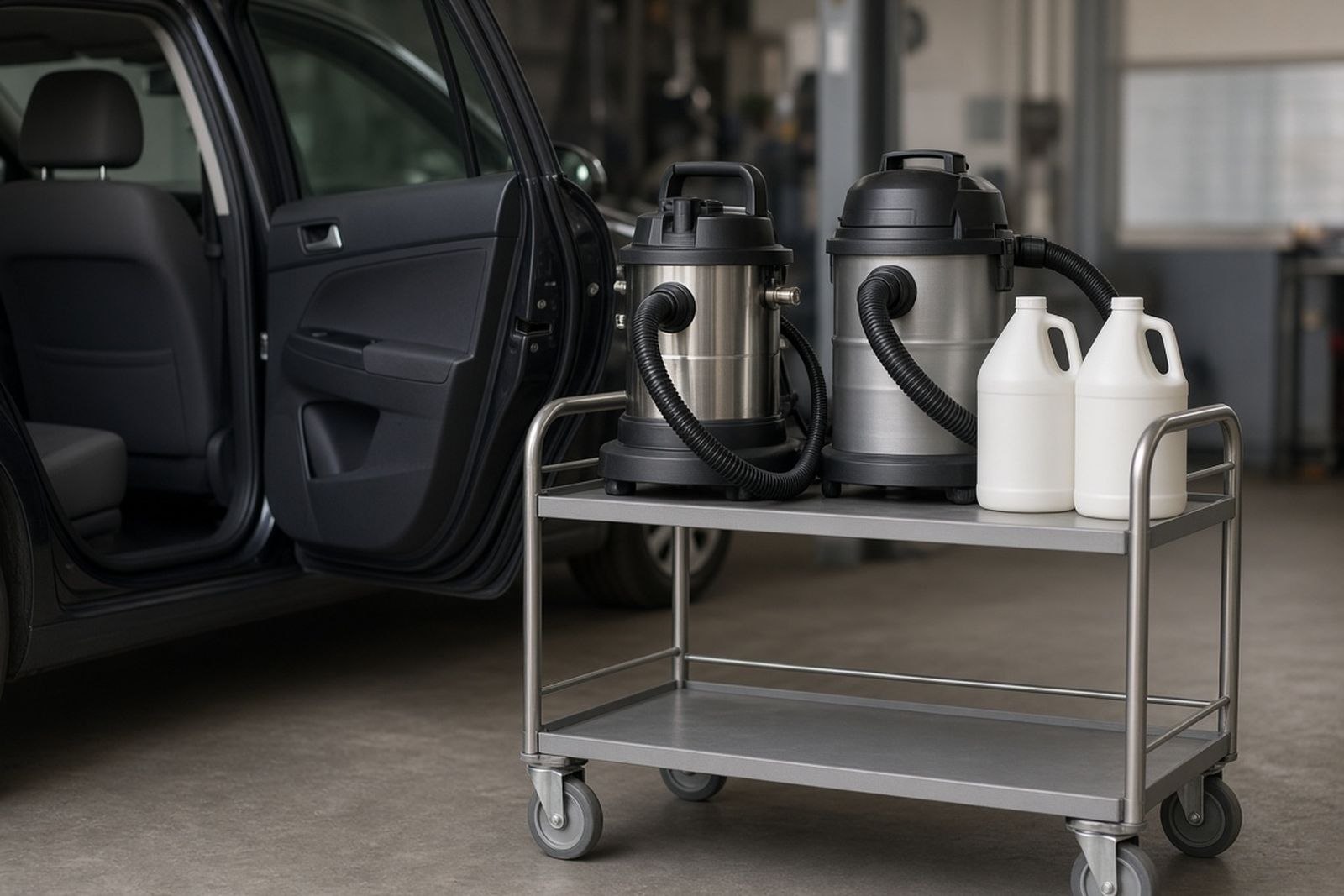
- A registered disinfectant with the right label claims
- Trash bags you can tie shut
Common DIY mistakes that make things worse
The most common mistake is shampooing or steam-cleaning fabric seats and carpet after a large amount of fluid. Adding water and scrubbing can push contamination deeper into the foam and spread it outward, while leaving the cabin damp enough to encourage odor and mildew.
Another is relying on air fresheners or odor bombs. They cover the smell for a while but leave the source in place. When the vehicle warms up, the odor returns, sometimes worse.
Harsh household products cause their own damage. Bleach can discolor fabric and carpet, weaken seat belts, and harm dashboard plastics. Mixing products can release dangerous fumes in a confined cabin.
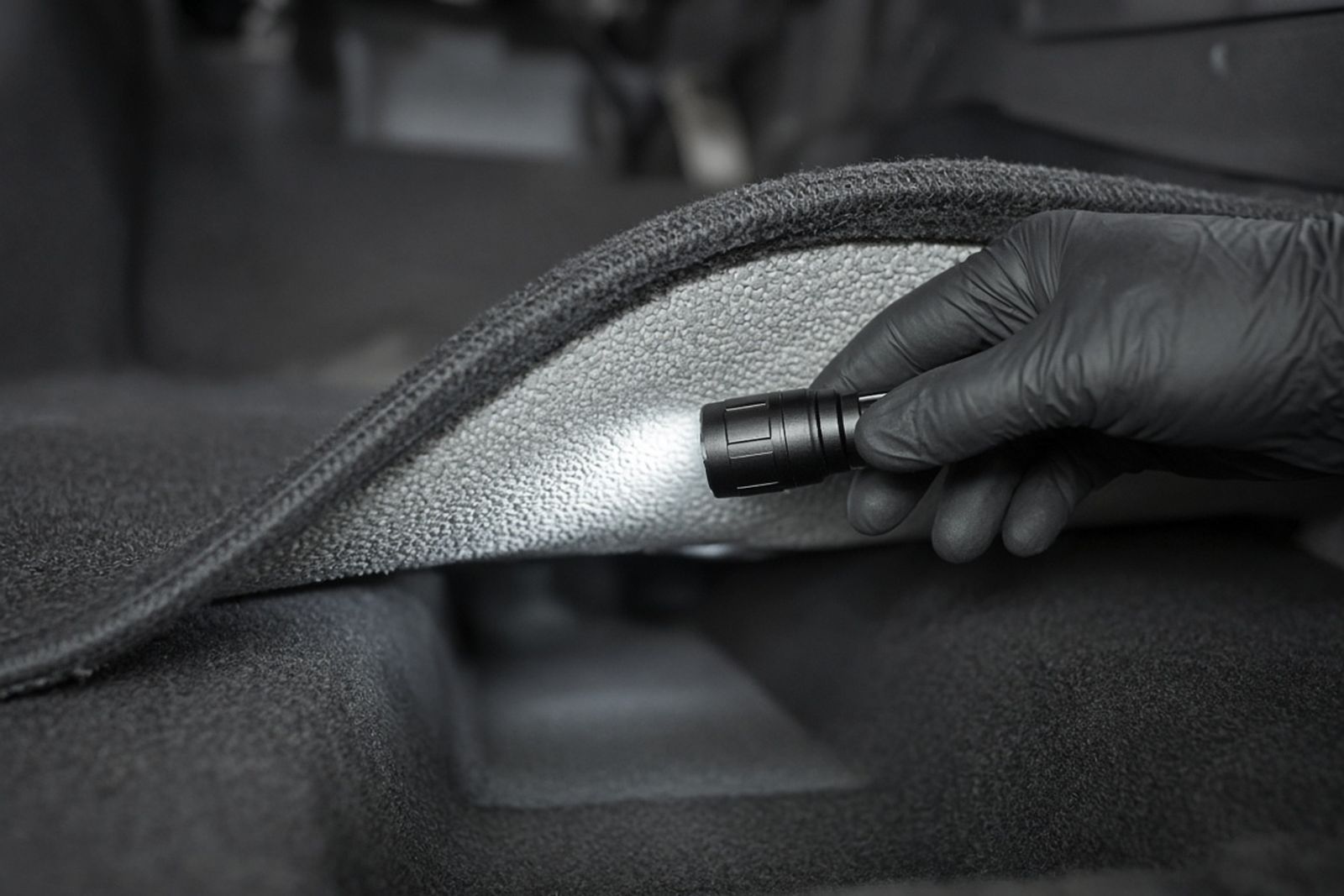
Finally, many people skip the places they cannot see: the seat rails, the underside of the cushion, the belt retractor, and the vents. Those hidden areas are where odor and contamination linger.
When to call a professional instead
Call a professional when the amount of fluid is more than a small spot, when it reached fabric seats, carpet, or belts, or when you cannot tell how far it traveled. The same applies if the vehicle sat closed for hours or days before cleanup, especially in warm weather.
Some situations call for professional help regardless of size. After a death in a vehicle, a serious injury, a crash with significant bleeding, or an incident investigated by police, the vehicle should be released by the investigating agency and then cleaned by trained technicians.
It is also completely reasonable to hire help simply because you do not want to see or handle what happened. Protecting your own well-being is a valid reason.
Commercial vehicles bring extra considerations. If you manage rideshare cars, taxis, buses, or company trucks, your organization may have its own exposure control plan, and employees asked to clean body fluids may need training and protective equipment under workplace rules. Check those obligations before assigning cleanup to a driver.
What professionals do that DIY cannot
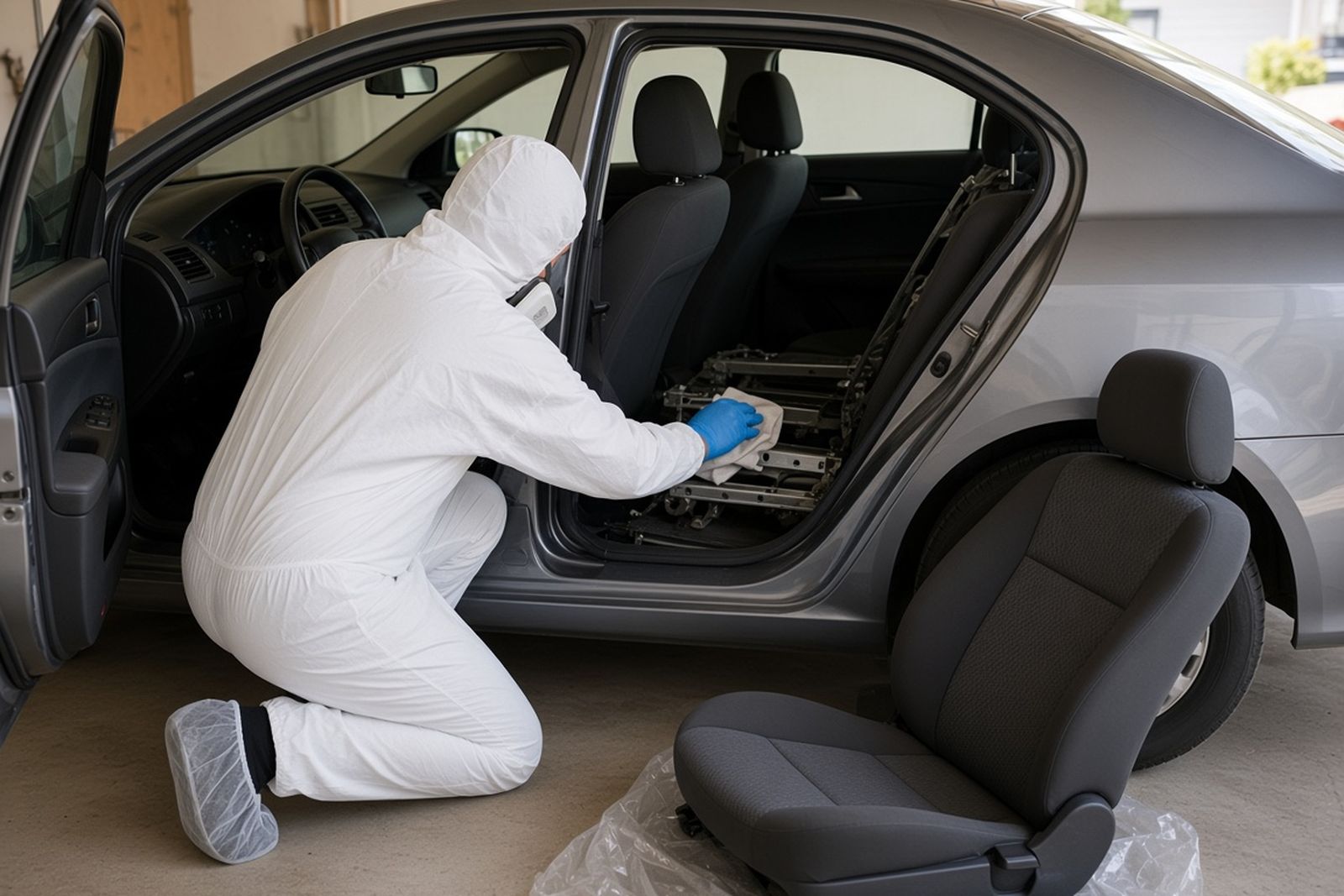
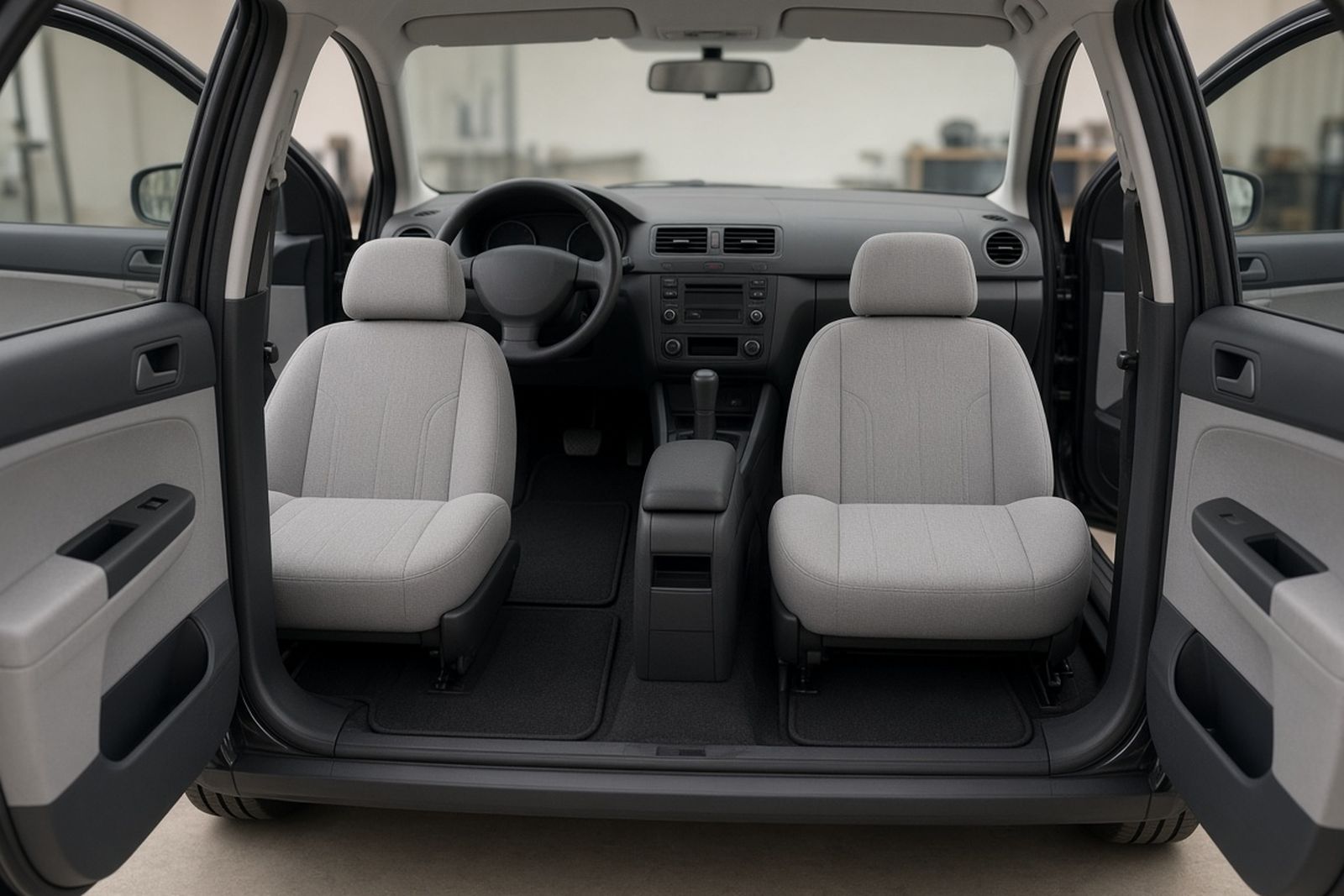
Professionals take the interior apart. They remove seats, trim, and carpet to reach contamination on rails, floor pans, and seams. They replace components that absorbed fluid instead of trying to clean them, including seat foam, carpet sections, and belts.
They use protective equipment and follow bloodborne pathogen procedures, choose disinfectants based on both the pathogen claims and compatibility with automotive materials, and treat the HVAC system so contaminated air does not keep circulating.
They also handle waste properly. Contaminated seats, carpet, and cleaning materials may need to be packaged and transported as regulated medical waste rather than placed in household trash. At the end, you receive documentation of what was done, which can help with insurance or resale.
Professionals also have better access to replacement parts. They know which components can be sourced for your make and model, how to reinstall seats with airbags and sensors correctly, and how to check that no warning lights remain once the job is done.
Are there health risks in doing it myself?
Yes, and they are often underestimated. Blood can carry bloodborne viruses, and some remain infectious on surfaces for days or longer. Broken glass or sharp trim can cut through gloves and skin while you work.
Bacteria are common passengers too. CDC notes that about one in three people carry Staphylococcus aureus on their skin or in their nose. In a confined cabin with many shared touch points, germs from a mess spread easily to door handles, steering wheels, and buttons if cleanup is rushed.
If you do handle a small mess yourself and get fluid in your eyes, mouth, or a cut, wash the area right away and contact a health care provider for advice.
Chemical exposure is a risk as well. Using strong cleaners in a closed cabin can irritate your eyes and lungs, so keep doors open, take breaks in fresh air, and never combine products.
Signs a DIY attempt has failed
The pattern below is a made-up but typical case. A college student drives a friend home after a party, and the friend is sick in the back seat. The student cleans the cloth seat with paper towels and a household spray, then shampoos it with a rented upholstery cleaner the next day.
For a few days, the car smells of shampoo. Then the weather turns warm, and a sour smell fills the cabin every time the car sits in the sun. The student tries an odor bomb, and the smell fades briefly before returning.
A professional inspection finds that fluid soaked through the seat cover into the foam and dripped onto the carpet under the seat. The rear cushion foam and a small carpet section are replaced, the floor pan is cleaned and disinfected, and the cabin filter is changed.
The warning signs were clear: a smell that grew with heat, temporary relief from fragrances, and a mess that had been on fabric rather than a hard surface.
DIY vs professional: the cost comparison
DIY supplies for a small mess cost little. The cost comparison changes once fluid reaches foam or carpet. Repeated shampooing, odor products, and eventual professional work can cost more in total than calling a professional first.
Professional pricing depends on the vehicle, the extent of contamination, and which parts need replacement. Ask for a written scope and compare proposals by what they include, especially removal of saturated materials and waste handling.
Check your auto policy too. Some policies may cover cleanup after certain incidents, but coverage varies. Ask your insurer before work begins.
Resale is worth considering. A vehicle with a lingering odor or visible staining can lose value, and a buyer or dealer may ask about it. Documentation from a professional cleanup can reassure a future buyer in a way that a receipt for shampoo cannot.
The safest first step
If the mess is small, fresh, and on a hard or removable surface, clean it carefully with gloves and a registered disinfectant. If it is larger, reached fabric or foam, or involves a death or serious injury, close the doors, avoid driving the vehicle, and call a professional.
If the situation involved a suicide or another traumatic loss, the 988 Suicide and Crisis Lifeline is available by call or text at any hour. Disposal requirements for fluid-soaked seats, carpet, and cleaning waste differ from place to place, and your county health department's environmental health office can tell you what applies where you live.