Short answer
Red flags when hiring a vehicular biohazard cleanup service include a detailing shop with no bloodborne pathogen training, a quote given without seeing the vehicle, no plan to remove seat foam or carpet padding, no answer on regulated waste disposal, no coordination with your insurer or tow yard, and pressure to decide on the spot. A qualified provider explains removal, disinfection, and documentation.
Why hiring for a vehicle cleanup carries special risks
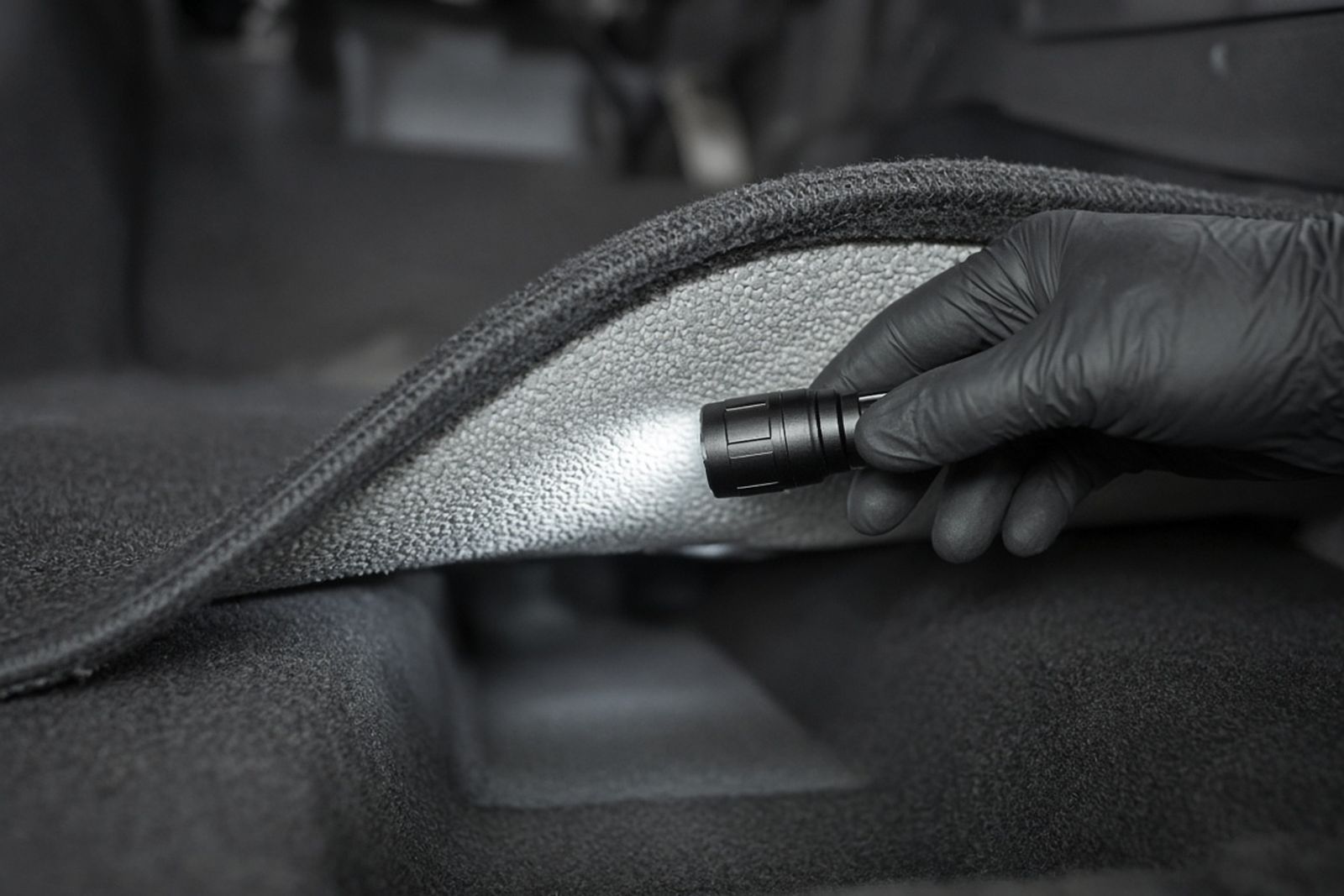
A vehicle is a small, tightly packed space made of materials that soak up fluids. Seat cushions are foam, carpets sit on thick padding, and seams, seat tracks, and seat belt retractors all trap residue out of sight. When blood or other body fluids enter that space, surface wiping rarely reaches everything.
That creates an opening for providers who are good at making a car look clean but are not trained to make it safe. A detailed interior can look spotless while contamination remains in the foam under a seat cover.
You may also be making this decision at a hard moment. The vehicle may belong to a family member who was hurt or died, and a tow yard or insurer may be pressing for an answer. Knowing the warning signs ahead of time helps you choose carefully even when you feel rushed.
Is a regular auto detailer a red flag?
Detailers do valuable work, and some also hold biohazard training. The warning sign is not the word detailing on a truck. It is a company that treats a blood-contaminated interior as a heavy cleaning job rather than a biohazard job.
Ask directly whether the technicians have completed bloodborne pathogen training and whether the company has a written exposure control plan. A company that has never heard of that plan is not set up for this work.
Also ask about protective equipment. Gloves alone are not enough when technicians are pulling seats and cutting out carpet. Expect talk of eye protection, fluid-resistant coveralls, and respiratory protection where appropriate.
- No bloodborne pathogen training for the crew
- No written exposure control plan
- Plans to use household cleaners or steam alone
- Describing the job as a deep clean or interior shampoo
- No mention of personal protective equipment beyond gloves
What a quote should include
It is hard to price a vehicle cleanup without seeing it or at least reviewing detailed photos. The extent of contamination under seats, in the headliner, and behind panels drives the work. A firm number over the phone suggests the company is not planning to look.
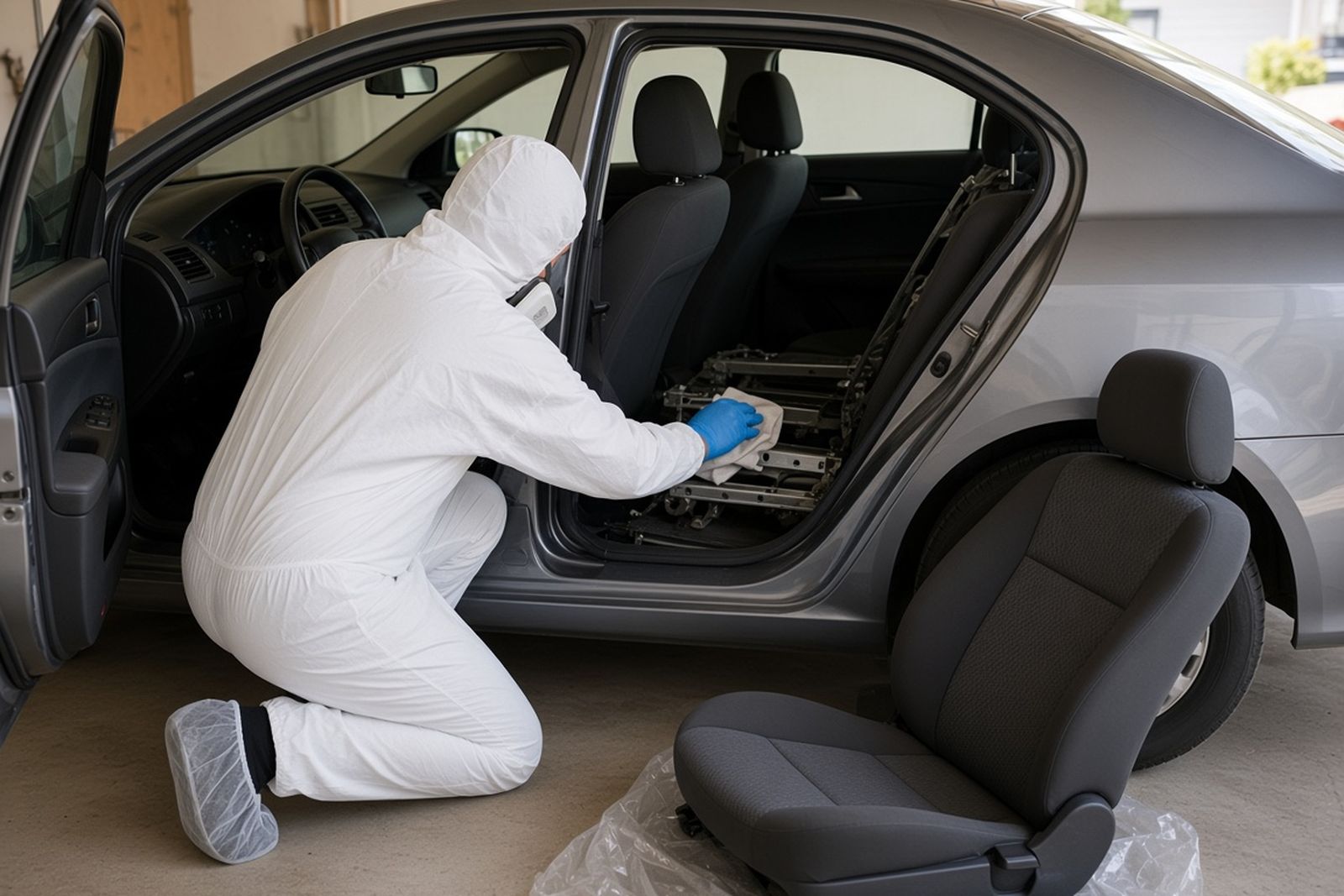
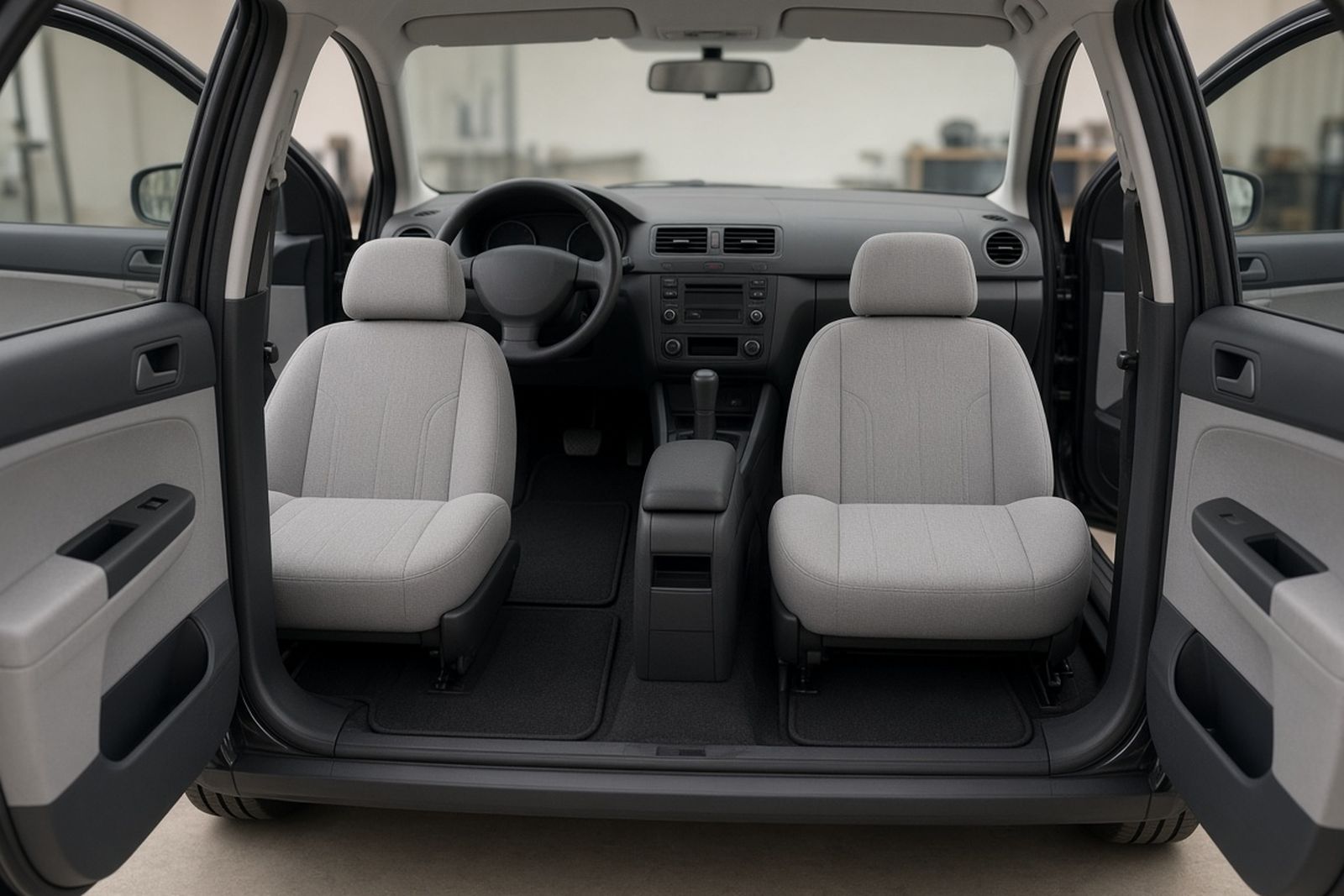
A strong estimate names the affected zones and says what will be removed. Seat foam, carpet, and padding that absorbed fluid often cannot be cleaned reliably and may need to be replaced. Seat belts that were contaminated are a safety component, so a careful provider will flag them for replacement rather than scrubbing and reinstalling them.
Look for mention of airbags as well. If airbags deployed, the residue and damaged modules need attention, and only a qualified repair shop should handle airbag system replacement. A cleanup company should tell you which parts of the job it will do and which belong to a mechanic or body shop.
Signs a company is skipping real disinfection
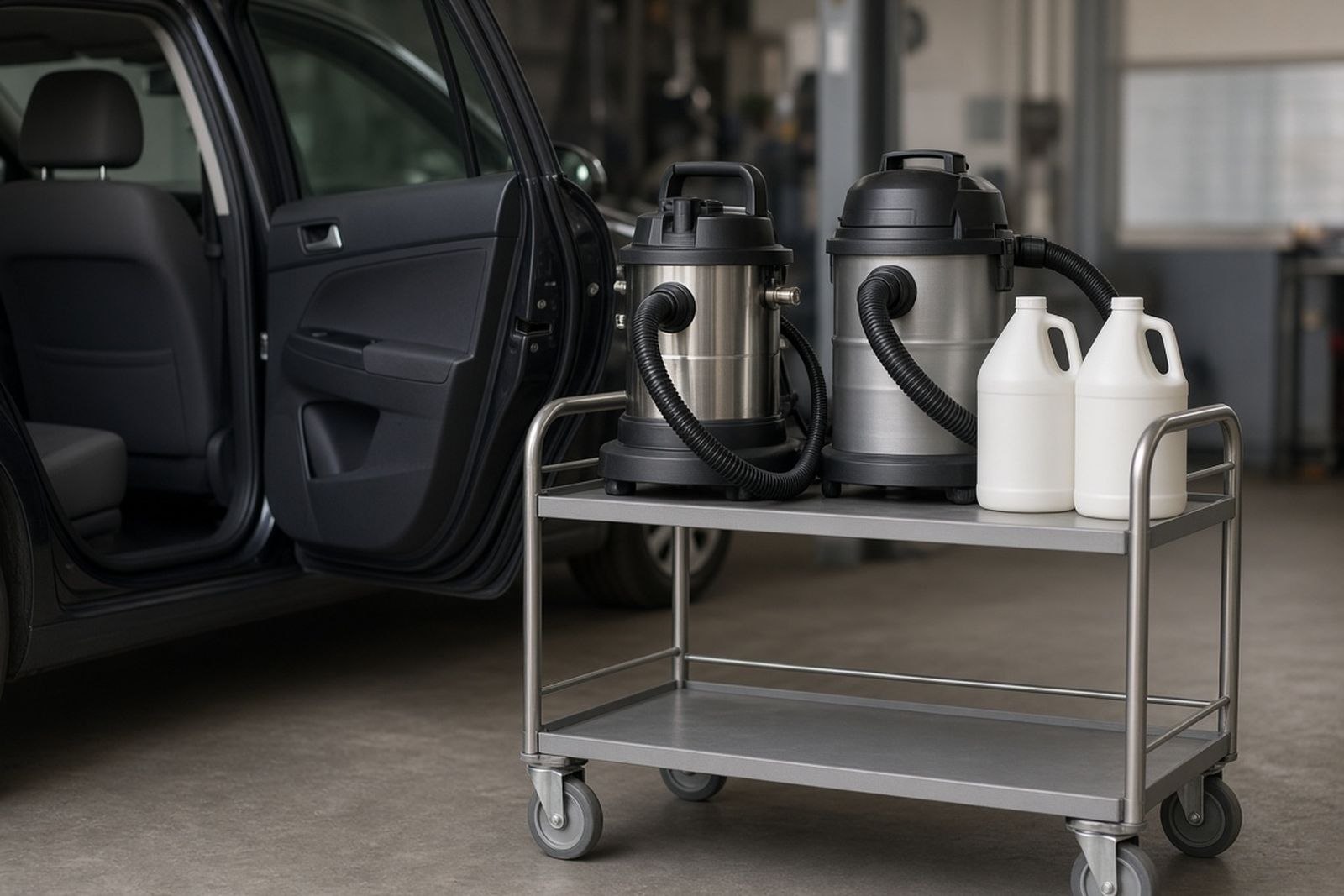
Cleaning and disinfection are separate steps. Cleaning removes visible soil and residue. Disinfection uses a registered product at the correct dwell time to inactivate microorganisms on the surface that remains.
Ask which disinfectant the company uses and whether it is registered for the pathogens of concern. The product label lists what it is registered to kill. A provider should be able to name a product and tell you how long it must stay wet.
Disinfection matters because some pathogens stay infectious on surfaces well after a spill dries, so time alone does not make a stored car safe.
Be wary if the answer is we use a strong cleaner, or if the plan involves fogging the cabin without first removing and cleaning the soiled materials. A fog cannot reach inside saturated foam.
Disposal and paperwork red flags
Materials pulled from a contaminated vehicle may need to be handled as regulated medical waste, depending on how saturated they are and on your state's rules. That means specific packaging, labeling, and a licensed transporter or treatment facility.
Ask where the waste will go. A clear answer names the process and the type of facility. A red flag is a shrug, or a plan to bag everything and put it in a dumpster behind the shop.
Documentation is the other half. You or your insurer may want photos before and after, a list of removed parts, and a disposal record. Never assume any of it can go out as ordinary trash; that is decided by your state's medical waste rules, not by the provider's convenience.
Ask, too, whether you will receive a copy of any waste manifest or disposal receipt. Some providers include it automatically, while others provide it only on request. Having it in your file can answer questions from an insurer or a future buyer about how the contaminated materials were handled.
What a red-flag phone call sounds like
Warning signs often arrive together in a single call, typically while a truck or car sits in a storage yard and daily fees are about to rise. A mobile service advertising biohazard detailing quotes a flat price without asking questions, promises to be done in an hour, and says an extraction treatment will leave saturated seats like new. Asked about a contaminated seat belt, it offers to wipe it down. Asked about the waste, it says the regular trash.
That one conversation contains several warning signs: a price without inspection, no removal plan for saturated foam, a safety component treated as cleanable, and no regulated disposal. A better provider asks for photos, explains that the saturated seat cushion and carpet section will be removed, recommends that the belt be replaced by a repair shop, and describes how the waste will be packaged and documented for the insurer.
Pressure tactics and insurance promises
Pressure often comes from the situation itself: storage fees, a rental car clock, or a family that needs a vehicle back. Some providers use that stress to push quick decisions.
Warning signs include insisting that you sign before seeing a written scope, claiming a price is only good for the next hour, or telling you that other companies will ruin the vehicle. A trustworthy provider accepts that you may want to compare two or three quotes and will send its scope in writing.
Be careful, too, with any company that approaches you first. If someone contacts you after an accident without being called, ask how they got your information before sharing anything.
If you feel rushed, it is reasonable to ask the tow yard or storage lot whether fees can be paused while you gather quotes, or whether the vehicle can be moved to a covered bay. Many families never ask, and a short call can buy you a day or two to decide without pressure.
Coverage for vehicle biohazard cleanup depends on your policy and the circumstances. Comprehensive or collision coverage may apply in some cases and not in others. A cleanup company can document the damage and talk with your adjuster, but it cannot promise approval.
A red flag is a provider who says insurance always pays or who wants you to sign over your claim before your adjuster has seen the vehicle. Another is a company that starts work without checking whether the insurer wants to inspect first, which can complicate a claim.
Sometimes the honest answer is that the cost of removal and replacement approaches the value of the vehicle. A provider who raises that possibility, and suggests you ask your adjuster about a total loss before work begins, is looking out for you.
Signs of a provider worth trusting
The strongest providers slow the conversation down in a helpful way. They ask where the vehicle is, how long it has sat, and whether the insurer or law enforcement needs to release it first.
They explain what they will remove, what they will clean and disinfect, and what needs a mechanic. They name their disinfectant and its dwell time, describe how waste will be packaged and where it goes, and send a written scope with photos. They also treat you with patience, because they understand that a contaminated vehicle is often tied to someone you care about.
Before you hire, it can help to write down three things each provider told you: what it plans to remove, which disinfectant it plans to use, and where the waste will go. Comparing those answers side by side usually makes the difference between a biohazard provider and a cosmetic cleaner obvious. It also gives you a simple record to share with your adjuster if questions come up later.