Vehicular Biohazard Cleanup: Industry Insights
Operational analysis of vehicular biohazard cleanup documentation, property-type differences, technology limits, environmental decisions, and provider business models—without invented case histories.
Industry posts look at how vehicle cleanup has changed and where it is heading. They cover the growing overlap between trauma cleanup firms and fleet service contracts. They show how rideshare and delivery work has changed who calls for help. They cover the differences between business and private vehicle jobs. They look at environmental questions about throwing away foam and carpet. And they show how providers build a scope that holds up and that adjusters can follow. They also look at how property managers handle vehicles left behind in parking garages. And they show how planning examples help owners see what a complete scope looks like before a single seat is unbolted.
Get an email reply about vehicular biohazard cleanup
Send a short message to the follow-up inbox. A coordinator can reply by email. This form does not send emergency help; call 911 first if anyone is in danger.
These trends matter because they shape the service you get. A provider used to fleet contracts may record vehicle numbers and times well. But it may handle a family car differently. A trauma firm may be good at being sensitive but new to taking vehicles apart. Knowing the field helps you ask about a provider's real experience with your type of vehicle. Do not assume every biohazard company works the same way. These posts also help fleet managers compare vendors on consistency and record-keeping. They help private owners notice when a network has passed a job to another company with little vehicle experience. Asking about recent jobs on your kind of vehicle often tells you more than asking about years in business.
How Vehicular Biohazard Cleanup Practice Has Changed
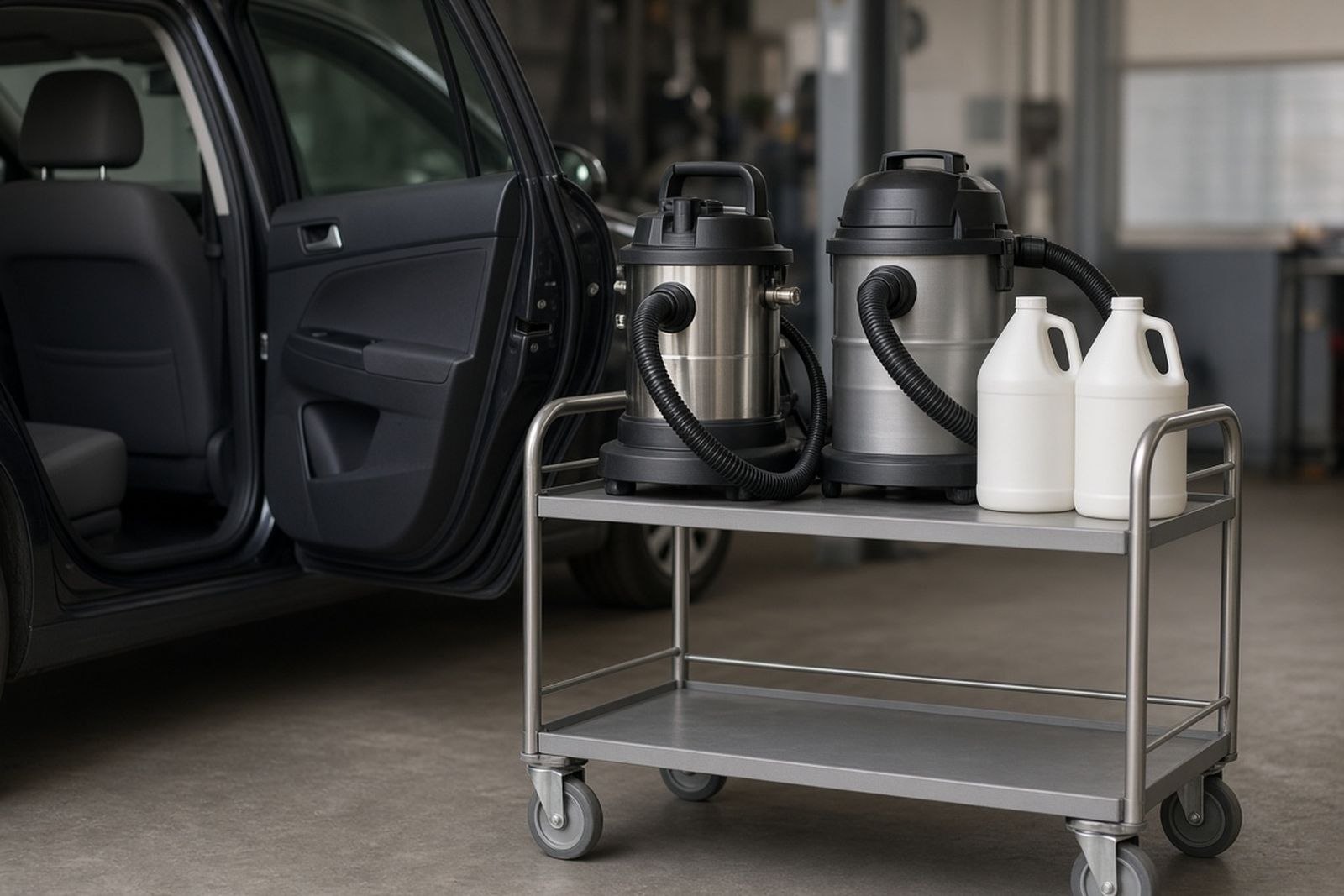
Vehicle biohazard cleanup grew from tow-yard scrubbing into a trained specialty with registered disinfectants, parts removal, and records. Here is the story.
Vehicular biohazard cleanup has moved from informal scrubbing by tow yards, dealers, and families to a specialty built on bloodborne pathogen training, registered disinfectants used by label directions, removal of saturated materials, regulated waste handling, and detailed records for insurers. Research on ambulance contamination and the growing complexity of modern vehicles both pushed the field toward more careful, documented methods.
Vehicular Biohazard Cleanup for Property Managers: What You Need to Know
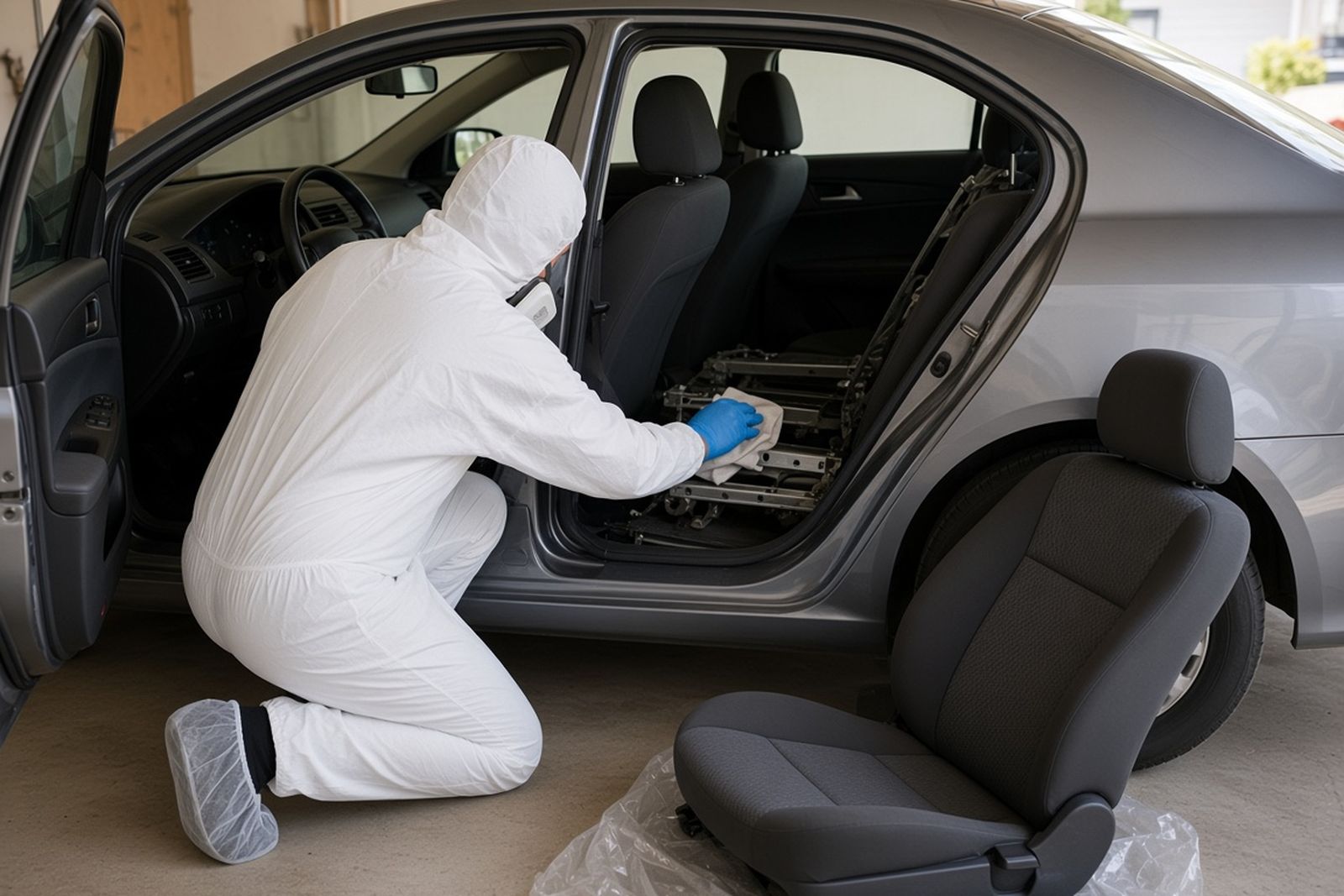
When a biohazard incident involves a car in your garage or lot, ownership, release holds, and pavement cleanup all matter. A property manager's practical guide.
When a vehicle biohazard incident happens on property you manage, separate two jobs: the vehicle, which belongs to its owner and their insurer, and the parking surface, stall, or structure, which is your responsibility. Secure the area, wait for any police release, coordinate with the vehicle owner or tow company, and hire a qualified provider for the pavement and nearby surfaces with written documentation.
Vehicular Biohazard Cleanup Planning Example: Building a Defensible Scope
A hypothetical SUV released from a medical examiner hold shows how to scope a vehicle cleanup by component, document every removal, and set a clear finish line.
A defensible vehicle cleanup scope breaks the cabin into components, records what each one showed on inspection, and states whether it will be cleaned, disinfected, or removed and replaced, with the reason. It also sets the order of work, names who approves changes, and defines how the vehicle will be checked before return. This hypothetical SUV example shows each step and the records it produces.
Commercial vs Residential Vehicular Biohazard Cleanup
Fleet vans, buses, and rideshare cars face downtime, records, and worker rules a family car does not. See how commercial and personal vehicle cleanups differ.
Commercial and personal vehicle biohazard cleanups use the same core steps: inspect, remove saturated parts, clean, disinfect, dry, reassemble, and verify. Commercial jobs add pressure to return vehicles to service, larger cabins such as buses and vans, employer safety duties for drivers and staff, and more documentation. Personal vehicle jobs lean more on privacy, family decisions, insurance claims, and belongings left inside.
Environmental Responsibility in Vehicular Biohazard Cleanup
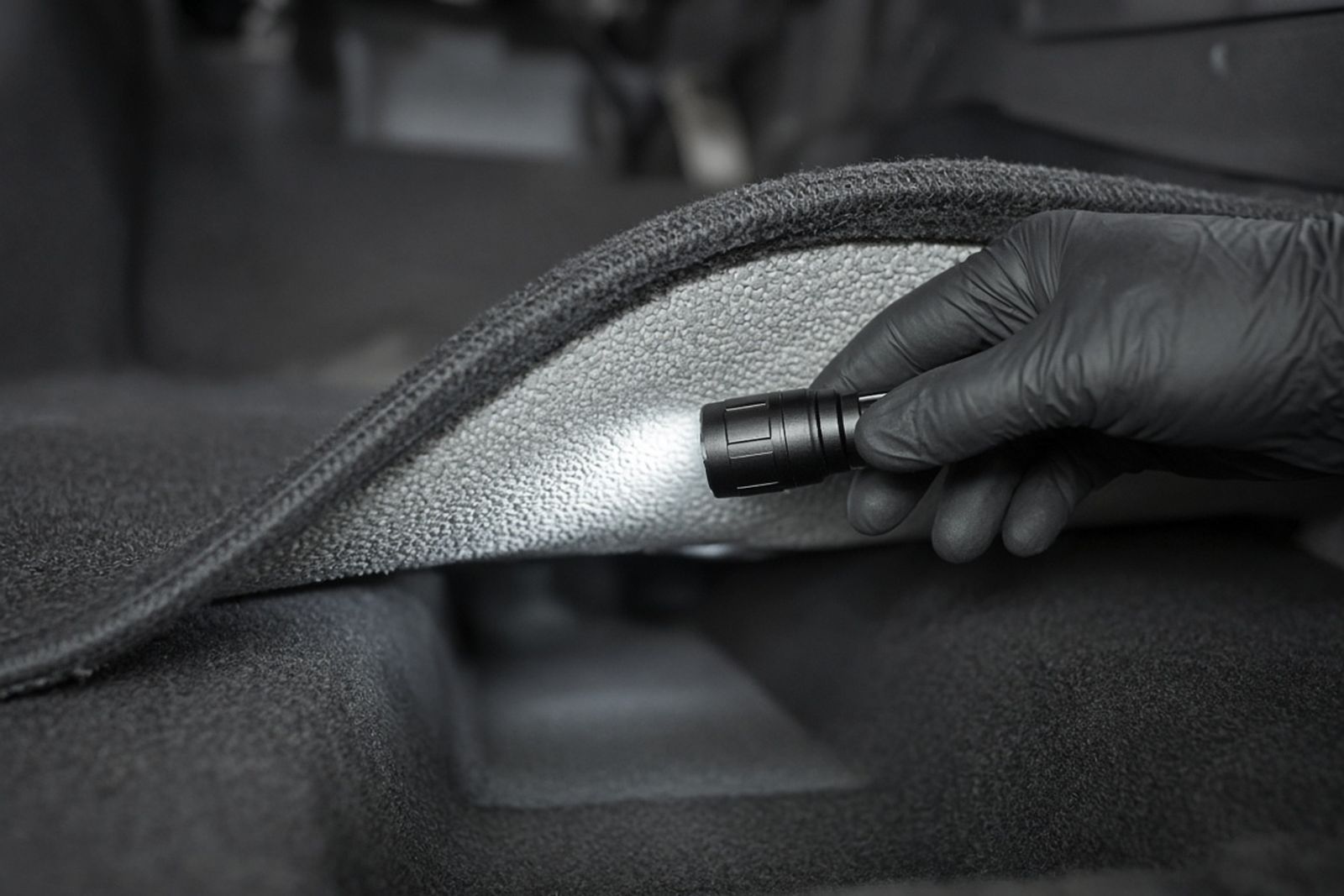
Vehicle cleanups can send seats, carpet, and rinse water into the wrong places. Learn how responsible crews limit waste, protect drains, and choose products.
Environmentally responsible vehicle biohazard cleanup keeps contaminated rinse water out of storm drains, separates biohazard waste from automotive fluids and ordinary trash, removes only the parts that are truly saturated, and uses registered disinfectants in measured amounts. It also saves reusable components where cleaning is reliable and documents where every removed item went. Ask providers how they handle each of these steps.
Sourced figures on industry insights
- 6 weeks
Hepatitis C virus can remain infectious on surfaces for up to 6 weeks at room temperature, according to Yale researchers.
Read with care: Laboratory conditions; real-world infectivity in a hot vehicle cabin may differ.
Source: HIV.gov (U.S. Department of Health and Human Services) (2014)Laboratory study, Yale Schools of Medicine and Public Health, published 2014
- 7 days
Hepatitis B virus remains infectious on environmental surfaces for at least 7 days.
Read with care: Survival depends on conditions; presence of virus does not guarantee transmission.
Source: CDC (2024)General surface persistence, per CDC clinical guidance
- 38.2%
Transportation incidents accounted for 1,937 worker deaths in 2024, 38.2% of all U.S. occupational fatalities.
Read with care: Includes aircraft, rail and water incidents, not just road vehicles.
Source: BLS (2024)United States, 2024, all workers
These figures are public research and agency data, not this network's own job records. Keep each number with its population, year and limits; none of them predicts cost, timing or outcome at a specific property.
What research has found
Findings from published studies of people and properties in situations like this one. They describe what researchers observed in a specific group; they are not predictions for your case.
MRSA and Pseudomonas detected after standard cleaning were not detected in post-fogging samples.
Clinicians reported high awareness of uniform and vehicle cleanliness despite detected contamination.
Industry Insights: common questions
Why do some trauma cleanup companies turn down vehicle jobs?
Vehicle work needs tools, parts knowledge, and an understanding of airbag and seat belt systems. Crews that mostly clean homes may not have these. Some also lack a covered space for taking a vehicle apart, or a way to store soiled parts safely. A company that sends you elsewhere may be showing good judgment. Ask it who it trusts for vehicle cleanup.
How are fleets changing the way vehicle biohazard work is done?
Fleet customers often want the same steps every time, the same product choices, and records they can file for each vehicle. That pressure has pushed some providers toward written checklists, set work areas, and faster record-keeping. Private owners can benefit too. A provider used to fleet records may already make clear final packets.
Are people paying more attention to waste from vehicle cleanup?
Yes. Seats, carpet, and fabric ceilings create bulky waste, and more owners now ask where it goes. Providers must still follow regulated waste rules for soiled materials. But some separate clean trim and metal for normal disposal or recycling when rules allow. Ask how the provider sorts waste and what records you will get.
Why do vehicle cleanup providers work closely with body shops and dealers?
Many vehicle jobs mean replacing seats, belts, carpet, or airbag parts. Those are best put in by repair experts who follow the maker's steps. Teaming up lets the cleanup crew focus on removing the mess and disinfecting. The repair shops handle safety systems and parts. Ask a provider which shops it works with, and how the two plan schedules and share records.
Is demand for vehicle biohazard cleanup changing?
People use vehicles in new ways, such as rideshare, delivery, car sharing, and larger fleets. So more vehicles carry passengers who are not the owner. That raises the chance of incidents. It also raises the need for recorded cleaning before a vehicle goes back into use. Providers are adjusting with faster scheduling, standard reports, and standing deals with fleets.
How do insurers view vehicle biohazard cleanup today?
More and more, insurers expect a line-by-line scope, photos, and records that show what was removed and why. A single cleaning charge is not enough. Clear records help adjusters choose between cleanup and a total loss. Practices differ by insurer, so ask your adjuster what it needs. Providers who often work with insurers usually know what information speeds up a decision.
Are cleanup providers keeping up with electric and hybrid vehicles?
Many are. They learn the maker's steps for shutting off high-voltage systems and staying clear of battery areas. They also team up with dealers or experts when a crash damaged the vehicle. Seats and floors in these vehicles can sit close to battery parts. Ask a provider how often it works on electric vehicles and what steps it takes before work inside begins.
Related community polls
Every count is a real visitor vote; nothing is seeded or padded. One vote per poll per device, and you can change your answer.
If a passenger became ill in your car, what would you most likely do first?
Would you keep driving a vehicle where blood reached the seat foam if it looked clean afterward?
More on vehicular biohazard cleanup
Vehicular Biohazard Cleanup services
Learn what cleanup of a car, van, RV, or boat involves after blood, illness, or death. It covers checking foam and belts, the air system, and waste.
Costs explained
What drives the price, published cost ranges, and how to read a written quote line by line.
Insurance and payment
Which policies may respond, how to document a claim, and what to do if coverage is denied.
Planning tools
Estimate the job for your vehicle, check a provider, organize an auto claim, and plan the first day. Sort removed materials and see whether you should touch the cabin.
Community polls
See how other owners, rideshare drivers, and fleet managers handled soiled vehicles. Views range from first reactions to total-loss offers and what to tell buyers.
Knowledge quiz
Test what you know about soaked foam, seat belts and airbags, the car's air paths, regulated waste, and when an insurer may total the vehicle.