Vehicular Biohazard Cleanup: Education
Science and technology used in some vehicular biohazard cleanup scopes, with explicit limits for ATP, disinfectants, enzymes, fogging, air equipment, and moisture tools.
Education posts explain why a cabin acts differently from a room when blood, body fluids, or decay are involved. They cover how open-cell foam soaks up liquid like a sponge. They explain why seat belt fabric pulls germs back into its housing, and how a closed car traps heat and tiny airborne droplets. They also explain the difference between cleaning away dirt and disinfecting what is left. Other posts look at equipment and technology claims. One test tool is a quick swab test that shows leftover organic residue (it does not detect germs). Posts also cover where enzyme products may or may not fit vehicle work. You will learn how tiny droplets settle into the fabric ceiling and vent slats. And you will learn why a car that sat closed for days is a different problem than one opened the same afternoon.
Get an email reply about vehicular biohazard cleanup
Send a short message to the follow-up inbox. A coordinator can reply by email. This form does not send emergency help; call 911 first if anyone is in danger.
This background matters because many owners assume a thorough detail job means a safe inside. Once you know how vehicle materials soak up and release germs, you can judge whether a plan covers the hidden layers or just the surfaces you see. That knowledge also helps you read a quote and see why some parts are priced as replacements. It also keeps you from paying for gadgets that sound impressive but do not change any choice about your seats, carpet, or air system. When a provider explains its reasons, you will be able to tell whether they match how vehicle materials really act under heat and pressure.
The Science Behind Vehicular Biohazard Cleanup
Vehicle cabins trap heat, hide fluid in foam and seams, and recirculate air. Learn the science that shapes how technicians clean a car after a biohazard event.
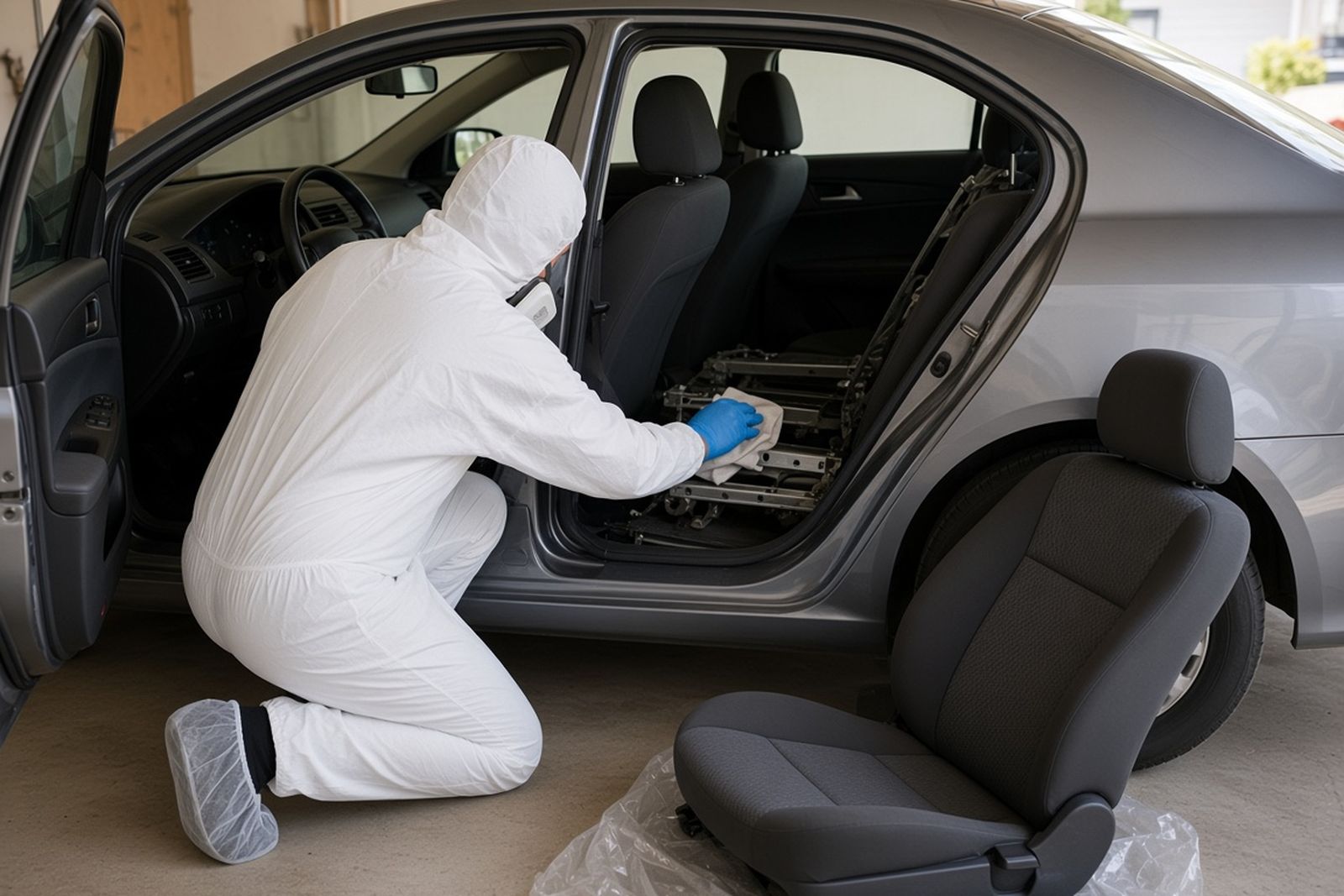
Vehicular biohazard cleanup is shaped by a car's design: absorbent foam and carpet, tight seams, a metal floor pan that collects liquid, and an air system that recirculates cabin air. Pathogens in blood can survive on surfaces for days or weeks, so technicians remove saturated porous parts, clean before disinfecting, respect label contact times, and treat the HVAC path before returning the vehicle.
How to Evaluate Equipment Proposed for Vehicular Biohazard Cleanup
Trim tools, extractors, ATP meters, foggers, and ozone units all appear in vehicle cleanup quotes. Learn how to judge whether each tool suits your car or truck.
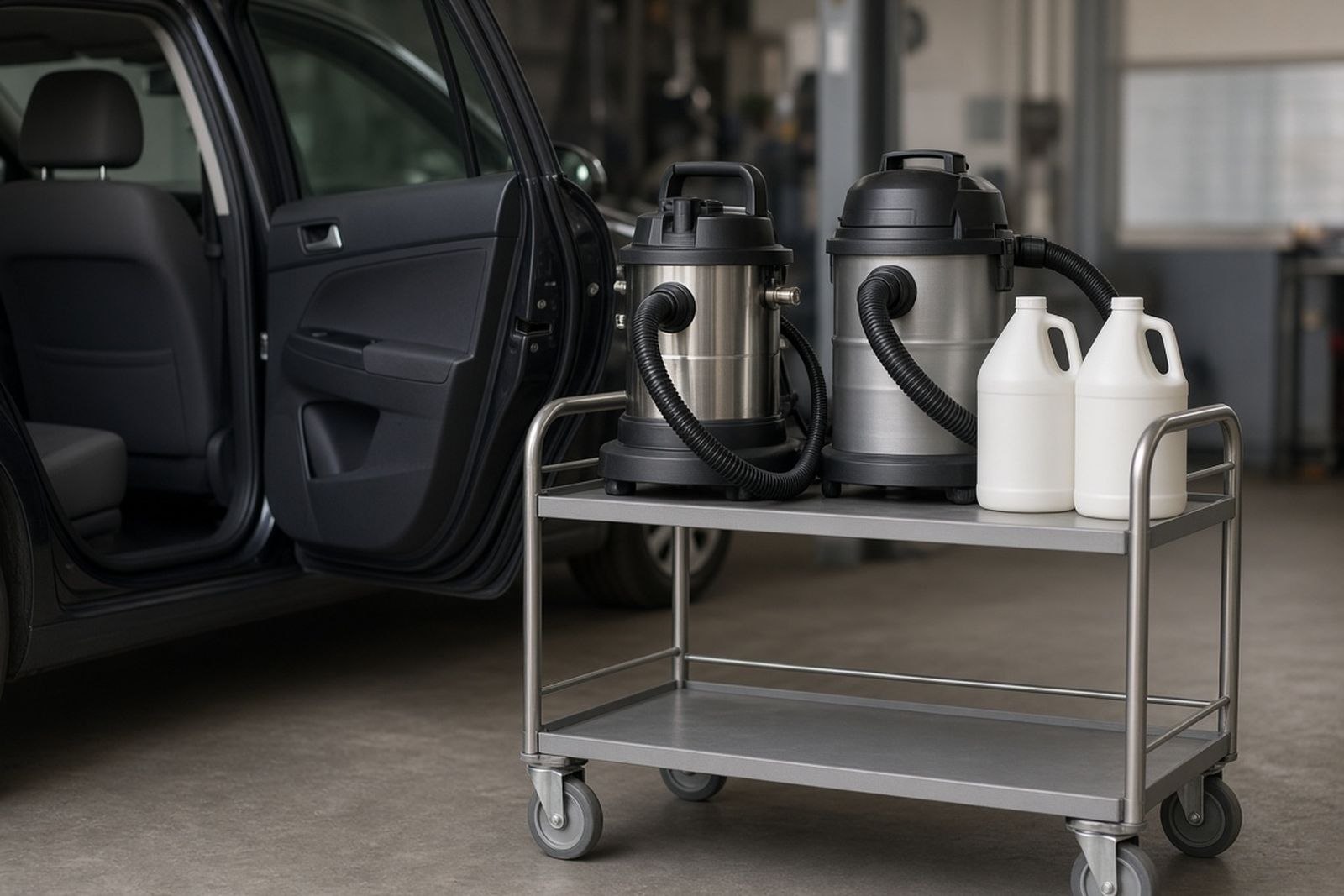
Judge the equipment in a vehicle biohazard proposal by whether it helps find, remove, clean, disinfect, and verify contamination without damaging the vehicle. Expect protective gear, trim and seat removal tools, extractors, registered disinfectants matched to automotive materials, waste packaging, and verification tools such as lighting and ATP meters. Foggers and ozone units belong at the end, not in place of hands-on work.
The Difference Between Cleaning and Disinfection in Vehicular Biohazard Cleanup
A car can look spotless and still carry pathogens. Learn how cleaning, disinfection, and part removal differ in vehicle biohazard work, and why order matters.
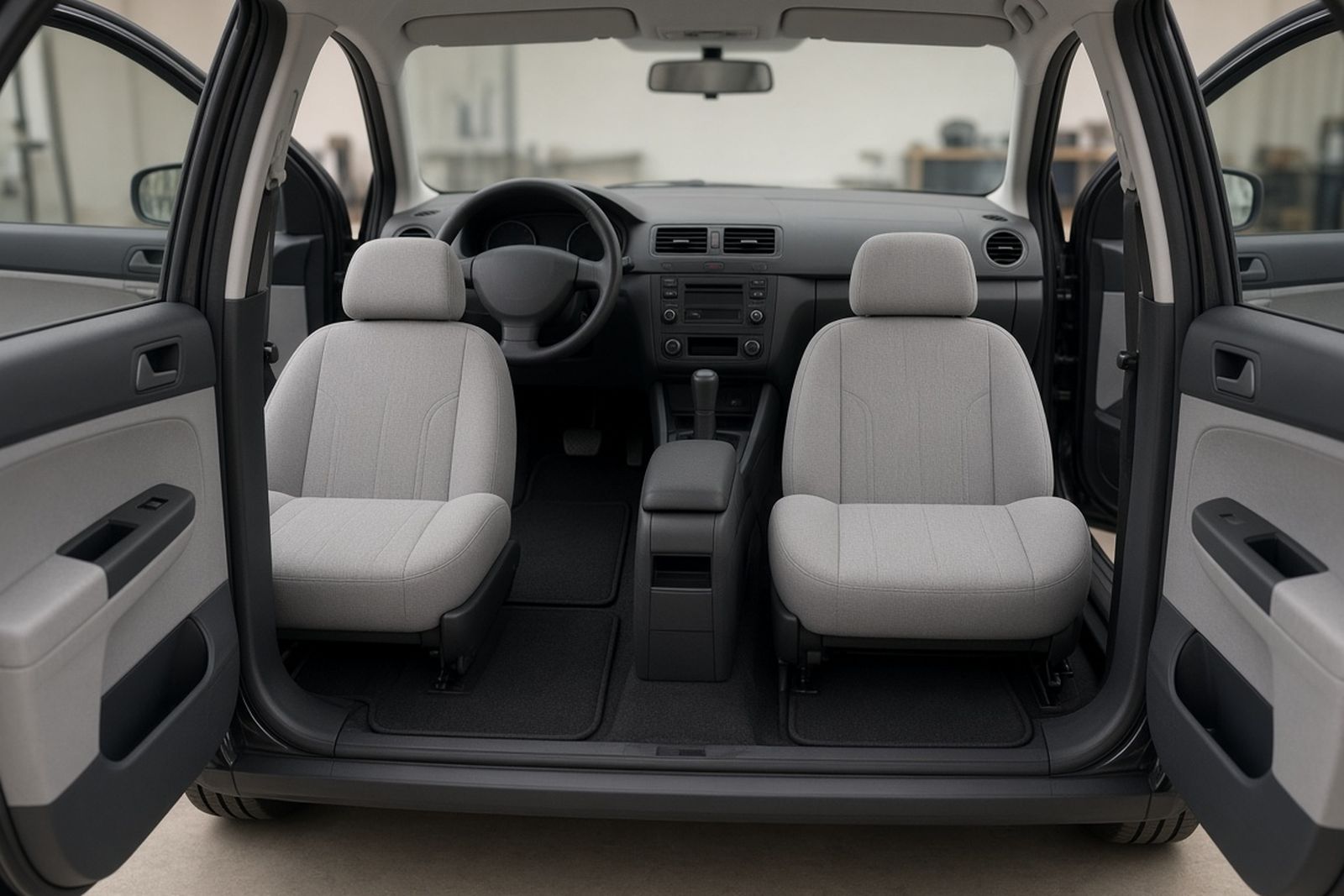
In vehicle biohazard cleanup, cleaning removes visible blood, body fluids, and residue from surfaces, while disinfection uses a registered product at its label contact time to inactivate pathogens on the cleaned surface. Porous parts such as seat foam and carpet padding often cannot be disinfected all the way through, so they are removed. A proper job cleans, disinfects, and removes in the right order and documents each step.
When ATP Testing Helps—and When It Does Not—in Vehicular Biohazard Cleanup
ATP swabs can show whether organic residue was cleaned from a car's hard trim and seat tracks, but not what soaked into foam. Learn how to read vehicle results.
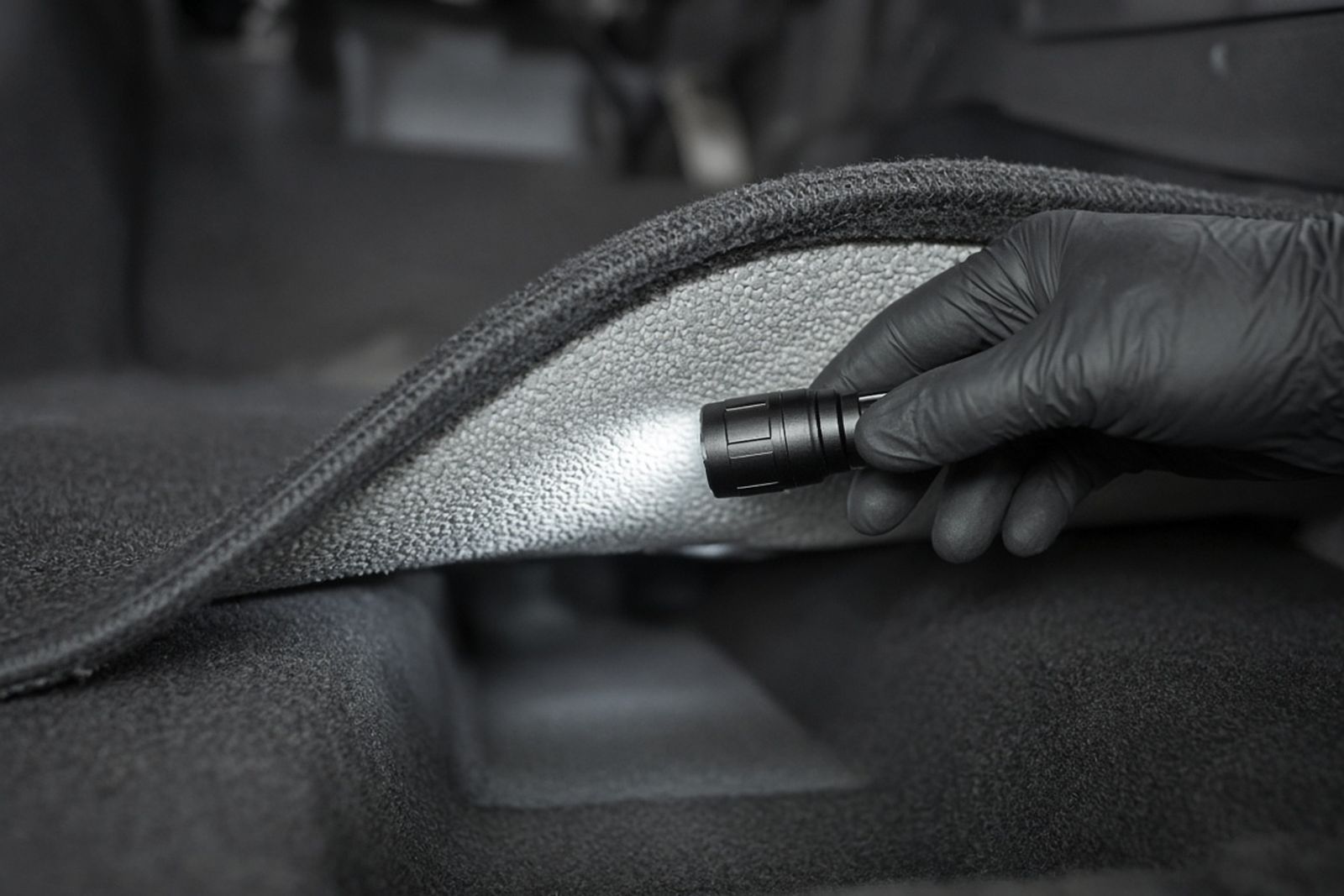
In a vehicle cleanup, ATP testing swabs hard surfaces such as dashboards, door panels, seat belt buckles, and seat rails to show how much organic residue remains after cleaning. It is useful for comparing before and after readings and spotting missed areas. It cannot see inside seat foam, carpet padding, or vents, does not identify pathogens, and should never replace removal of saturated parts.
How to Evaluate Technology Used in Vehicular Biohazard Cleanup
Foggers, UV lights, steam, and cabin ozone all get pitched for car cleanups. Learn how to judge each by what it reaches, what it leaves behind, and its limits.
Judge vehicle cleanup technology by whether it reaches where contamination actually sits, whether it is used after hands-on cleaning rather than instead of it, what it does to automotive materials and electronics, and how results are verified. Extraction, inspection tools, and registered disinfectants do most of the work. Foggers, UV devices, steam, and ozone can help as follow-up steps when a provider explains why they fit.
When Enzymes or Microbial Products Fit Vehicular Biohazard Cleanup
Enzyme and bacterial cleaners can help with vomit, urine, and blood residue in a car, but they do not disinfect or save soaked seats. Learn where they fit.
Enzyme and microbial products can help a vehicle cleanup by breaking down organic residue from vomit, urine, feces, and blood left in fabric, seams, and carpet after bulk removal. They need contact, moisture, and time, and they do not kill pathogens. In a biohazard job they follow removal of saturated parts and a registered disinfectant step, and they work best as a residue and odor finishing tool.
Sourced figures on education
- 214
214 of 429 samples grew bacteria.
Read with care: Detection is not infection; small local fleet; most isolates were environmental flora.
Source: Noh et al. (2011)13 Seoul ambulances; 33 sites each, 429 samples.
- 1 in 3
About one in three people carry Staphylococcus aureus on their skin or in their nose, according to CDC.
Read with care: Carriage of staph is not the same as MRSA carriage or infection.
Source: CDC (2024)General population, United States
- 52%
The reported contamination rate fell from 52% before disinfection to 8% afterwards.
Read with care: Abstract does not provide sample count; product-specific; contamination is not infection.
Source: Farhadloo et al. (2018)Ambulance cabins and equipment in Qom, Iran, treated with one named disinfectant.
These figures are public research and agency data, not this network's own job records. Keep each number with its population, year and limits; none of them predicts cost, timing or outcome at a specific property.
What research has found
Findings from published studies of people and properties in situations like this one. They describe what researchers observed in a specific group; they are not predictions for your case.
The comparison found no significant difference between preceding cleaning with and without UV.
Microorganisms decreased significantly on sampled surfaces after treatment.
Education: common questions
Why is seat foam harder to clean than a household couch cushion?
Car seat foam is molded around frames, heaters, sensors, and wiring. So it cannot just be unzipped and washed. It is also exposed to cabin heat that pushes fluids deeper. Disinfectant cannot reliably reach the inside of soaked foam. So providers often cut out the affected sections or replace the whole cushion.
Can an ozone machine alone fix a vehicle that smells after an incident?
No. Ozone and similar machines can reduce leftover odor after the source is removed. But they do not remove soaked foam, carpet padding, or residue on the metal floor. Using them first can hide a problem that comes back in warm weather. These machines also require the cabin to be empty of people and pets, and aired out well afterward, as the equipment and product directions say.
What is the difference between cleaning and disinfecting inside a car?
Cleaning physically removes dirt, residue, and body matter from a surface. Disinfecting uses a registered product that kills certain germs. But it only works if the surface is clean first and stays wet for as long as the label says. In a cabin, textured plastics, vents, and seams make both steps slower than they look. That is why a quick wipe rarely finishes the job.
Why do vehicle interiors seem to hold odor longer than rooms in a house?
A cabin is small and packed with materials that soak things up. So odor chemicals build up and settle into the fabric ceiling, seat backs, and carpet. Sun on the glass heats the cabin and pushes more of those chemicals into the air each day. Closed windows keep them in. The air system can pull odor into the ducts too. That mix is why vehicles often need source removal plus air system treatment.
Does leather protect the seat underneath better than cloth?
Smooth, sealed leather slows fluid more than cloth, but it is not a barrier. Seams, stitching holes, and perforations for ventilated or heated seats let fluid pass into the foam. Leather that looks clean can hide a saturated cushion. Providers often open the cover or inspect from underneath before deciding whether a leather seat can stay.
Why do providers treat every fluid as if it could carry disease?
You cannot tell by looking which fluids carry germs. Some germs also stay alive on surfaces for a long time. Treating all blood and body fluids with the same care keeps workers and owners safe without guessing. The same idea applies whether the fluid came from a stranger or a family member. It is a safety habit, not a judgment about anyone.
How can I learn the basics without reading every single article?
Focus on three ideas. First, cleaning removes soil and disinfection kills germs on the cleaned surface, and they are separate steps. Second, porous materials that absorbed fluid, such as foam and padding, are often replaced rather than cleaned. Third, verification in warm, closed conditions reveals missed residue. With those in mind, most scopes and quotes become easier to understand.
Related community polls
Every count is a real visitor vote; nothing is seeded or padded. One vote per poll per device, and you can change your answer.
If a passenger became ill in your car, what would you most likely do first?
Would you keep driving a vehicle where blood reached the seat foam if it looked clean afterward?
More on vehicular biohazard cleanup
Vehicular Biohazard Cleanup services
Learn what cleanup of a car, van, RV, or boat involves after blood, illness, or death. It covers checking foam and belts, the air system, and waste.
Costs explained
What drives the price, published cost ranges, and how to read a written quote line by line.
Insurance and payment
Which policies may respond, how to document a claim, and what to do if coverage is denied.
Planning tools
Estimate the job for your vehicle, check a provider, organize an auto claim, and plan the first day. Sort removed materials and see whether you should touch the cabin.
Community polls
See how other owners, rideshare drivers, and fleet managers handled soiled vehicles. Views range from first reactions to total-loss offers and what to tell buyers.
Knowledge quiz
Test what you know about soaked foam, seat belts and airbags, the car's air paths, regulated waste, and when an insurer may total the vehicle.