Short answer
Judge the equipment in a vehicle biohazard proposal by whether it helps find, remove, clean, disinfect, and verify contamination without damaging the vehicle. Expect protective gear, trim and seat removal tools, extractors, registered disinfectants matched to automotive materials, waste packaging, and verification tools such as lighting and ATP meters. Foggers and ozone units belong at the end, not in place of hands-on work.
What a cleanup equipment list should tell you
A good equipment list reads like a plan. Each item should connect to a step: protecting workers, reaching hidden contamination, removing what cannot be cleaned, disinfecting what stays, handling waste, and proving the work is complete.
Vehicles are tight, mixed-material spaces full of electronics, airbags, and sensors. Equipment that works well in a house can damage a car, and tools built for detailing are not designed for biohazards. The right list sits between those two worlds.
If a quote simply says "biohazard cleaning, deodorize" with a price, ask for more detail. You are entitled to know what will be used on the seats you sit in and the air you breathe on the drive home.
Pay attention to what is missing as well as what is listed. A proposal without disassembly tools, waste packaging, or any verification step leaves gaps that no amount of deodorizer will fill.
Protective gear for technicians
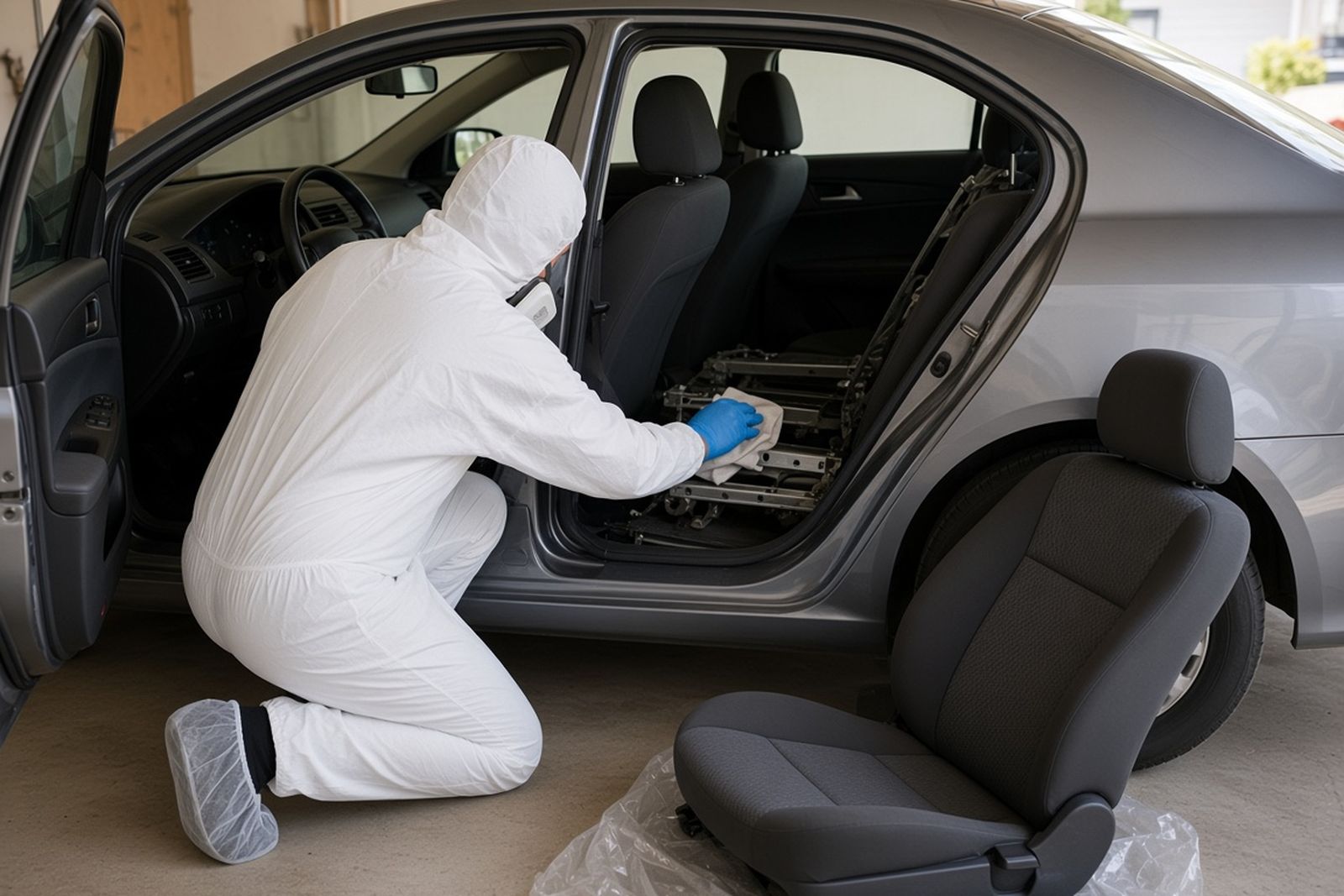
Technicians working on blood or body fluids in a vehicle should wear protection suited to bloodborne pathogens and to the chemicals they use. That usually includes disposable gloves, often double-layered, fluid-resistant coveralls, eye protection or a face shield, and a respirator when aerosols, odor, or chemical vapors are expected.
Vehicle work adds specific hazards. Broken glass, sharp trim edges, and exposed seat frames can cut through light gloves, so cut-resistant layers may be worn underneath. Kneeling on floor pans and working in footwells call for knee protection and good lighting.
Ask whether the company trains its technicians under OSHA's bloodborne pathogens standard, and whether they provide hepatitis B vaccination and exposure procedures. Those are signs the company takes worker safety seriously, which usually carries over to the quality of the work.
Protective gear also protects your vehicle. Technicians who change gloves between contaminated and clean zones avoid carrying residue from the back seat to the steering wheel, door handles, and dashboard controls. Watch for that habit if you are present during the work.
Tools for taking the interior apart safely
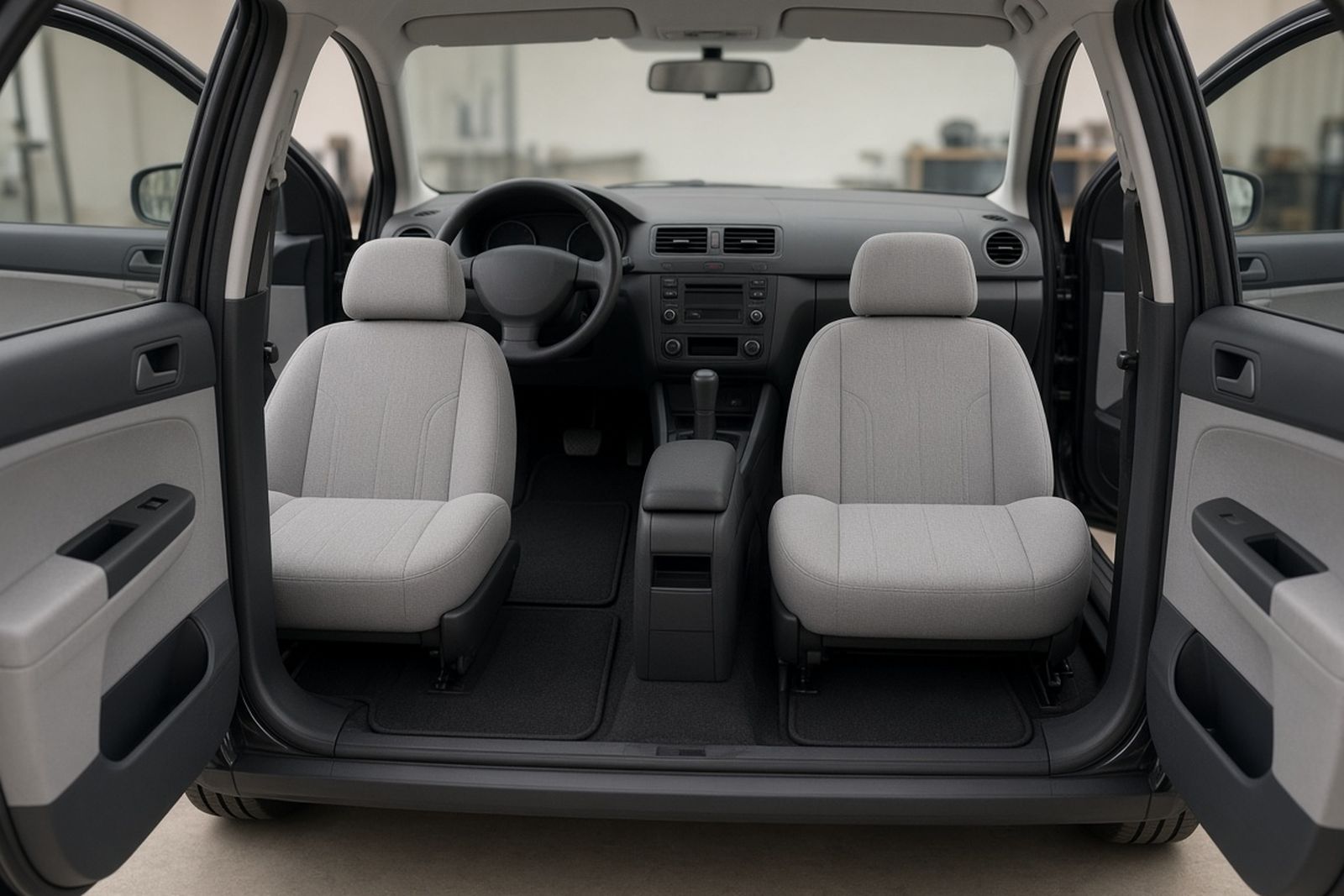
Disassembly tools are a strong indicator of a thorough job. Expect plastic trim removal tools that pop panels without breaking clips, socket and Torx sets for seat bolts, and seat belt tools. Technicians should know how to disconnect the battery and wait the manufacturer's recommended time before unplugging seats with airbags or sensors.
Carpet is often held under sill plates, seat bases, and the center console, so pulling it cleanly takes patience and the right fasteners. Headliners, door cards, and cargo panels come out with their own clips and screws.
A provider who plans to work around seats rather than remove them may not be able to reach contamination on the rails, under the cushion, or on the floor pan below. Ask directly whether seats will come out.
Organization is part of the toolkit. Labeled bins for each panel's fasteners, photos taken before each component comes out, and a parts list keep reassembly accurate. A cabin that rattles, leaks air, or shows a dashboard warning after cleanup is often the result of rushed disassembly rather than poor cleaning.
- Plastic trim tools and clip removers
- Socket, Torx, and specialty seat bolt tools
- Battery disconnect and airbag-safe procedures
- Bins and labels to organize removed parts and fasteners
- Headlamps and portable LED lighting for footwells and under seats
Cleaning equipment that suits automotive materials
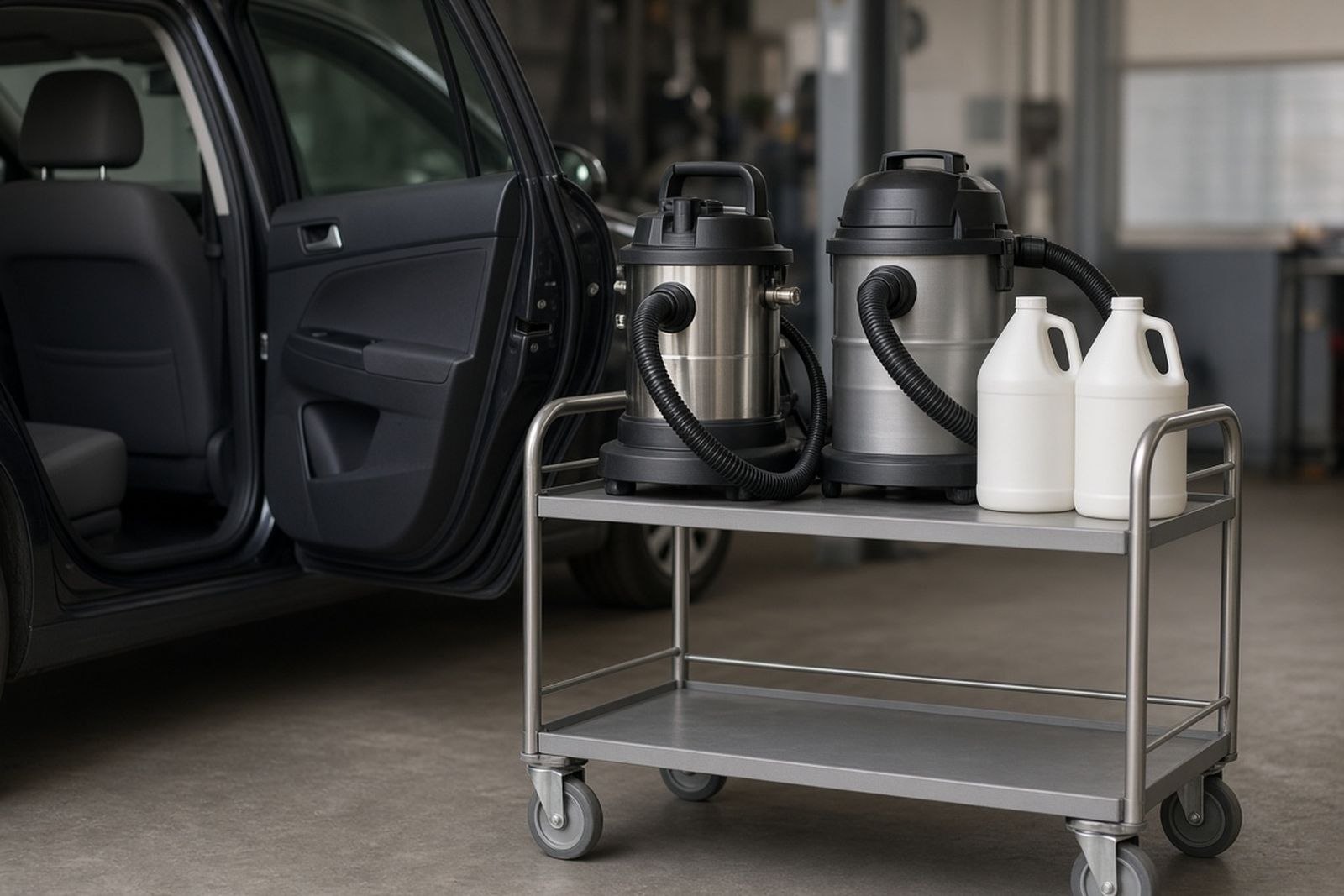
Cleaning equipment must remove organic soil without spreading it or damaging finishes. Heated extractors pull fluid and cleaning solution out of fabric and carpet that will stay in the vehicle. Soft brushes and microfiber pads clean textured plastics and vinyl without scratching.
Steam can be useful on some surfaces, but it must be used carefully near electronics, leather, and adhesives. Pressure washers generally have no place inside a cabin, though they may be used on a removed floor mat or on exterior surfaces.
Sprayers and applicators for disinfectants should deliver the product so surfaces stay wet for the full label contact time. Handheld pump sprayers and dampened wipes are common, because mists that drift into vents and switches can cause problems.
Tools for vents and the floor pan
HVAC components need their own tools. Expect a replacement cabin air filter, vent brushes or swabs, and sometimes a treatment applicator designed to reach the evaporator through the intake or the drain. These small items often decide whether odor returns on the first hot day.
For the metal floor pan, technicians may use scrapers, stiff brushes, and wet vacuums to clear seams and low spots before disinfecting. They also check drain plugs and seam sealer, since fluid can sit in those places long after the carpet above looks dry.
Choosing and applying disinfectants
The disinfectant is equipment too, and it deserves the same scrutiny. It should be registered for the pathogens of concern, compatible with the materials in the cabin, and used according to its label.
Ask the provider which product they plan to use and what it is registered against. According to EPA's 2025 guidance, the agency keeps 13 active lists of registered disinfectants, among them List S for bloodborne pathogens, List G for norovirus, and List H for MRSA and VRE. Knowing which list a product appears on tells you what it was tested to kill.
Material compatibility matters as much as kill claims. Some oxidizers can cloud clear instrument covers, discolor leather, or damage touchscreens. A careful technician tests in an unseen spot and uses a separate cleaner for screens and electronics.
Are foggers and ozone machines worth including?
Whole-cabin treatments can reach air spaces, vents, and exposed surfaces that hands cannot easily touch. They are most helpful after cleaning and disinfection are done, as a final step.
Research supports that role. In a 2022 hospital study, Khandelwal and colleagues reported that aerobic colony counts fell 98% after added fogging compared with post-cleaning measurements, and ATP readings fell 88% after fogging. The key words are after cleaning: fogging added to manual work rather than replacing it.
Ozone units are sometimes used for odor, but they can harm rubber seals, wiring insulation, and some plastics with heavy use. If a provider proposes ozone, ask how long it runs, what concentration they target, and how the cabin will be aired before anyone drives it.
A plan that uses a fogger or ozone machine instead of removing saturated seat foam or carpet should raise questions.
Handling contaminated parts and waste
Waste equipment includes red biohazard bags, rigid containers for sharps or broken glass, approved boxes for transport, and labels. Removed seats, carpet, and belts are often bulky, so the provider needs a plan for packaging them properly rather than improvising.
Ask who will transport the waste and whether you will receive documentation. Contaminated parts should not be left for you to handle or placed in household trash.
If an insurance adjuster needs to see removed components, the provider should be able to stage them in labeled, sealed packaging until the inspection is done.
Glass from a broken window deserves attention too. Fragments mixed with blood count as contaminated sharps in many cases and should go into a rigid container rather than a soft bag that can tear.
Proposal A vs Proposal B
Two proposals for the same job can read very differently. Take blood on a second-row captain's chair, the carpet beneath it, and a sliding door track.
A thin proposal lists a steam cleaner, a deodorizing spray, and an ozone treatment, with the chair and carpet left in place. A complete one lists trim tools and seat removal, an extractor for areas that will stay, a named disinfectant with its registration information, replacement of the chair cushion and affected carpet section, a new cabin air filter, biohazard packaging with a transporter named, ATP swab checks on hard surfaces, and a short fogging step after cleaning.
The complete proposal explains how each tool fits the job and how success will be checked. It is also easier to share with an insurance adjuster before approving the work, because the adjuster can see exactly which parts are being replaced and why. Neither version guarantees what an insurer will accept, but only one gives it enough to evaluate.
How will the provider prove the vehicle is clean?
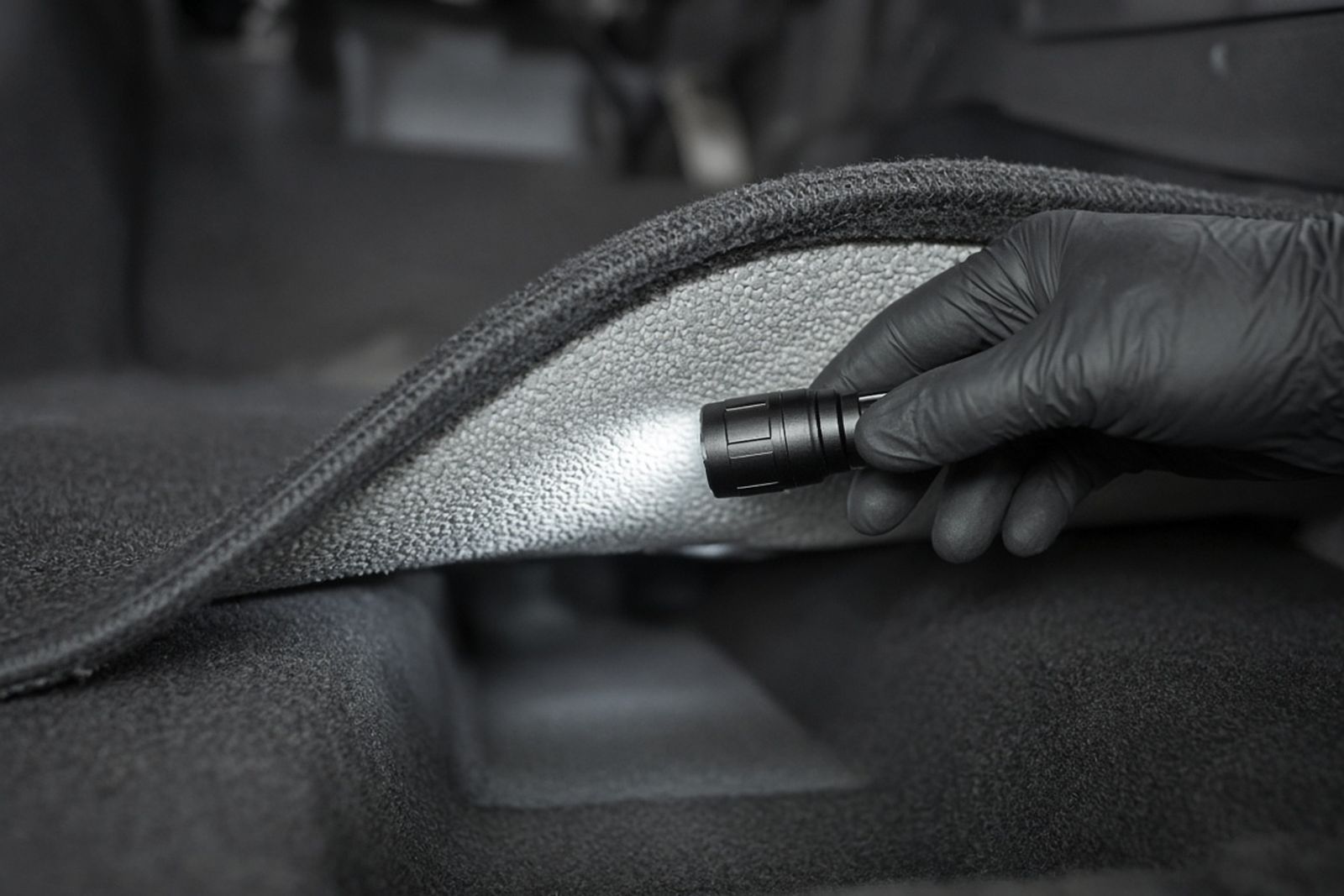
Verification tools close the loop. Bright, angled lighting and magnification help find traces in seams and textured plastics. ATP meters read organic residue on hard surfaces and give a number that can be compared before and after cleaning.
Photographs are verification equipment too. Before, during, and after images show what was removed, what the floor pan looked like, and how it was restored.
Some providers also do a final road test. Running the heat and air conditioning on each setting, checking that no warning lights appear, and confirming seat adjustments and belts work correctly are simple checks that catch reassembly problems before you drive away.
Ask what the provider considers a passing result and what they do if a surface does not pass.