Short answer
Vehicular biohazard cleanup is shaped by a car's design: absorbent foam and carpet, tight seams, a metal floor pan that collects liquid, and an air system that recirculates cabin air. Pathogens in blood can survive on surfaces for days or weeks, so technicians remove saturated porous parts, clean before disinfecting, respect label contact times, and treat the HVAC path before returning the vehicle.
Why a car interior is harder to decontaminate than a room
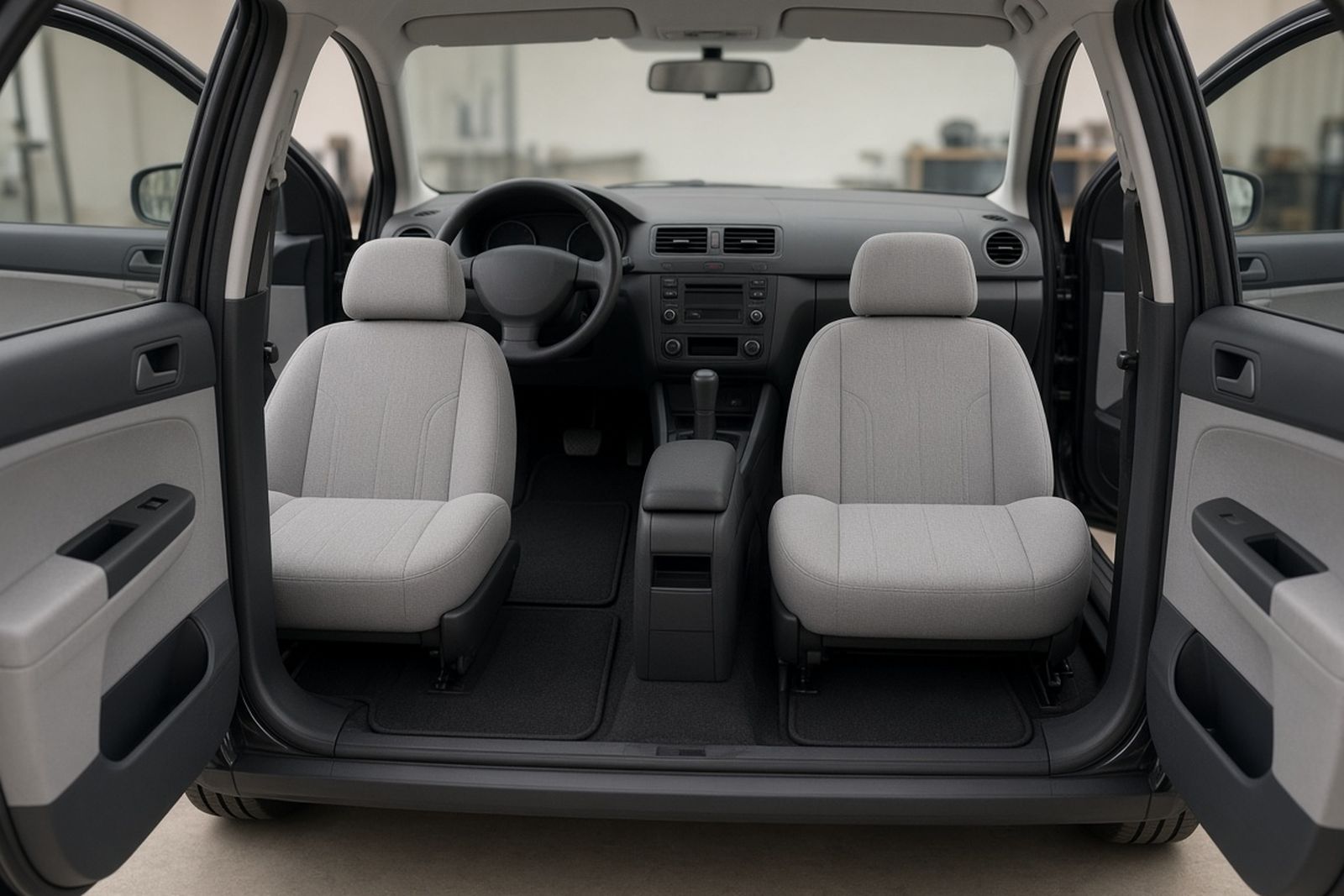
A vehicle cabin packs more absorbent material into less space than almost any room in a house. Seats are built from open-cell foam wrapped in fabric or perforated leather. Floors combine carpet, jute or foam padding, and sound-deadening mats. Headliners are fabric bonded to fiberboard. All of these soak up liquid and hold it out of sight.
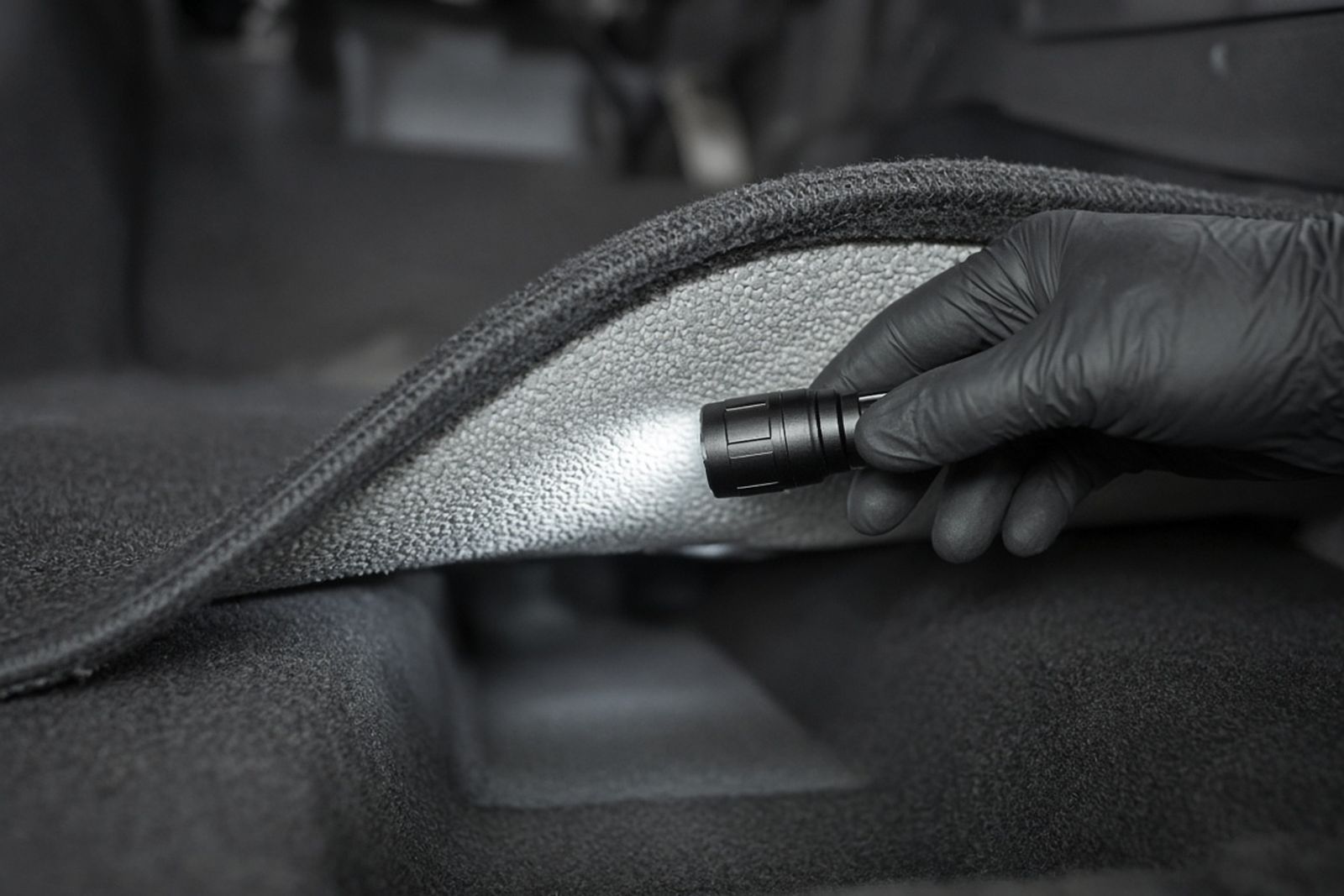
Underneath those layers sits a stamped steel floor pan with ridges, drain plugs, and seam sealer. Liquid that passes through the carpet pools in the low points of that pan, where it stays damp far longer than the surface above it.
Then there are the gaps. Seat tracks, console edges, belt retractors, and trim panels all have openings that let fluid slip behind them. A cabin that looks clean at eye level can still hold contamination in places you would only reach with tools.
Vehicles also mix materials in ways homes rarely do. A single door panel might combine painted metal, textured plastic, vinyl, fabric, and a speaker grille, each needing a different cleaning approach. Technicians plan for that variety before they open a single product.
How long bloodborne pathogens survive inside a vehicle
Survival time depends on the organism, the surface, and conditions like temperature and humidity. Some viruses fade quickly outside the body, while others remain a concern for a long time.
CDC notes in its 2024 clinical overview that hepatitis B virus remains infectious on environmental surfaces for at least 7 days. HIV.gov reported in 2014 that hepatitis C virus can remain infectious on surfaces for up to 6 weeks at room temperature, according to Yale researchers. By contrast, CDC states that HIV does not survive long outside the human body, for example on surfaces, and cannot reproduce outside a human host.
Those differences explain why a professional does not treat a dried stain as harmless. Dried blood can still carry infectious material, and scraping or brushing it can release particles or cause small cuts. The safer assumption is that any unknown fluid could be infectious, which is the principle behind universal precautions.
What heat does to fluids and odor in a closed vehicle
A parked car in the sun acts like a greenhouse. Cabin temperatures climb well above the outside air, and that heat speeds up decomposition of organic material and drives volatile compounds out of the fluid and into the air.
Those compounds do not simply vent away when the doors are shut. They settle into the headliner, seat backs, and trim, even in areas that fluid never touched. That is why odor from a vehicle that sat closed for several days can spread far beyond the visible stain.
Heat also changes the fluid itself. It dries into a film on hard surfaces and bonds more tightly to fibers, which makes cleaning slower. Cold weather slows these processes but can hide the extent of the problem until the vehicle warms up again.
Moisture works alongside heat. Condensation on the inside of windows and a damp floor pan keep residue moist, which supports microbial growth and odor production. Drying the cabin thoroughly after cleaning is part of the science, not just a finishing touch.
Why cleaning and disinfection happen separately
Disinfectants are tested and registered to work on surfaces that have already been cleaned. Blood, tissue, and other organic soil can bind to active ingredients, shield microbes, and use up the product before it reaches what it is supposed to kill.
So the sequence is fixed. First comes gross removal, then cleaning with a detergent or cleaner suited to the material, then disinfection with a registered product at the label's required wet contact time. Skipping straight to spraying disinfectant may leave a surface that smells clean but has not reached the kill claim on the label.
Material compatibility adds another layer of chemistry. Some strong oxidizers can cloud clear plastics, dull soft-touch dash coatings, discolor leather, or damage electronics. Technicians choose products that meet the pathogen claim without destroying the interior, and they test in inconspicuous spots when unsure.
Why some parts get replaced instead of cleaned
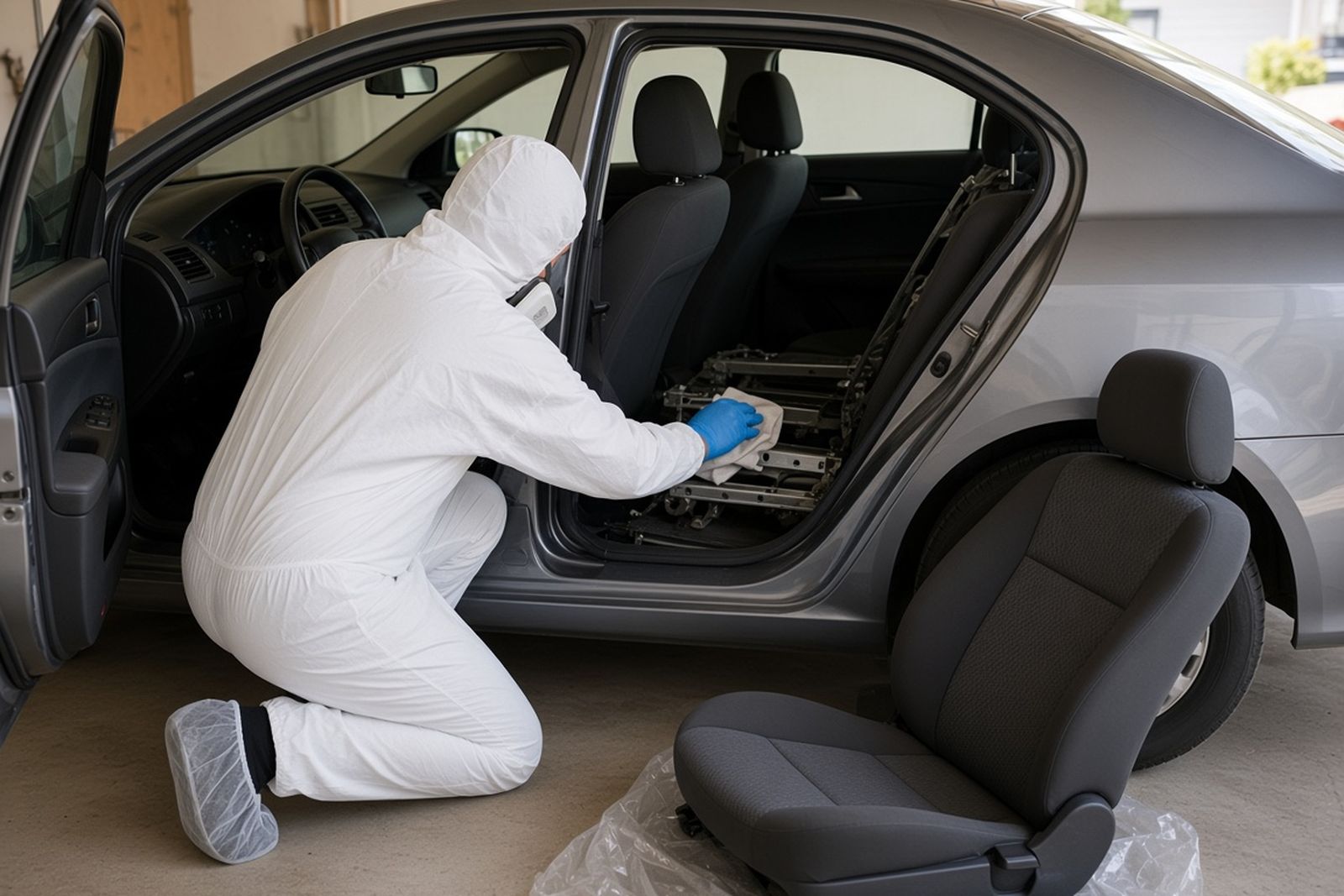
The deciding question is whether the technician can reach and verify every place the fluid went. On glass, painted metal, and hard plastic, the answer is usually yes. Inside a seat cushion, carpet padding, or seat belt webbing, the answer is often no.
Foam is the clearest example. Liquid travels through the cover and spreads outward inside the cushion. Even with extraction, a cleaner cannot be confirmed to have reached every cell, and trapped residue will keep producing odor. Replacing the saturated section is often the only way to be confident.
Seat belts are treated with particular care because they are safety equipment. Harsh chemicals or aggressive scrubbing can weaken webbing, so affected belts are commonly replaced with proper parts rather than cleaned.
- Usually cleaned in place: glass, painted metal, hard trim plastics, sealed vinyl
- Often cleaned after testing: leather surfaces, depending on seams and perforations
- Often replaced when saturated: seat foam, carpet pad, sound insulation, belt webbing
- Routinely replaced: the cabin air filter
How the ventilation system spreads contamination and odor
Most vehicles pull air from inside the cabin when recirculation mode is on and push it through a blower, an evaporator core, and a network of ducts. Odor compounds and fine droplets that enter this path can coat surfaces inside the housing.
The evaporator is a special concern. It stays cool and damp when the air conditioning runs, which is a friendly environment for microbial growth and odor. Once contaminated air has passed over it, the smell can return every time the system switches on.
That is why technicians replace the cabin air filter, clean reachable vent surfaces, and may treat the system while it runs so the product travels the same path the air does. Leaving this step out is a common reason a car smells clean in the shop and unpleasant on the first hot drive.
Can fogging replace hands-on cleaning in a car?
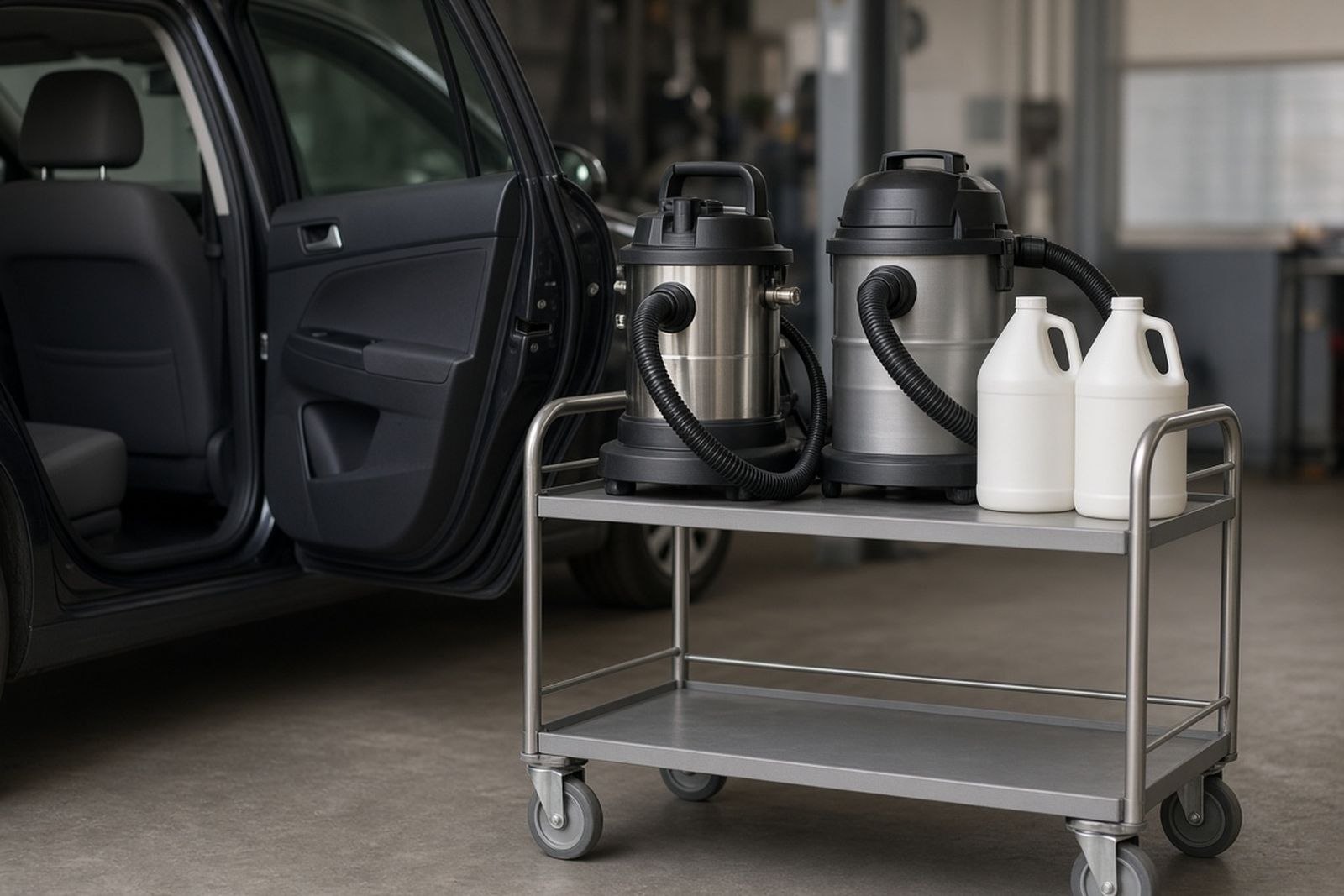
Whole-cabin treatments are useful, but they sit at the end of the process, not the beginning. A fog or gas reaches exposed surfaces and air spaces. It cannot lift dried blood out of seat fabric or reach liquid trapped under a carpet pad.
Research on fogging generally measures what happens after surfaces are already cleaned. In hospital and transit studies, the added treatment lowered microbial counts further, but those gains came on top of manual cleaning rather than in place of it.
Ozone in a closed cabin
Ozone deserves particular caution in vehicles. It can degrade rubber seals, wiring insulation, and some plastics with repeated or heavy use, and the cabin must be aired out fully before anyone sits inside. Ask any provider who proposes it how long the treatment runs and how they protect interior materials.
If a quote relies on fogging alone after a significant fluid event, treat that as a warning sign. Treatments that skip source removal tend to produce a pleasant smell for a few days and then a return of the original problem.
Putting the science together on one job
The principles above combine on almost every job. Take a common pattern: blood from a severe nosebleed has dried on rear seat fabric, a door panel, a belt buckle, and the carpet behind the front passenger seat, and the car then sat closed in the sun for several hours. A strong light often reveals spatter on window glass that no one noticed, and a seat cushion that feels damp when pressed means fluid reached the foam.
The plan follows the science. The rear cushion and the affected carpet section are removed. The floor pan beneath is cleaned, disinfected at label contact time, and dried. Glass, buckles, and hard trim are cleaned and then disinfected with a product compatible with automotive plastics. The affected belt is replaced, the cabin filter is swapped, and the HVAC path is treated. Only after the cabin passes an odor check on a warm day does the car go back into service.
How do professionals confirm the work was effective?
Verification in vehicles combines visual inspection, documentation, and sometimes testing. Technicians use strong lighting to recheck seams, tracks, and textured plastics. Some use ATP swabs, which detect organic residue, to confirm hard surfaces are clean before disinfection or after it.
An odor check under realistic conditions matters too. Closing the car up for a few hours, ideally in warmth, then opening it with fresh noses will reveal missed residue that a cool shop can hide.
If you are selling or returning a leased vehicle afterward, keep that documentation with the title paperwork. It answers questions a buyer, dealer, or fleet manager may raise about the interior replacement work.
You should receive a record of what was removed, what was replaced, which products were used, and how waste left the site, including the disposal record.