Short answer
In a vehicle cleanup, ATP testing swabs hard surfaces such as dashboards, door panels, seat belt buckles, and seat rails to show how much organic residue remains after cleaning. It is useful for comparing before and after readings and spotting missed areas. It cannot see inside seat foam, carpet padding, or vents, does not identify pathogens, and should never replace removal of saturated parts.
ATP testing in plain terms
ATP, short for adenosine triphosphate, is a molecule present in living cells and in the organic material they leave behind. An ATP test uses a swab that a technician rubs over a set area of a surface. The swab goes into a handheld luminometer, which reports a number in relative light units. More organic residue on the swab produces a higher number.
Blood, vomit, urine, feces, food, sweat, and skin oils all register. The reader cannot tell which of those it picked up, and it does not tell you whether a virus or bacterium on the surface is alive or infectious. It is a measure of cleanliness, not a lab culture.
Because the test is fast and portable, it works well in the confined space of a vehicle, where technicians often want quick feedback on whether a surface is ready for disinfection or needs another pass.
Which parts of a vehicle can ATP actually check?
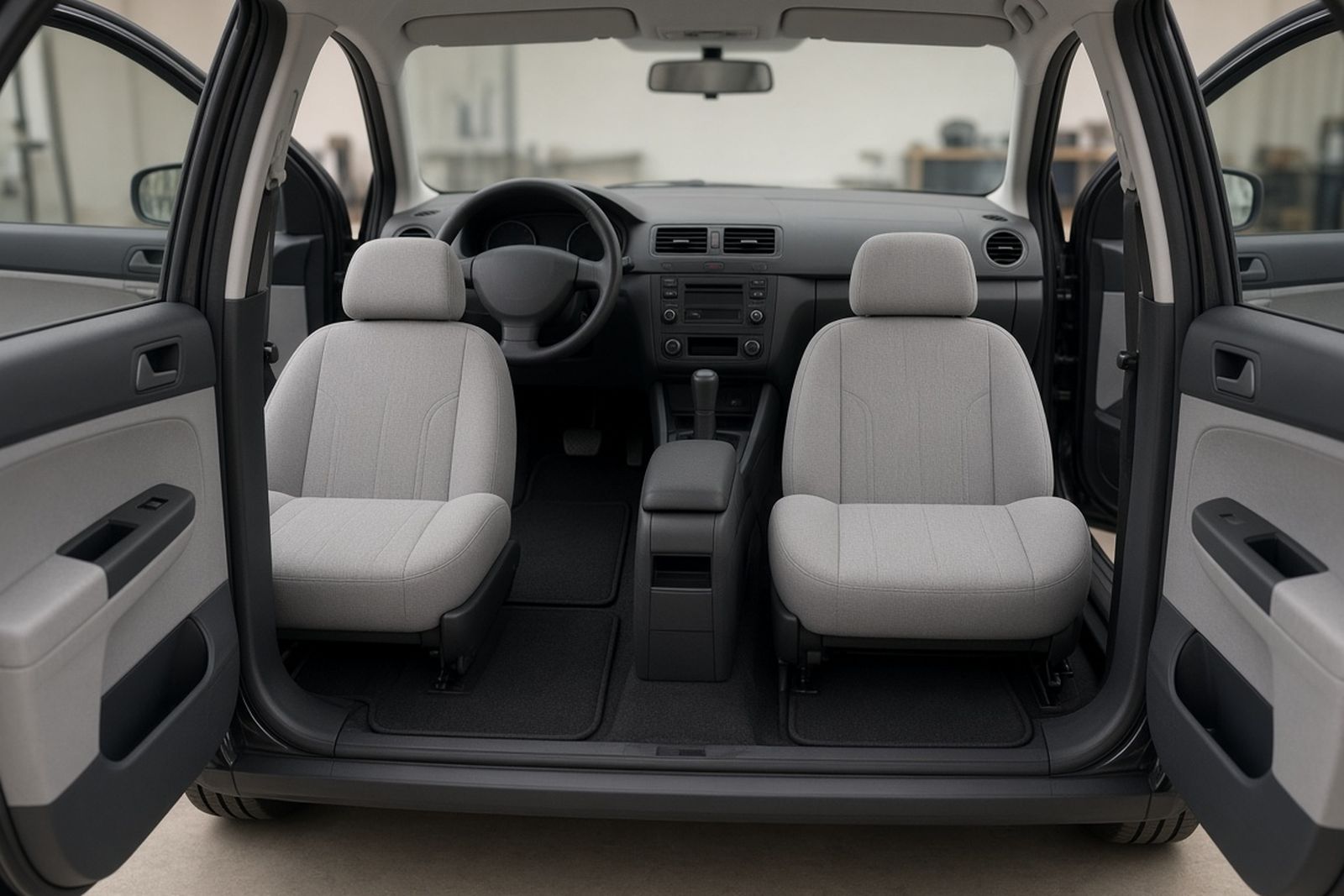
ATP works best on hard, relatively smooth surfaces. In a car, truck, or van, that includes the dashboard, center console, steering wheel, shifter, door panels, window switches, grab handles, seat belt buckles and latch plates, plastic seat trim, and exposed metal such as seat rails and the floor pan once carpet is removed.
These are also the surfaces most likely to be touched during and after an incident, by occupants, first responders, tow operators, and family members. Checking them gives you a picture of how well the cabin's high-contact areas were cleaned.
Tight areas such as seat tracks, the gap between the seat and console, and the seams of door pockets are worth swabbing too. They are hard to reach and easy to miss, and a high reading there is a signal to disassemble further.
Vinyl and leather seating sit in a middle ground. Their top surface can be swabbed, and a clean reading is meaningful for that surface, but stitching, perforations in ventilated seats, and seams can let fluid pass into the cushion below. Technicians usually inspect those seams closely or open the cover rather than trusting a surface swab alone.
Commercial vehicles add their own hard surfaces. Cargo floors, partition walls in vans, wheelchair securement points, and grab rails on buses or shuttles can all be swabbed and compared across the vehicle.
What ATP cannot tell you
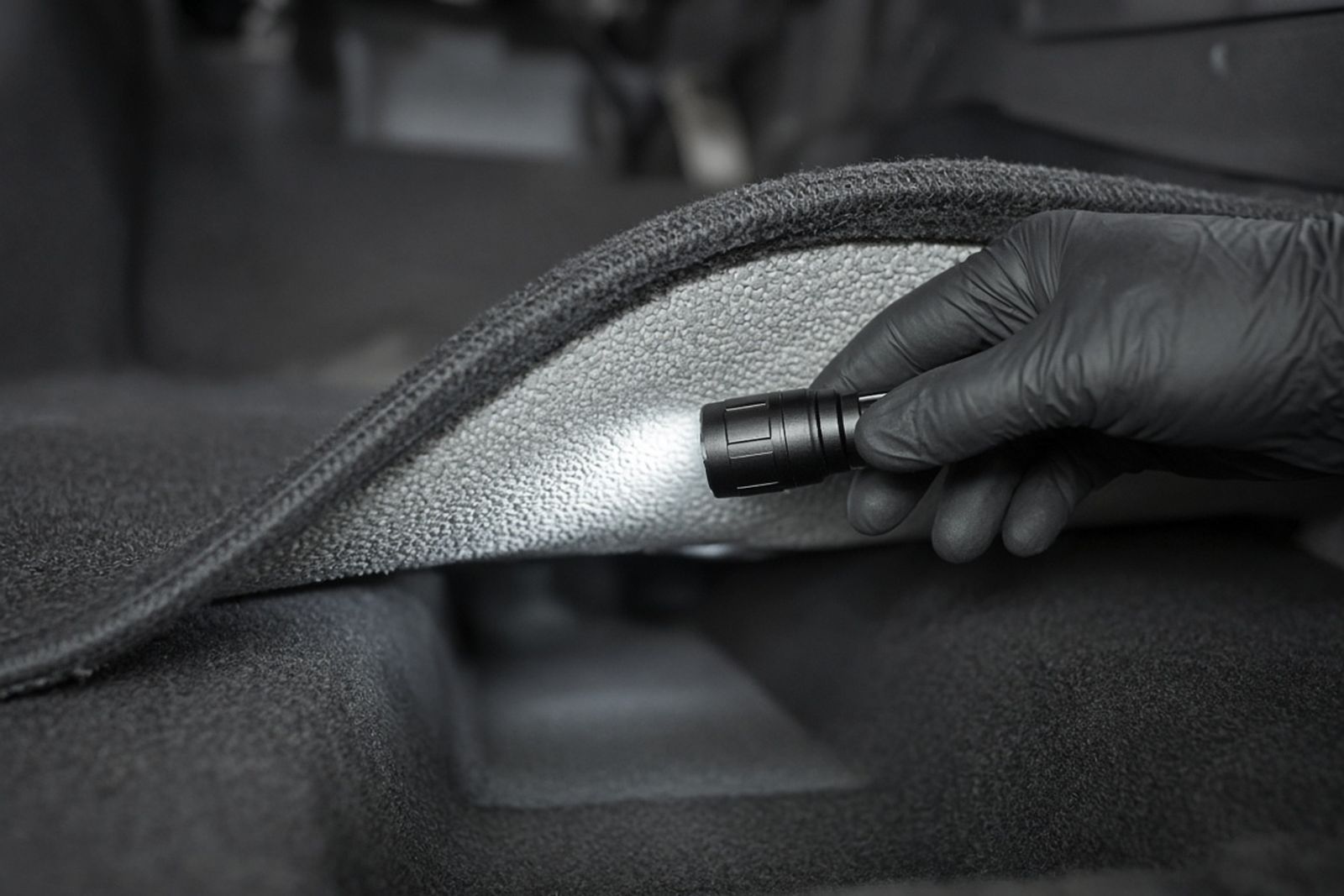
It cannot see into soft or layered materials. Seat foam, cloth upholstery, carpet and its padding, sound-deadening mats, headliners, and the insulation behind trim panels all absorb fluid. A swab across the top of a cleaned seat cover says nothing about what reached the cushion underneath.
It cannot inspect the HVAC system. Blood or other fluid that reached a floor vent or was drawn into the cabin air intake may sit in ducts that no swab can touch.
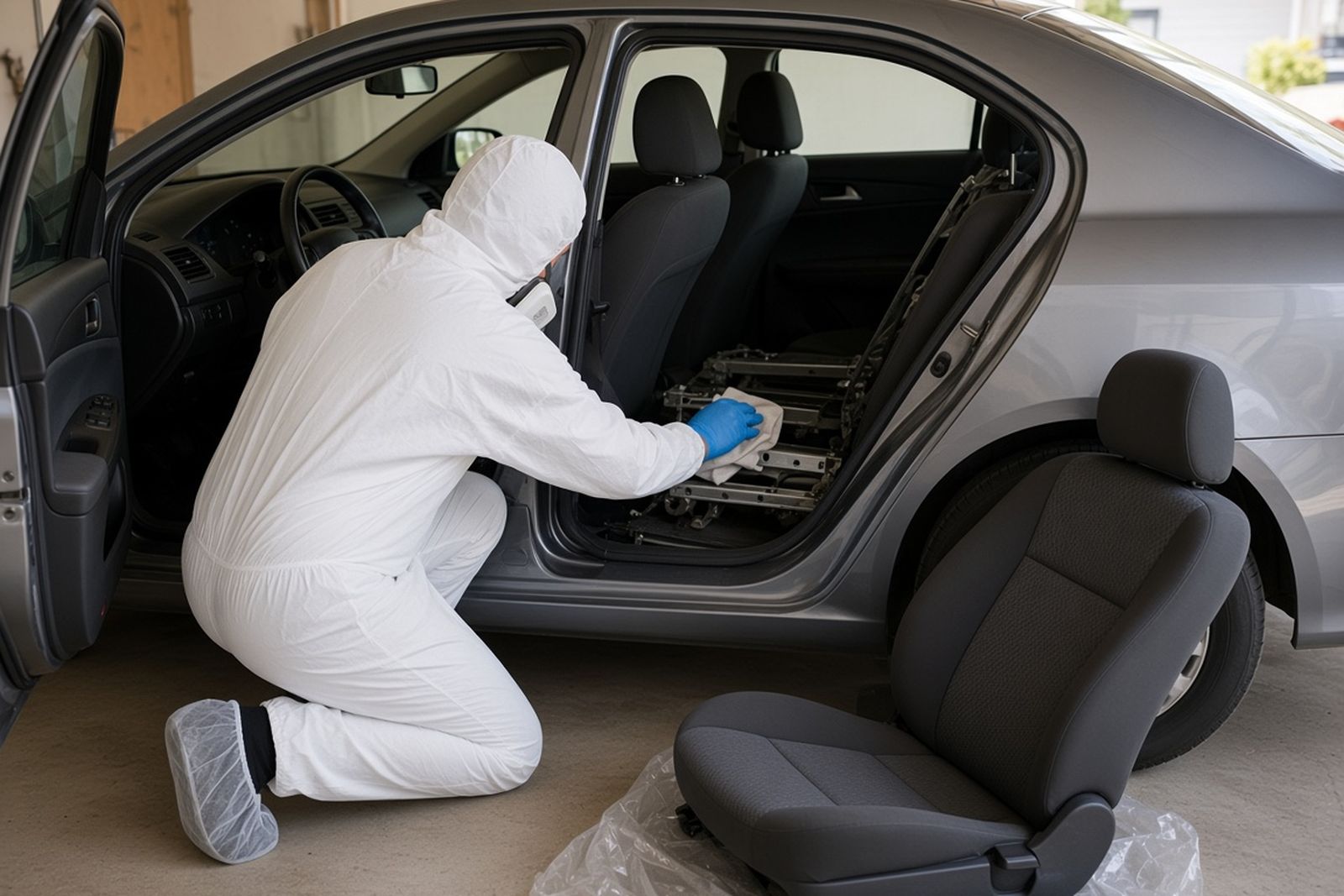
It cannot replace judgment about which parts to remove. If fluid saturated a seat, the right response is to remove and replace the affected components, not to clean the surface until the meter reads low.
Readings can also be skewed by leftover cleaning chemicals, by textured plastics that hold residue differently, and by differences between meter brands. A number from one device should not be compared with a number from another.
- Seat foam and cushions: out of reach
- Carpet pad and floor insulation: out of reach
- Vents and ductwork: out of reach
- Infectious status: not measured
- Cross-brand comparisons: not reliable
Where ATP fits in the order of work
A careful provider follows a sequence. First comes inspection and documentation, then removal of saturated parts, then cleaning to remove visible and organic soil, then disinfection with an EPA-registered product at its label contact time, then drying, reassembly, and odor treatment.
ATP fits best between cleaning and disinfection. Disinfectants work less well when organic soil remains on a surface, so confirming that soil is gone before disinfecting improves the result. A second round of swabs after the full process documents the final condition.
Research on emergency vehicles shows why checking matters. A 2018 study by Farhadloo and colleagues reported that the contamination rate on prehospital ambulances fell from 52% before disinfection to 8% afterwards. The drop was large, but not to zero, which is a reminder that verification catches what a single pass can leave behind.
Is there a number that means my car is clean?
There is no universal standard for vehicle biohazard work. Meter makers suggest ranges for their devices, and some fleets and ambulance services set internal targets. Those targets are useful within that organization, but they are not a regulatory clearance level for a private car.
The more meaningful use is comparison. A reading taken on the driver's door panel before cleaning and again after should show a clear drop. A reading on the affected side of the cabin can be compared with an untouched surface on the other side.
If a provider hands you a single low number with no context, ask what it was before cleaning and what surface it came from. Written readings with locations and times are more useful than a verbal assurance.
Keep in mind that a reading reflects only the few square inches swabbed. Two spots on the same door panel can read quite differently if one was wiped more carefully. A sampling plan that covers several points in the affected zone gives a fairer picture than a single swab.
Why tracer studies matter for car interiors
Contamination moves. Hands, gloves, tools, and cloths carry residue from one surface to the next. A 2015 study by Valdez and colleagues on emergency medical response found that an added hydrogen-peroxide wipe protocol left 19 of 48 sites tracer-positive. The study was designed around ambulances, but the lesson carries over: cleaning can spread residue as well as remove it.
For a passenger vehicle, that means ATP swabs should not be limited to the obvious spot. Checking surfaces near the incident area, such as the opposite door, the rear of the front seats, and the steering column, helps show whether anything was tracked during the response or the cleanup itself.
Good technicians change gloves and wipes often and work from cleaner areas toward dirtier ones. ATP readings on adjacent surfaces are one way to confirm that discipline held.
ATP on a rideshare job
The rideshare call below is a sample job, simplified for illustration. A rideshare driver's passenger becomes ill in the back seat and vomits across the seat, the floor mat, and the rear door panel. The driver pulls over, gets the passenger help, and parks the car. He calls a provider the next morning.
The technician photographs the cabin and swabs four spots before starting: the rear door panel, the seat belt buckle, the plastic seat back of the front passenger seat, and the driver's door handle as a comparison point. The first three read high. The driver's handle reads low.
The rear floor mat is removed for disposal. The seat cover is unzipped, and the technician finds that liquid reached the foam at one corner. That section of foam is replaced. Hard surfaces are cleaned, swabbed again, and cleaned a second time where the seat belt buckle still reads high. Once all readings drop, the cabin is disinfected at the label contact time and dried.
The driver receives a short report with photos and the before and after readings. He shares it with the rideshare platform when he returns the car to service.
Questions to ask, and whether ATP is worth it
Ask whether they use ATP at all, and if so, where. A provider who swabs only one spot after finishing is using it for show. One who swabs before and after, across several surfaces, and shares the results is using it as a tool.
Ask how they decide which soft materials to remove. The answer should rely on inspection and handling of the actual materials, not on a meter.
Find out what paperwork comes with the finished job. For a fleet vehicle, insurance claim, or resale, a report with photos, readings, parts removed, and waste handling can be valuable.
For a small incident on hard surfaces, ATP adds a layer of confidence at little cost. For a major incident with saturated seats and carpet, the value lies mostly in the removal work, and ATP is a secondary check on the surfaces that stay.
Fleet operators, rideshare and delivery drivers, dealers, and anyone who needs to show that a vehicle was cleaned often benefit most from written readings. For a family car after a painful event, the most important thing may simply be knowing the work was thorough.
Disposal of removed seats, carpet, and absorbent materials may be regulated where they contain blood or other potentially infectious materials, so ask the provider how it routes them.
- Which surfaces will you swab, and when?
- Will I get the readings in writing with locations?
- How will you check seat foam, carpet, and vents?
- What disinfectant will you use, and at what contact time?