Short answer
Before hiring a vehicular biohazard cleanup company, ask whether it confirms the vehicle is released, how it traces contamination, which parts it replaces versus cleans, how it handles seats with airbags, what disinfectants it uses, how waste is routed, what training its technicians have, how long the job takes, what documentation you receive, and what happens if odor returns.
A cleanup company is not a detailer
A detailer's job is to make a vehicle look and smell good. A biohazard cleanup company's job is to remove contamination that may be hidden in foam, carpet backing, seat tracks, and vents, and to dispose of it safely. The two can look similar from the outside, and some businesses offer both.
The questions below help you find out which service you are actually being offered. They are grouped by stage, from the first phone call to handback. You do not have to ask every one, but the answers to the first four usually tell you whether a company is right for the job.
If you are dealing with this after the loss of someone close to you, it is fine to ask a friend or family member to make these calls. A good provider will speak with whoever you designate.
Keep a simple note for each company you call: its name, the person you spoke with, and a line or two on each answer. Comparing notes is much easier than comparing memories.
Questions one and two: release and inspection
Question one: Will you confirm the vehicle has been released before starting? If police, a medical examiner, or a coroner were involved, the vehicle may be held until they release it. A responsible company asks about this on the first call and waits for confirmation.
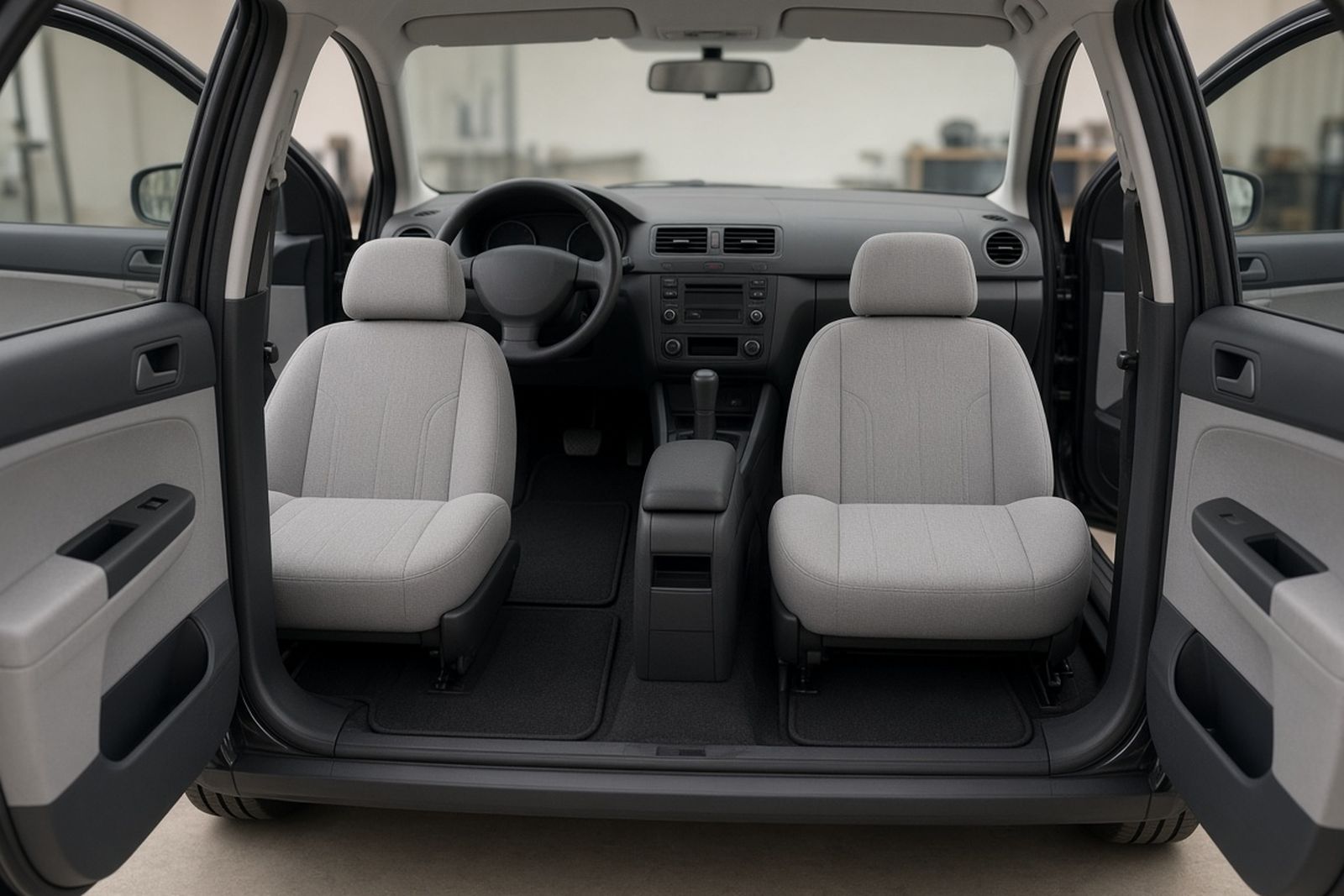
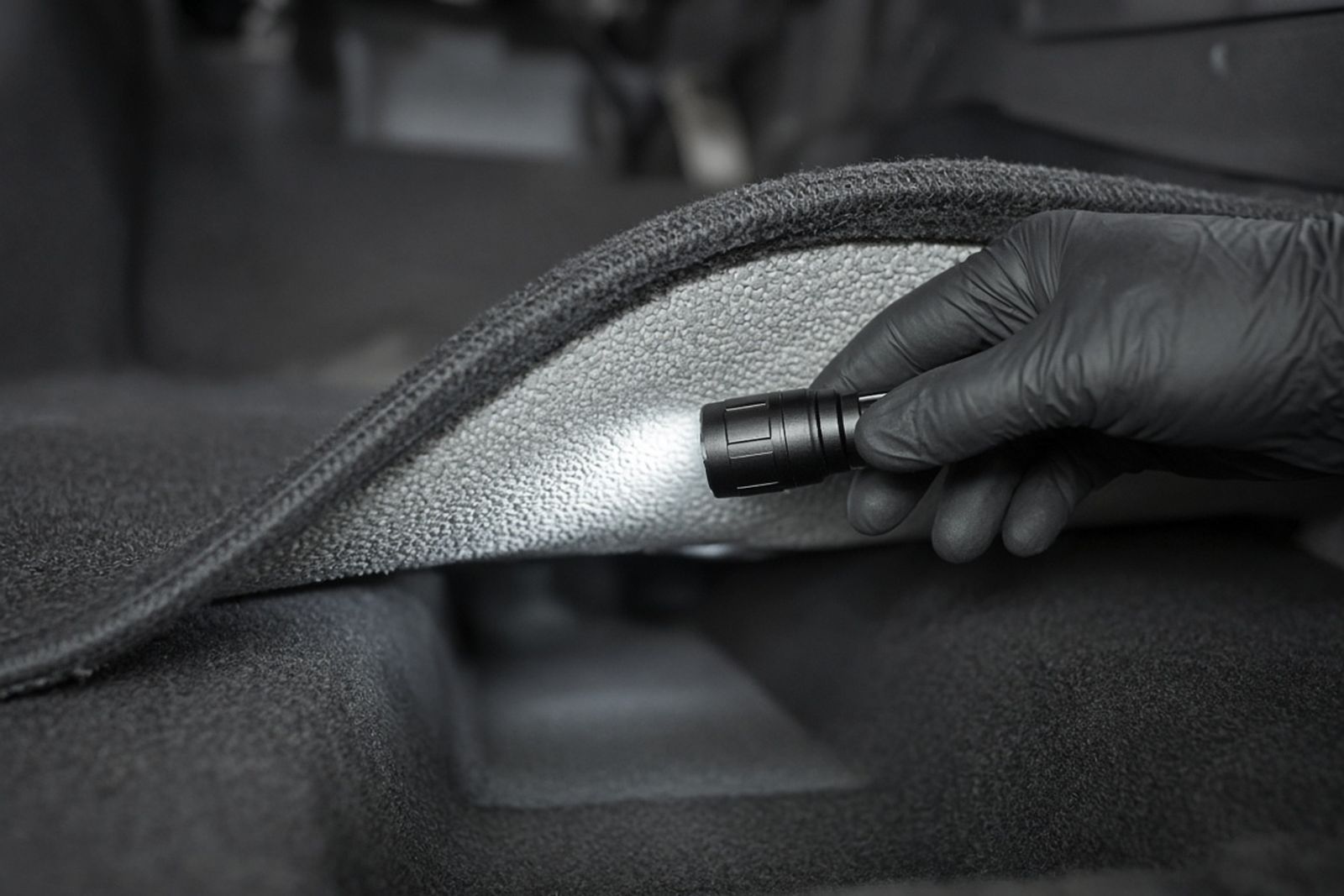
Question two: How will you figure out how far the contamination went? Look for an answer that mentions removing or tilting seats, pulling back carpet, checking seat tracks, belts, and the floor pan, and inspecting vents and the cabin air filter. Fluid travels in ways that are hard to see from the driver's door.
Contamination can also be present where nothing is visible. In a 2026 study, Schaps and colleagues found that 60% of ambulances labelled service-ready had at least one targeted pathogen. Personal vehicles are not ambulances, but the finding is a reminder that a clean-looking surface is not proof of a clean one.
Questions three and four: replacement, airbags, and electronics
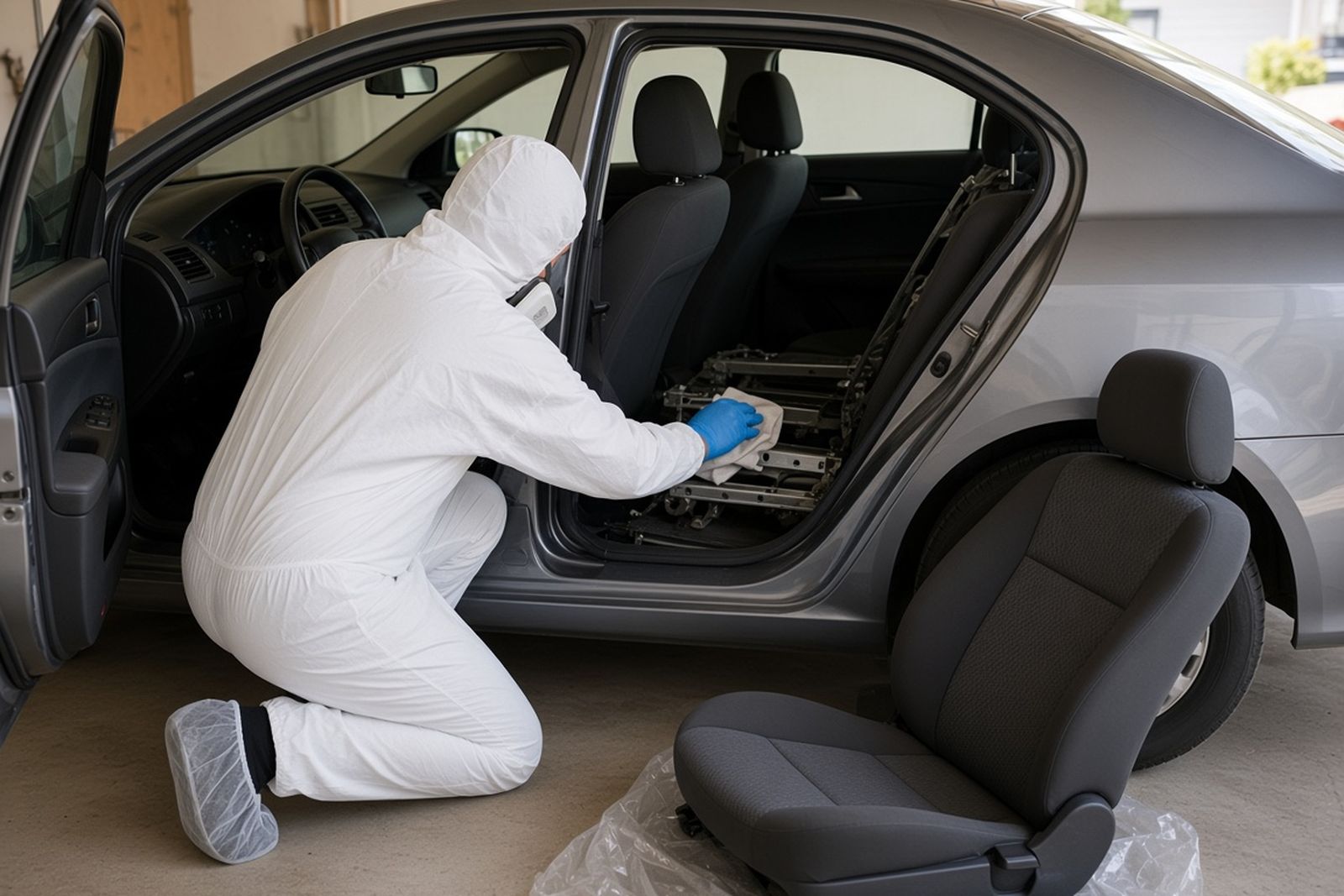
Question three: Which parts will you replace, which will you clean, and why? Porous materials that absorbed fluid, such as seat foam, cloth covers, carpet, and padding, are often replaced because they cannot be verified clean. Hard plastics and metal are usually cleaned and disinfected in place. Ask the company to explain its reasoning for each component.
Ask specifically about seat belts. Belt webbing is porous and is also safety equipment, so many providers recommend replacement rather than cleaning when a belt is affected.
Question four: How do you handle seats with airbags, sensors, or heaters? Many modern seats contain side airbags, occupancy sensors, and wiring. Removing and reinstalling them incorrectly can cause warning lights or, worse, affect how safety systems work. Ask whether the company has experience with your make and model, and whether it checks for warning lights after reassembly.
Questions five and six: products and waste
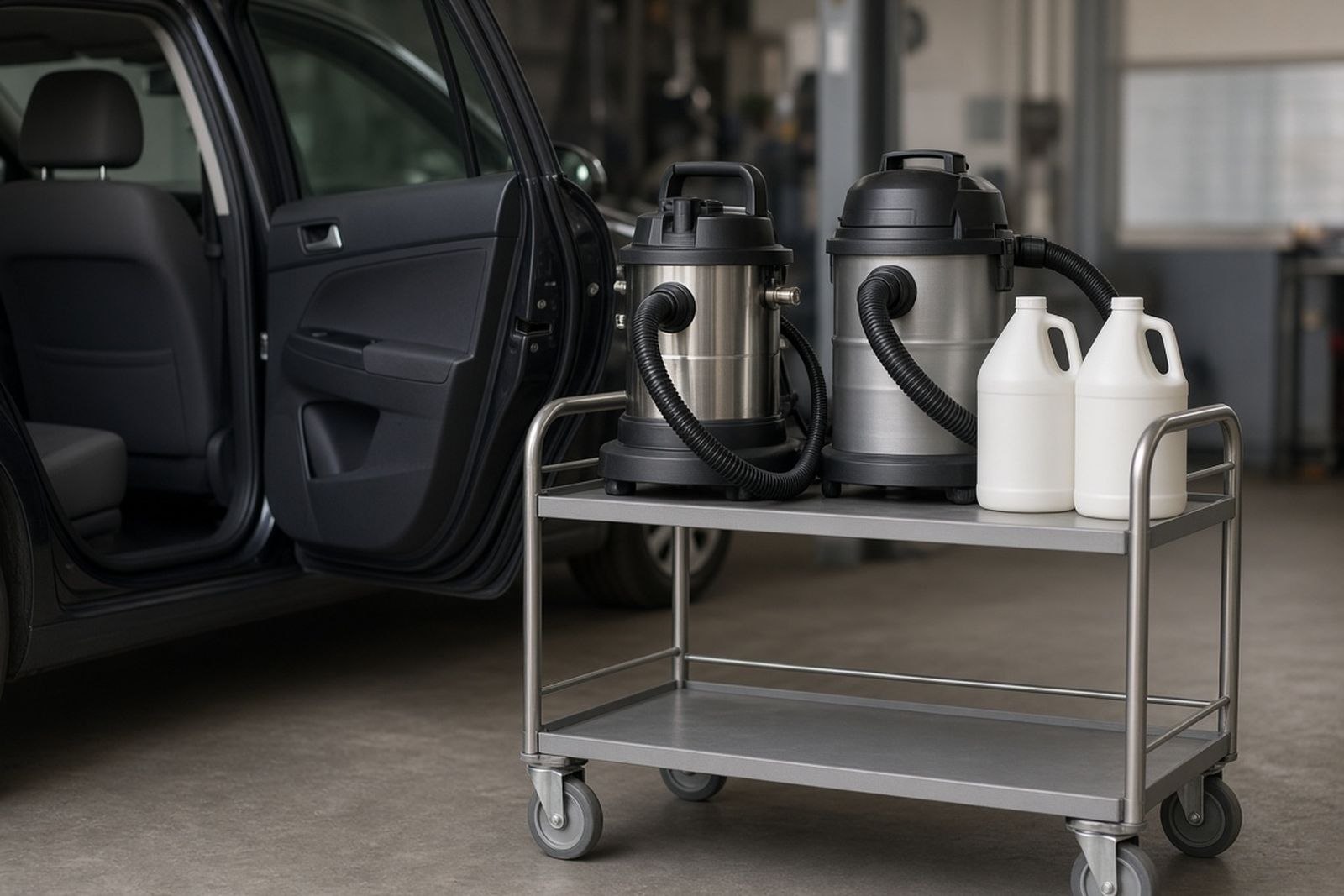
Question five: What disinfectants will you use, and are they safe for my vehicle? Products should be registered for the pathogens of concern and used according to their label, including the required wet contact time. They should also be compatible with automotive materials like dashboards, screens, and leather.
Question six: How will contaminated parts and materials be disposed of? Removed foam, carpet, and belts should be packaged and handled as regulated waste where required, then transferred to a licensed transporter. Ask whether you will receive a copy of the waste documentation.
If a company suggests putting soaked materials in a dumpster or tells you to take them home, that is a sign it may not be following the rules. Your state's environmental or health agency sets the medical waste rules, and a legitimate company should be able to tell you which ones it follows.
You can also ask how the company protects parts of the vehicle that were not contaminated while it works. Covering clean seats, masking screens, and sealing off the cargo area keeps a job from growing larger than it needs to be.
Question seven: who does the work?
Question seven: What training do your technicians have? At minimum, technicians handling blood and other potentially infectious materials should have current bloodborne pathogens training, and employers are expected to refresh that training regularly. It is reasonable to ask when the crew was last trained.
Ask whether the company carries general liability insurance and whether it will provide a certificate. A vehicle is valuable property, and damage during seat removal or towing should be the provider's responsibility, not yours.
Question eight: how long, and where?
Question eight: How long will I be without the vehicle? Ask for a timeline that includes inspection, parts ordering, cleaning, reassembly, and any odor treatment. Parts for older or less common vehicles can take time to arrive, and that often drives the schedule more than labor does.
Ask whether work happens on site or at the company's facility, and whether towing or storage is included. For fleet vehicles, ask whether the company can prioritize return to service.
Questions nine and ten: handback and follow-up
Question nine: What paperwork and photos come back with the vehicle? Expect before and after photos, a written scope and invoice that separates parts, labor, and disposal, and waste records. That package helps with insurance claims, resale, and your own peace of mind.
Question ten: What happens if odor returns or a warning light appears? Ask whether the company offers a follow-up visit within a certain period and how it handles issues that show up after the vehicle sits in the sun or after a few days of driving.
Also ask whether the company will walk you through the vehicle at handback. Seeing what was replaced and asking questions in person often matters more than any written guarantee.
- Photos from inspection, during removal, and after reassembly
- A written scope listing each component and what was done to it
- An invoice separating parts, labor, disposal, and odor treatment
- Waste documentation from the licensed transporter or treatment facility
- Any warranty or follow-up terms in writing
What a strong answer sounds like
The difference between a weak and a strong answer is easiest to hear side by side. A weak response to a contaminated bench seat is a same-day wipe-down and fogging, priced over the phone. A strong response starts by asking whether the vehicle has been released, requests photos, and explains that the crew will remove the seat cushion to inspect the foam, lift flooring where fluid may have entered a seam, and disinfect hard-to-reach hardware such as seat tracks or wheelchair tie-downs.
A strong provider also answers the training and waste questions without hesitation, commits to a follow-up inspection, and offers a documentation package that a fleet risk manager, an insurer, or a future buyer can rely on as a complete record.
Red flags that should send you elsewhere
Some answers should give you pause. A company that avoids specifics or pushes you to decide quickly may not be the right fit for a job that involves both health and safety.
A single red flag does not always mean a company is dishonest, but it does mean you should ask a follow-up question and listen carefully to the answer.
- A firm price quoted without an inspection or detailed photos
- Plans to shampoo or steam clean saturated seats rather than inspect the foam
- No clear answer about how waste is disposed of
- Unfamiliarity with airbag-equipped seats or reluctance to discuss them
- Promises that insurance will pay for everything
- Pressure to sign or pay in full before a scope is written
Before you sign
Compare the value of the vehicle with the written quote. If remediation is close to what the vehicle is worth, talk with your auto insurer about whether it might be settled as a total loss instead.
If the incident involved a suicide, a good provider will handle it with discretion and will not ask for more detail than it needs. If you or someone you know is struggling, the 988 Suicide and Crisis Lifeline is available by call or text at any hour.
Finally, give yourself permission to take a day to decide unless the situation is truly urgent. A thoughtful provider will understand and will still be there tomorrow.