Vehicular Biohazard Cleanup: Choosing a Company
Evidence to request from vehicular biohazard cleanup providers: business identity, applicable training, insurance, scope assumptions, waste routing, verification, availability, and responsibility for subcontractors.
These posts help you tell real vehicle cleanup providers apart from businesses that just add biohazard to a detailing menu. They cover the questions to ask on the first call. They cover warning signs that a company will rush through choices about foam and carpet. They cover the training and records you can fairly ask for. And they help you weigh a local shop against a national network that hands vehicle jobs to other companies. They explain what a trustworthy provider should say about removing seats, seat belt systems, cabin filters, and the hauler that takes soiled parts away. They also show how to tell whether its photos and papers come from real vehicle jobs, not house calls.
Get an email reply about vehicular biohazard cleanup
Send a short message to the follow-up inbox. A coordinator can reply by email. This form does not send emergency help; call 911 first if anyone is in danger.
Choosing well matters, because the wrong provider can create problems that last longer than the incident. An unqualified crew may damage airbag wiring or leave soiled padding in place. It may dump soiled parts where they do not belong. It may also push you to approve work before an adjuster inspects. These posts give you clear ways to test a company's claims before you hand over the keys. They also cover how to handle a company that pushes you to decide on the spot or tells you not to call your insurer. A trustworthy provider welcomes questions and explains its reasons in plain words. It does so even when the answer is that your vehicle may not be worth fixing.
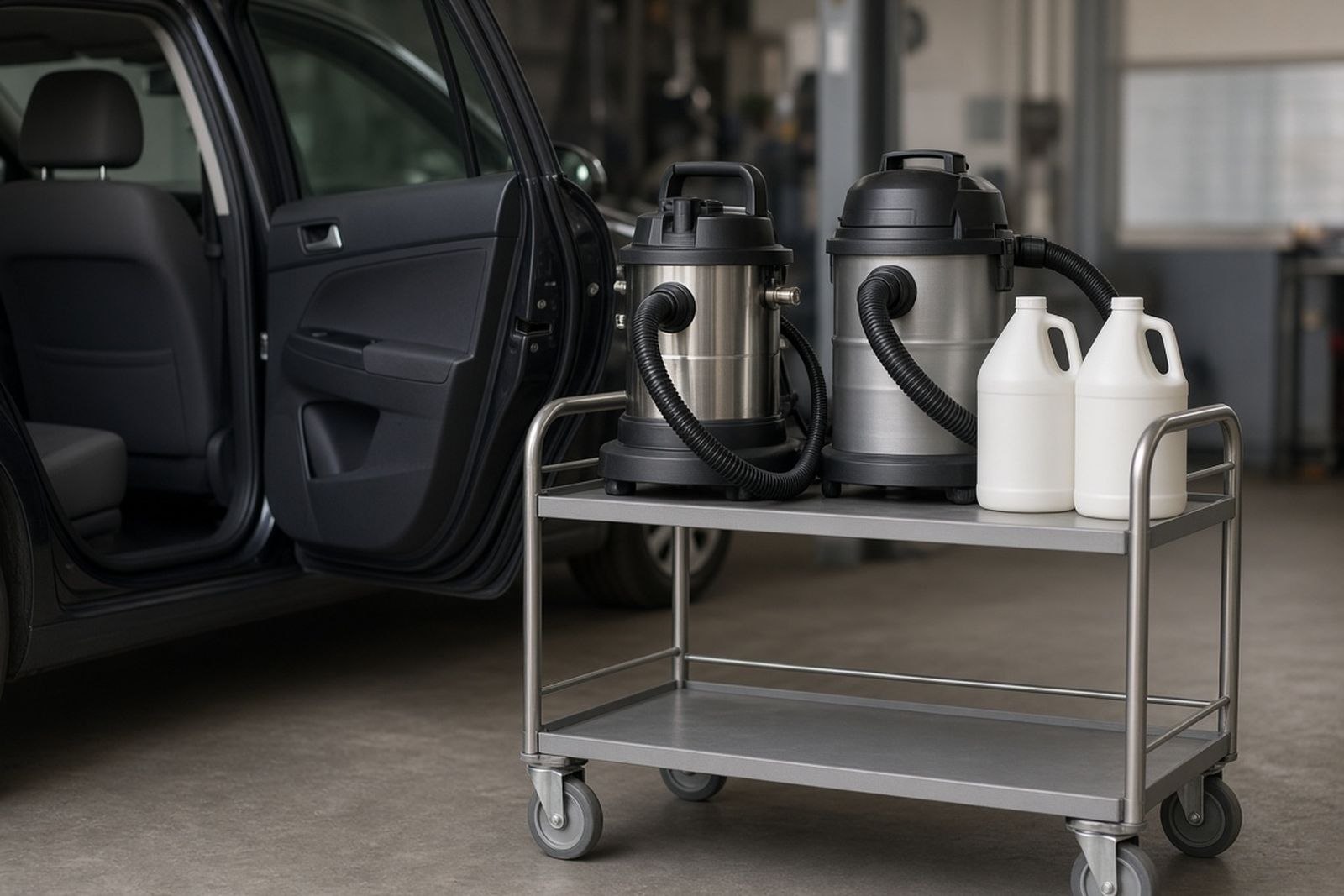
10 Questions to Ask Before Hiring a Vehicular Biohazard Cleanup Company
Before a company takes apart your car or van, ask how it traces fluid, what it replaces, how it handles airbags and waste, and what you get at handback.
Before hiring a vehicular biohazard cleanup company, ask whether it confirms the vehicle is released, how it traces contamination, which parts it replaces versus cleans, how it handles seats with airbags, what disinfectants it uses, how waste is routed, what training its technicians have, how long the job takes, what documentation you receive, and what happens if odor returns.
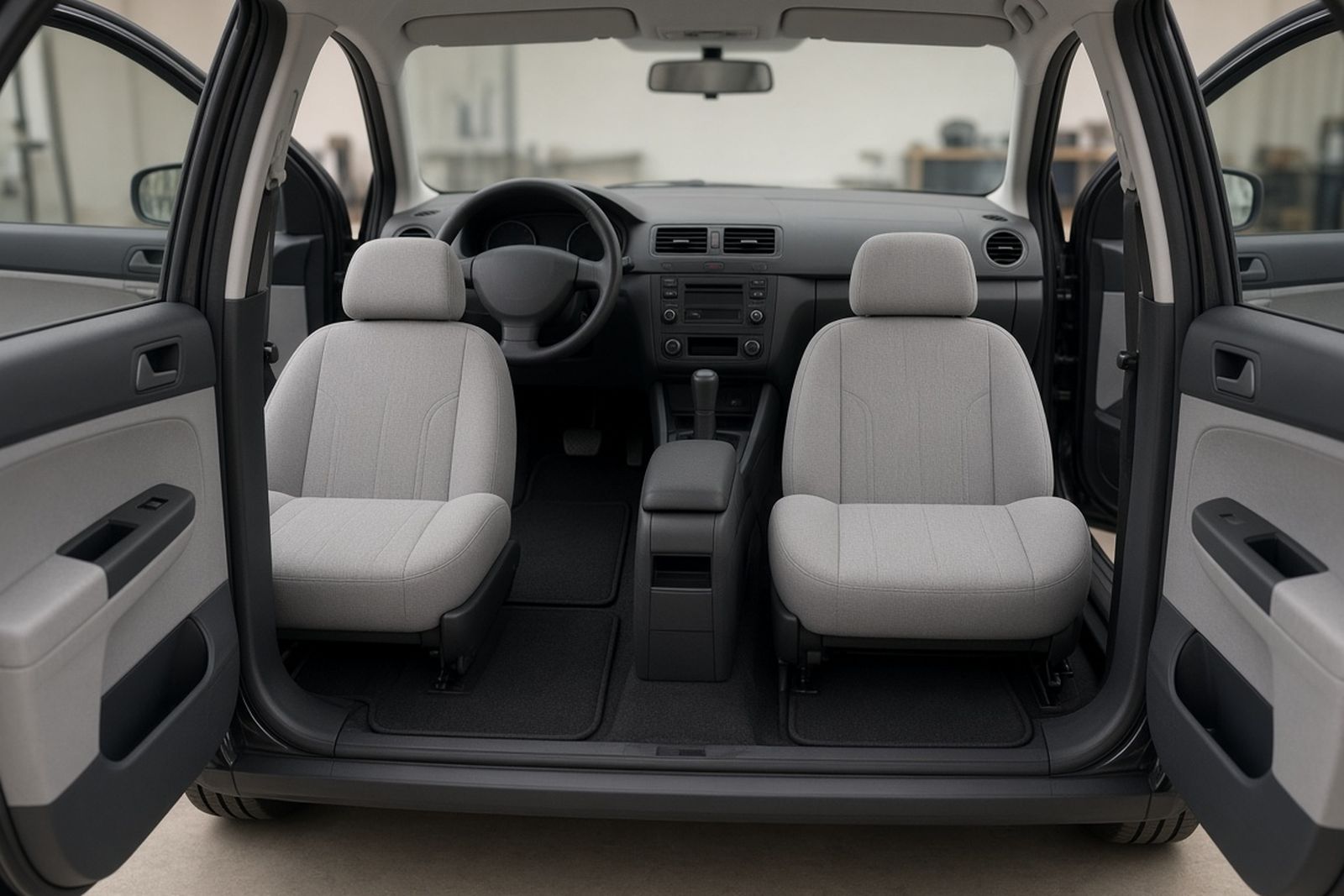
Red Flags When Hiring Vehicular Biohazard Cleanup Services
Detailers posing as biohazard crews, no plan for seat foam, and vague disposal answers are key red flags when hiring a vehicle biohazard cleanup company.
Red flags when hiring a vehicular biohazard cleanup service include a detailing shop with no bloodborne pathogen training, a quote given without seeing the vehicle, no plan to remove seat foam or carpet padding, no answer on regulated waste disposal, no coordination with your insurer or tow yard, and pressure to decide on the spot. A qualified provider explains removal, disinfection, and documentation.
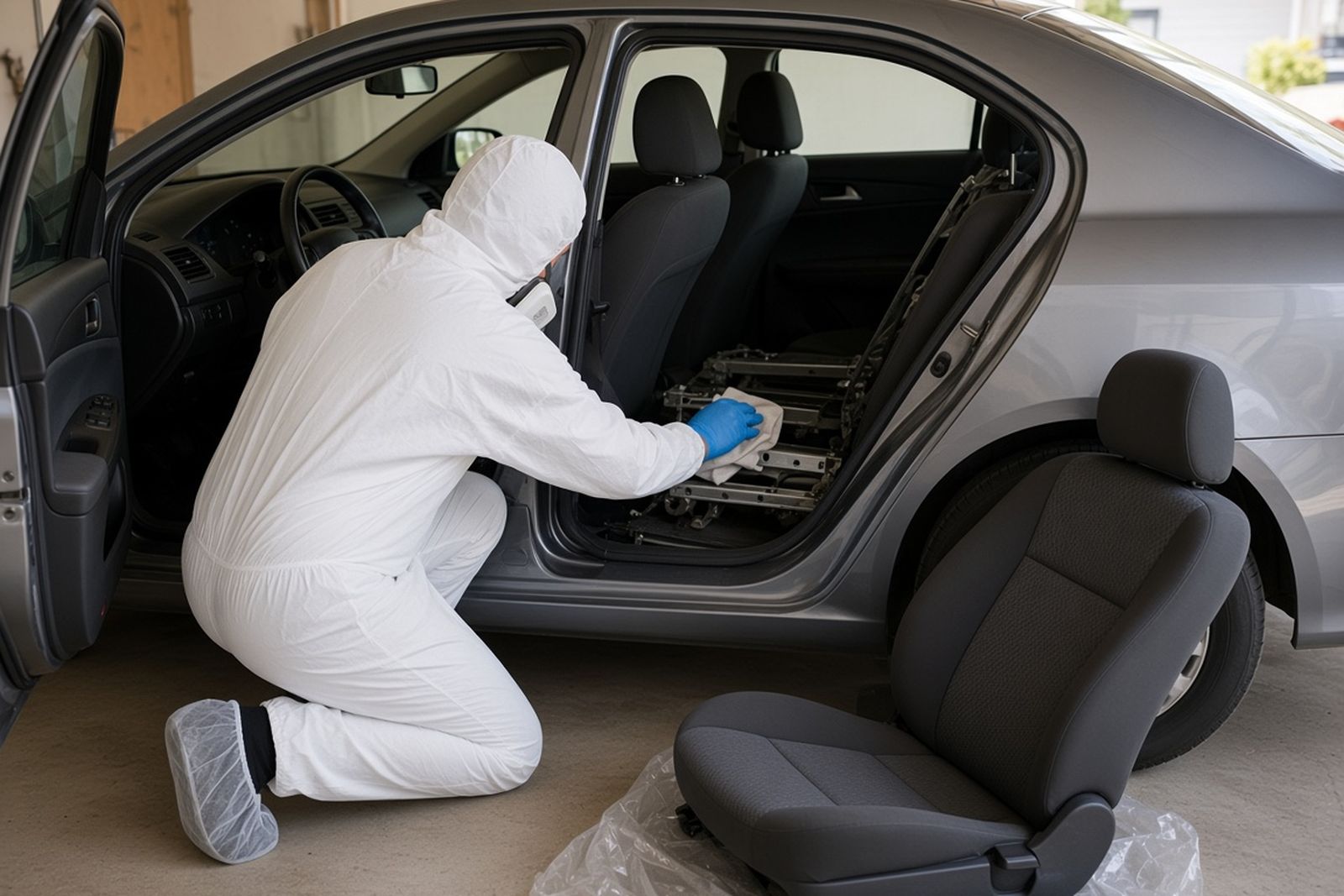
Training, Documentation, and Credentials for Vehicular Biohazard Cleanup
Bloodborne pathogen training, a written exposure plan, waste handling know-how, and job records separate real vehicle biohazard crews from detail shops.
Vehicular biohazard cleanup rarely has its own license, so training and records are how you judge a provider. Technicians should have bloodborne pathogen training under an employer exposure control plan, know how to select and use registered disinfectants, understand regulated waste rules, and document removal and disinfection with photos and disposal records. Verify each claim with the company and, where possible, the issuing organization.
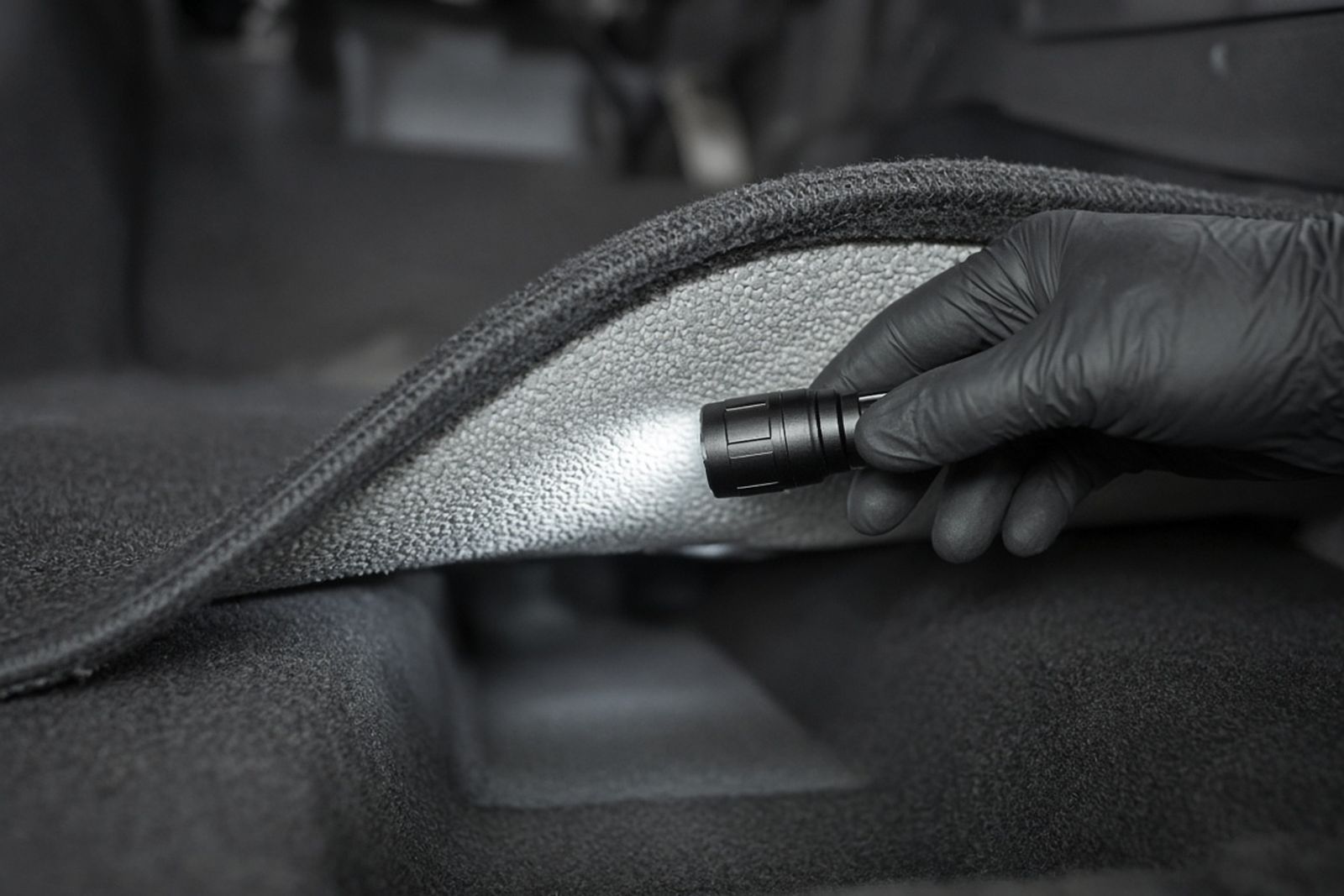
How to Compare Local and National Vehicular Biohazard Cleanup Providers
Local crews and national networks both clean vehicles after blood or trauma. Compare who shows up, where the work happens, parts sourcing, and records.
Compare local and national vehicle biohazard cleanup providers on who will inspect and clean the vehicle, whether they work at the tow yard or their own facility, how they source seats and belts, how they coordinate with insurers and tow companies, and what documentation you receive. National networks may offer reach and fleet contracts, while local companies may offer faster direct contact. Crew experience with vehicles matters most.
Sourced figures on choosing a company
- 98%
Aerobic colony counts fell 98% after added fogging compared with post-cleaning measurements.
Read with care: System-specific; commercial technology; no patient infection or occupied-room safety endpoint.
Source: Khandelwal et al. (2022)Patient-room surfaces sampled after standard cleaning and again after a specific fogging system.
- 81.7%
The reported overall reduction was 81.7% in buses.
Read with care: Product/vehicle-specific; bacterial reductions do not establish virus control or passenger safety.
Source: Kruszewska et al. (2022)Buses and long-distance coaches treated with a specific automated peracetic-acid system.
- 13 lists
EPA maintains 13 active lists of registered disinfectants, including List H for MRSA and VRE, List G for norovirus, and List S for bloodborne pathogens.
Read with care: Lists are not exhaustive; products must be used per label contact times.
Source: EPA (2025)United States, EPA-registered antimicrobial products
These figures are public research and agency data, not this network's own job records. Keep each number with its population, year and limits; none of them predicts cost, timing or outcome at a specific property.
What research has found
Findings from published studies of people and properties in situations like this one. They describe what researchers observed in a specific group; they are not predictions for your case.
Clinicians reported high awareness of uniform and vehicle cleanliness despite detected contamination.
All six surface types were contaminated before routine cleaning.
Choosing a Company: common questions
What should I ask a vehicle biohazard company before I agree to anything?
Ask whether it works where the vehicle sits or needs a tow. Ask how it decides which soft materials to replace and how it protects airbag and seat belt parts. Ask which hauler takes its waste, and whether it will wait for your adjuster. Also ask for sample final papers from a past job, with personal details removed.
Is it a warning sign if a company quotes a flat price over the phone?
It can be. Without seeing how far fluids traveled, a provider cannot know whether seats, carpet padding, or air components need attention. A phone range is fine as a rough guide, but a firm price before inspection may mean the company plans surface work only. Ask what would change the price once seats come out.
Should I use the provider my insurer or rideshare app suggests?
You can, but you usually do not have to. A suggested vendor may know the claims process, which can help. Still ask it the same questions you would ask any other company about the scope, safety parts, and waste. If you would rather use another provider, confirm with your insurer that its quote will be considered.
Should I choose a company that works only on vehicles?
Focusing on vehicles can help, but it is not required. What matters is whether the crew has real experience with your type of vehicle. They should understand seats, airbags, and air systems, along with biohazard safety steps. Many trauma cleanup companies handle vehicles well. Ask how many vehicle jobs the crew has done lately, and ask for a sample report from one.
How can I compare companies if I am too upset to make many calls?
Ask a trusted friend or relative to make the calls using a short list of questions, and to write down each company's answers. You can also email the same questions to a few companies and compare replies later. It is fine to choose based on the company that answered clearly and treated your helper with patience. You do not need to handle every step yourself.
Is it okay to choose a provider recommended by the tow yard?
It can be, if the provider answers the same questions you would ask anyone else and gives you a written scope. Tow yards often work with providers who know their procedures. Ask whether the yard has any financial relationship with the provider, and feel free to get another quote. The choice is yours, even when the vehicle is at the yard.
No local company handles vehicle biohazards. Can the car be towed to one farther away?
Often, yes. Ask providers in the nearest larger city whether they travel, or whether they take towed vehicles at their shop. Ask your insurer about options in your region and about towing coverage. In the meantime, keep the vehicle closed, shaded, and locked. Do not settle for a cosmetic detail shop just because it is close. A surface-only job on seats and carpet can cost more to fix later.
Related community polls
Every count is a real visitor vote; nothing is seeded or padded. One vote per poll per device, and you can change your answer.
If a passenger became ill in your car, what would you most likely do first?
Would you keep driving a vehicle where blood reached the seat foam if it looked clean afterward?
More on vehicular biohazard cleanup
Vehicular Biohazard Cleanup services
Learn what cleanup of a car, van, RV, or boat involves after blood, illness, or death. It covers checking foam and belts, the air system, and waste.
Costs explained
What drives the price, published cost ranges, and how to read a written quote line by line.
Insurance and payment
Which policies may respond, how to document a claim, and what to do if coverage is denied.
Planning tools
Estimate the job for your vehicle, check a provider, organize an auto claim, and plan the first day. Sort removed materials and see whether you should touch the cabin.
Community polls
See how other owners, rideshare drivers, and fleet managers handled soiled vehicles. Views range from first reactions to total-loss offers and what to tell buyers.
Knowledge quiz
Test what you know about soaked foam, seat belts and airbags, the car's air paths, regulated waste, and when an insurer may total the vehicle.