Free vehicular biohazard cleanup tool
Vehicular Biohazard Cleanup Cost Range Estimator
Set the affected area, surface types, severity and extras to see an educational cost range and the factors that move it.
The cost of a vehicle cleanup depends on how much has to come out of the cabin. A small amount of blood on a vinyl seat and a hard floor is a cleaning and disinfecting job. The same amount soaked through a cloth seat into the foam and down into the carpet padding is different. That is a parts replacement job, with a regulated waste bill added. This estimator asks about the affected area in the vehicle. It asks whether the surfaces are hard, mixed, or soft. It also asks how bad the mess is, including whether the vehicle sat closed in heat. You can add factors such as after-hours service, several vehicles, odor treatment, and removing seats or carpet down to the metal floor. The result is a range for learning, with the cost drivers explained.
Keep two things in mind. First, the range is for cleanup, not repair. If a crash damaged the vehicle, body and mechanical work are separate quotes from separate shops. Second, when the range climbs toward the vehicle's value, the insurer may prefer to call it a total loss. Then paying for a big tear-down before the adjuster reviews the file can leave you out of pocket. Use the result to judge whether a written quote makes sense. Use it to see why a quote for a sedan with cloth seats differs from one for a truck with leather seats. And use it to decide when to pause and let the insurer weigh in. Disposal rules that affect cost vary by state and county, so check with the local authority.
How to use it
- 1Guess how much of the cabin or cargo space was affected. Include any nearby seats, footwells, or trunk areas the fluid may have reached.
- 2Pick the surface type based on the seats and floor. Leather or vinyl over foam is mixed. Cloth over foam, with carpet, is soft.
- 3Rate how bad it is by how much fluid there was, how long the vehicle sat, and whether it sat closed in heat.
- 4Add the extras that apply. Then review what drives the cost and the list of items to ask for in a written quote.
Prefer to ask a person?
Your request is sent to the follow-up inbox. A coordinator can reply by email. Not for emergencies; call 911 first if anyone is in danger.
Estimate a cost range
Vehicular Biohazard Cleanup cost range estimator
Educational only. Real pricing needs an on-site assessment and a written scope. Insurance coverage is decided by your carrier, not by this tool.
Educational range: $3,000 – $5,000
Scaled from a published reference range (typical biohazard cleanup project, national) reported by Fixr (2025). Your region, provider and the actual findings on site can move the real number outside this range.
Cost level: Mid range.
None of the big cost multipliers are selected. Minimum service charges, travel and waste fees still apply.
Ask every quote to itemize labor, containment, product, waste disposal, verification sampling, and any rebuild, and to state what is excluded.
A worked example
Imagine a rideshare driver whose passenger got very sick in the back seat late on a weekend night. The driver ended the trip, reported it in the app, and parked the car. By morning, the cloth back seat, the rear floor carpet, and the backs of the front seats are affected. The car has been sitting closed. In the estimator, the driver enters the back seat area and floor as the affected zone. The driver picks soft surfaces, because the seats are cloth over foam and the floor is carpet. The driver sets the severity to moderate. There was a lot of fluid, and the car sat overnight, but not in extreme heat. Under extras, the driver adds odor treatment. The driver leaves structural removal off, expecting the worker to decide whether the foam must come out. The tool gives a range and explains what drives it. That includes checking the foam and carpet, likely replacing the soaked seat cushion, and deep cleaning and disinfecting the rest. It also includes replacing the cabin air filter and a sealed-cabin odor step. The quote checklist prompts the driver to ask three things. Is replacing the seat cushion included? How will the provider record the incident for the app's payback process? How long will the car be off the road? Each day off the road is lost income.
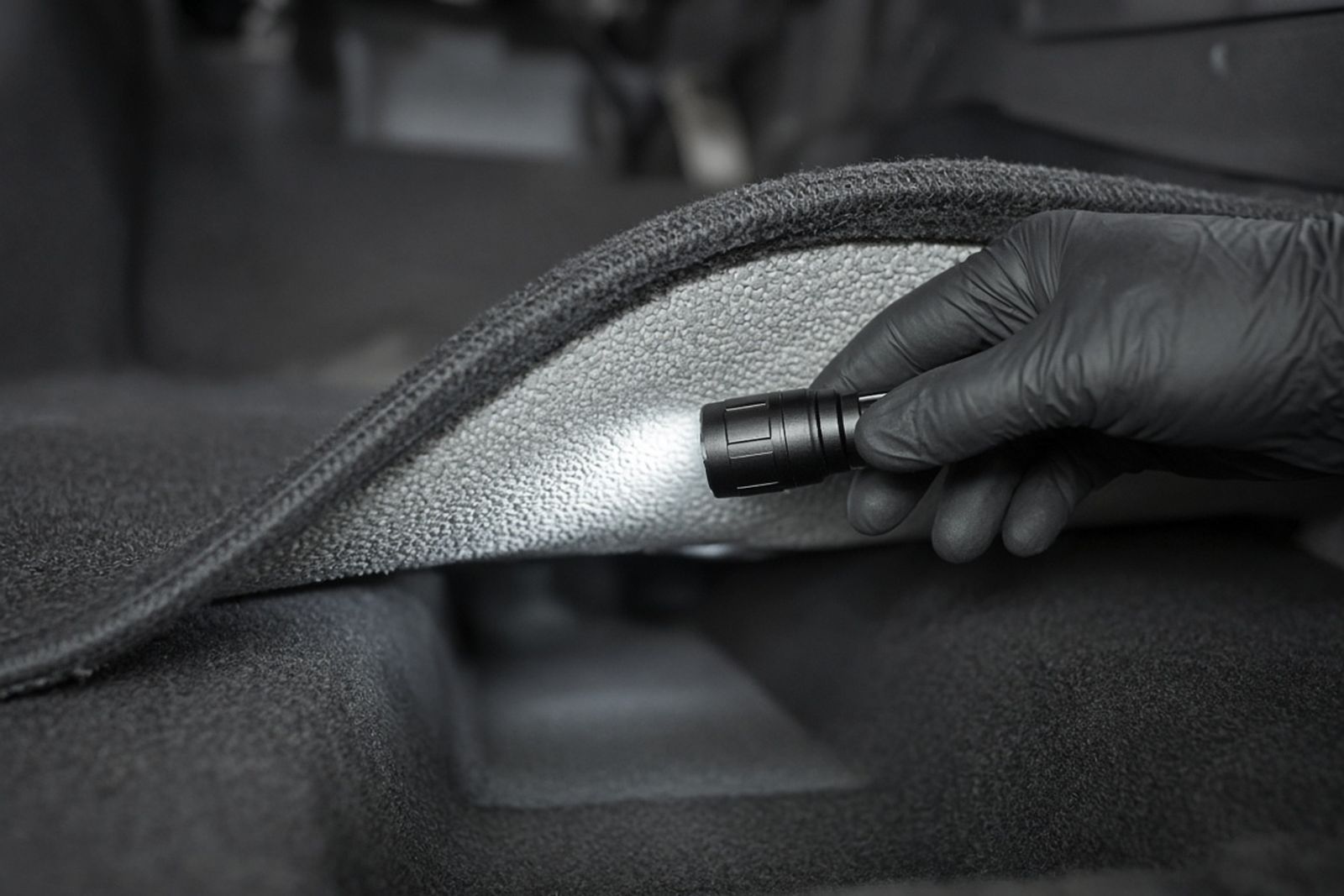
Numbers behind cost estimator decisions
- $340 billion
The economic cost of U.S. motor vehicle crashes is estimated at $340 billion per year.
Read with care: Economic cost estimate originates from NHTSA modeling and includes lost productivity, not cleanup alone.
Source: IIHS (2024)United States, annual estimate cited by IIHS
- $25-$600/hour
Biohazard cleanup labor ranges from $25 per hour for Biosafety Level 1 work to as much as $600 per hour for Level 4 work.
Read with care: Most vehicle blood cleanups fall in the lower biosafety tiers.
Source: Fixr (2025)United States, consumer cost guide updated January 2025
- every 3 years
Hazmat employees must receive recurrent DOT training at least once every three years.
Read with care: Records must be kept for the prior three years plus 90 days after employment ends.
Source: DOT PHMSA (49 CFR via Cornell LII) (2024)United States, all hazmat employees
- 180 days
Facilities generating more than 100 kg but less than 1,000 kg of hazardous waste per month are Small Quantity Generators and may store it up to 180 days.
Read with care: Limit extends to 270 days when the disposal facility is over 200 miles away.
Source: EPA (2024)United States, RCRA generators
These figures are public research and agency data, not this network's own job records. Keep each number with its population, year and limits; none of them predicts cost, timing or outcome at a specific property.
Cost Range Estimator questions for vehicular biohazard cleanup
Why does cloth seating raise the range so much compared with leather?
Cloth lets fluid pass straight through into the foam. No one can confirm foam is clean, so the cushion often has to be replaced. Sealed leather or vinyl slows fluid down, though leather with tiny holes and seams still let it through. Replacement means parts. It means labor to remove and put back the seat around airbag wiring. And it means regulated waste disposal for the removed foam. Those three costs are what separate the soft-surface range from the hard-surface range.
What does the multiple-vehicles option account for?
It fits a fleet or household where more than one vehicle needs attention. For example, a shared tool may have spread germs to a second vehicle, or one incident may have involved several vehicles. The option adjusts for setting up, ordering the work, and keeping records for each vehicle. It does not just multiply one vehicle's price. Fleet managers should still expect a separate scope and final notes for each vehicle.
Does the odor treatment extra mean the smell is guaranteed gone?
No. It includes a sealed-cabin treatment step, such as hydroxyl or ozone used under rules on keeping the cabin empty and airing it out. That step comes after dirt and soaked materials are removed. Odor that stays after treatment usually means a source is still in the foam, padding, or air system. The fix is more source removal, not more machines. Ask the provider how they will confirm the cabin is clear.
Should I include the trunk or cargo area?
Include any space the fluid could have reached. That includes the trunk if the back seat folds down or if items were moved there. In vans and SUVs, the cargo carpet often runs under the back seats and shares padding with the passenger area. Leaving out a connected area makes the job look smaller than it is. It leads to a plan that treats only part of one continuous carpet.
What should a written quote break out for a vehicle?
Ask for each of these as its own line. List the assessment and tear-down, and the cleaning and disinfecting of hard surfaces. List each part being replaced, with its part and labor cost. Then list regulated waste disposal, air system work, odor treatment, and putting the vehicle back together. Adjusters use those lines to compare against actual cash value. You use them to understand what a total-loss choice would be based on.
Does the estimate include towing, storage, or a rental car?
No. The range covers cleanup work only. Other costs are separate. These include towing to a provider's shop, daily storage at a tow yard or impound lot, a rental car, and body or mechanical repairs. They can add up while you wait on a release, an adjuster, or parts. List them next to the estimator's range, so you see the full picture. Ask each provider which of them its quote includes.
Should I run the estimator again after a provider checks the vehicle?
Yes, it is worth doing. An inspection often reveals that fluid reached foam, padding, or a seat track you could not see, or that an area you worried about is fine. Update the affected area, surface type, and severity to match the findings, then compare the new range with the written quote. A large gap is a prompt to ask the provider which items explain the difference.
Related community polls
Every count is a real visitor vote; nothing is seeded or padded. One vote per poll per device, and you can change your answer.
If a passenger became ill in your car, what would you most likely do first?
Would you keep driving a vehicle where blood reached the seat foam if it looked clean afterward?
Other vehicular biohazard cleanup tools
Provider Vetting Checklist
Fifteen questions to ask any remediation provider, a readiness score, and a copyable list of what is still unanswered.
OpenInsurance Claim Organizer
A guided checklist from finding the policy to tracking the carrier decision, with a printable summary of where the claim stands.
OpenFirst 24 Hours Planner
Tell the planner a few facts about the situation and get an ordered list of who to call, what not to touch, and what to photograph.
OpenWaste & Disposal Classifier
Five questions about the material point to the likely waste category and which authority to confirm the rules with.
OpenDIY or Call a Pro? Risk Check
Eight yes-or-no questions that produce a risk level and explain when professional help is the safer choice.
OpenMore on vehicular biohazard cleanup
Vehicular Biohazard Cleanup services
Learn what cleanup of a car, van, RV, or boat involves after blood, illness, or death. It covers checking foam and belts, the air system, and waste.
Costs explained
What drives the price, published cost ranges, and how to read a written quote line by line.
Insurance and payment
Which policies may respond, how to document a claim, and what to do if coverage is denied.
Community polls
See how other owners, rideshare drivers, and fleet managers handled soiled vehicles. Views range from first reactions to total-loss offers and what to tell buyers.
Knowledge quiz
Test what you know about soaked foam, seat belts and airbags, the car's air paths, regulated waste, and when an insurer may total the vehicle.
Articles and resources
Plain reads on rideshare cases, fleet steps, RV and boat cabins, and how heat speeds decay. Learn how to talk with an adjuster about your car or truck.