Short answer
Vehicular biohazard cleanup rarely has its own license, so training and records are how you judge a provider. Technicians should have bloodborne pathogen training under an employer exposure control plan, know how to select and use registered disinfectants, understand regulated waste rules, and document removal and disinfection with photos and disposal records. Verify each claim with the company and, where possible, the issuing organization.
Does a company need a special license to clean blood from a vehicle?
Most states do not issue a dedicated license for cleaning blood or body fluids out of cars, trucks, or other vehicles. A few states regulate trauma scene or crime scene cleanup companies more directly, and many regulate how the resulting waste is handled and transported. Requirements differ widely.
Because of that patchwork, you usually cannot look up a single license number and be done. Instead, you look at what the company can show: the training its technicians have completed, the safety programs it runs as an employer, the way it handles waste, and the records it produces for each vehicle.
Your state health department or environmental agency is often the best place to ask whether a vehicle cleanup business must register and how contaminated materials must be managed.
Fleet operators, rental agencies, and public transit systems sometimes have their own contract requirements on top of state rules. If you manage vehicles for an employer, check your internal policy or vendor agreement before hiring, since it may name specific training or documentation that a cleanup provider must meet.
Bloodborne pathogen training is the baseline
Anyone whose job exposes them to blood or other potentially infectious materials is covered by OSHA's Bloodborne Pathogens standard. For employers, that standard means a written exposure control plan, protective equipment, hepatitis B vaccination offered to exposed workers, and training on the hazards and how to control them.
The standard also requires that the plan and the training stay current. Under OSHA's 2024 text of 29 CFR 1910.1030, employers must review the written exposure control plan at least annually and provide retraining to exposed workers at least annually.
For a vehicle cleanup crew, this training is not optional background knowledge. It shapes how technicians put on and remove protective gear, how they handle sharp debris such as broken glass that may carry blood, and what they do if they are exposed. Ask when the crew last completed bloodborne pathogen training and whether the company can show the date.
- A written exposure control plan specific to the company's work
- Annual bloodborne pathogen training for exposed technicians
- Hepatitis B vaccination offered to exposed workers
- Procedures for exposure incidents and follow-up
- Protective equipment suited to fluid removal and material cutting
Disinfection and waste handling: skills beyond cleaning
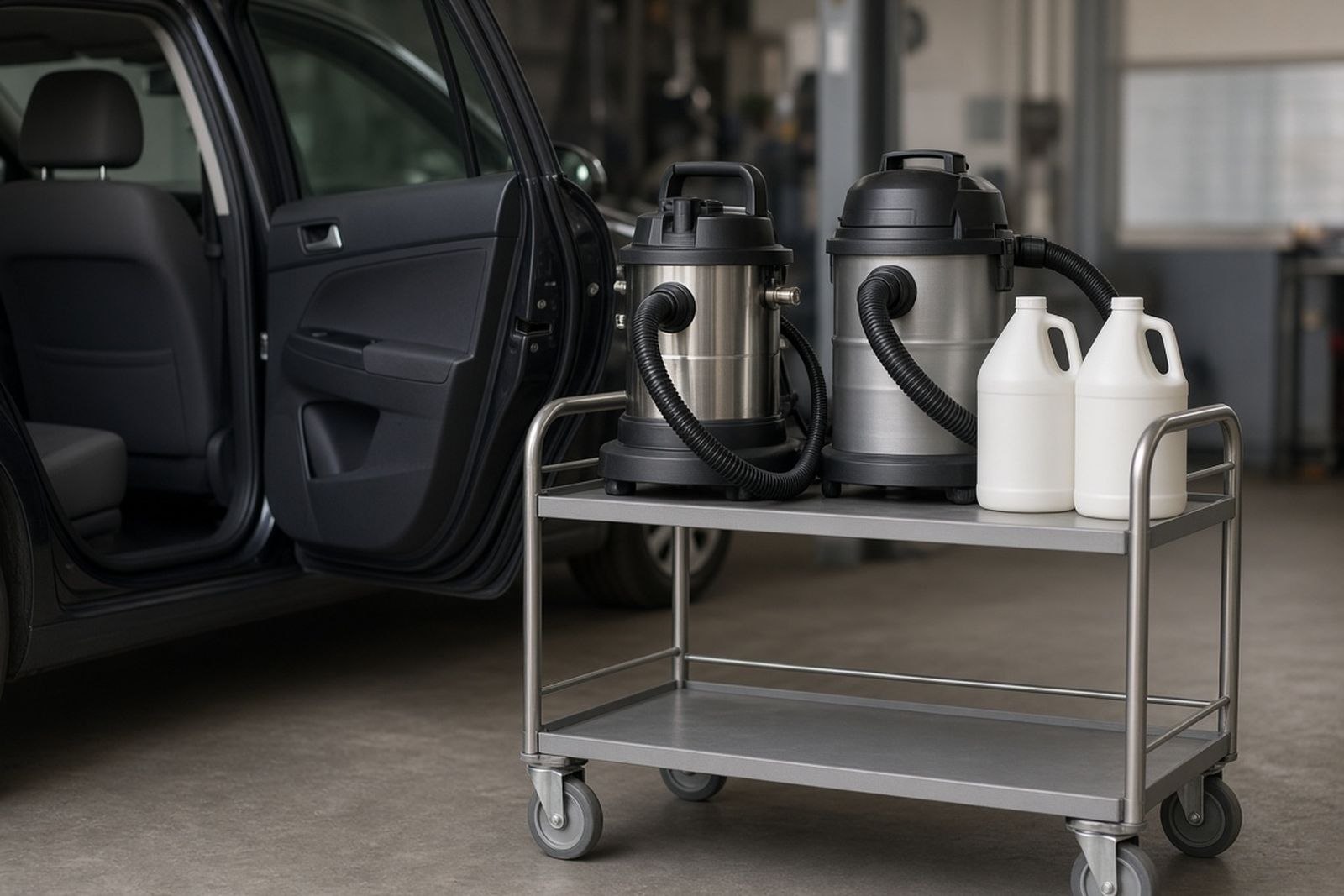
Many detailers are excellent cleaners. Biohazard work adds a second skill: choosing and using disinfectants so they actually inactivate pathogens. That means reading the product label, cleaning the surface first, keeping the product wet for its full contact time, and understanding which materials the product may damage.
Contact time matters in a vehicle because the cabin is full of vertical, textured, and hard-to-reach surfaces. A technician who sprays and immediately wipes may leave the surface visibly clean without meeting the product's label directions.
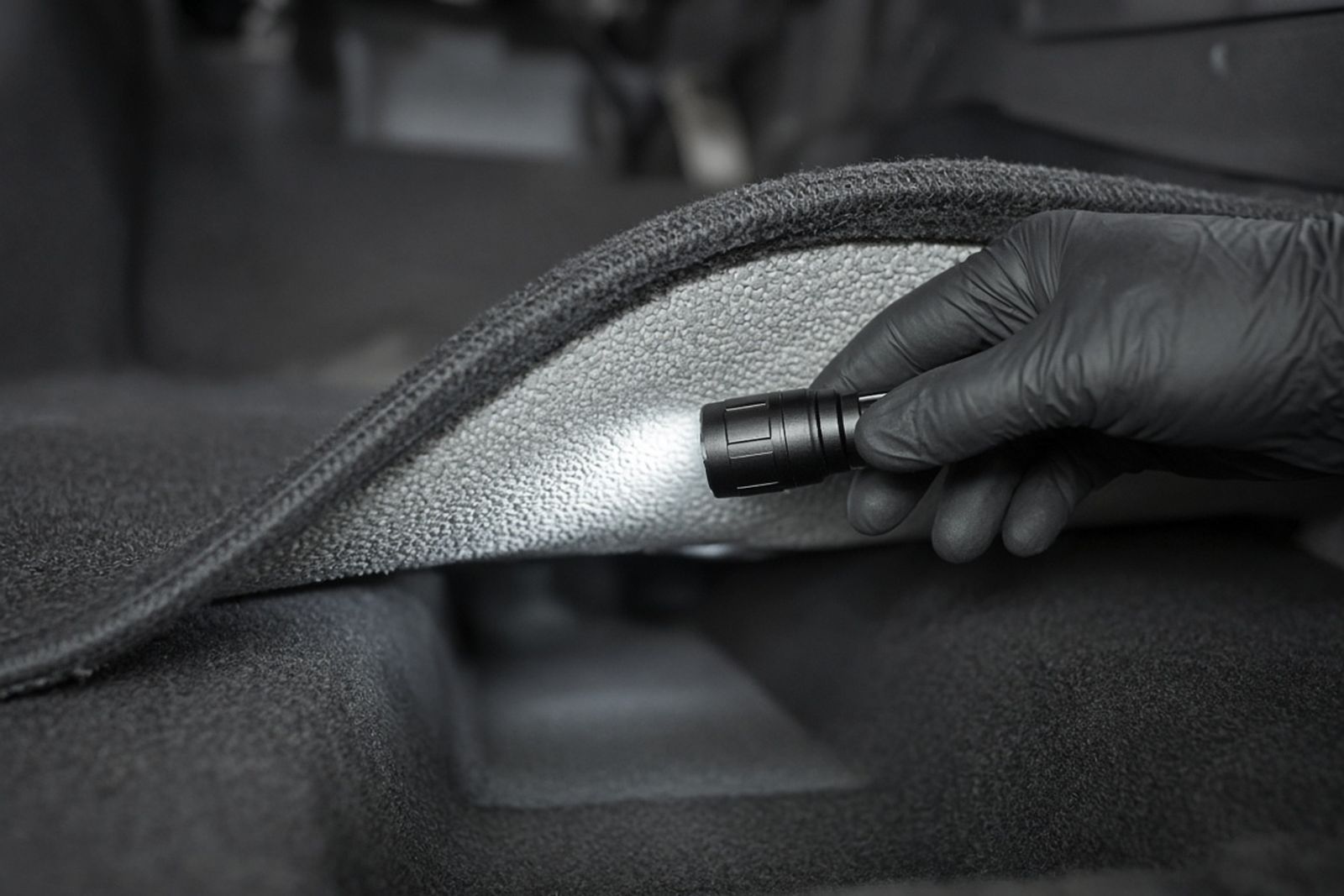
Training also covers why some materials must be removed rather than disinfected. Seat foam, carpet padding, and headliner backing that absorbed blood cannot be reliably treated all the way through. Some viruses are hardy, too, and a trained technician does not assume a vehicle that has been parked for days is safe.
Removing contaminated seats, carpet, and trim creates bulky waste. Depending on how saturated it is and on your state's rules, some of it may need to be managed as regulated medical waste. That means specific bags and containers, labels, storage, and a licensed transporter.
A technician trained in waste handling knows how to separate regulated waste from ordinary trash, how to package items with sharp edges, and how to keep liquids from leaking during transport. The company should be able to tell you who hauls its waste and where it is treated.
If the vehicle was part of a crash, some materials may also be automotive waste, such as fluids or airbag components. A trained crew recognizes those items and routes them to the right handler rather than mixing everything together.
Should the crew understand vehicle systems too?
Yes, at least enough to know their limits. Seats contain wiring for heaters, sensors, and side airbags. Seat belts are safety equipment. Dashboards and door panels hide clips and connectors that break if forced.
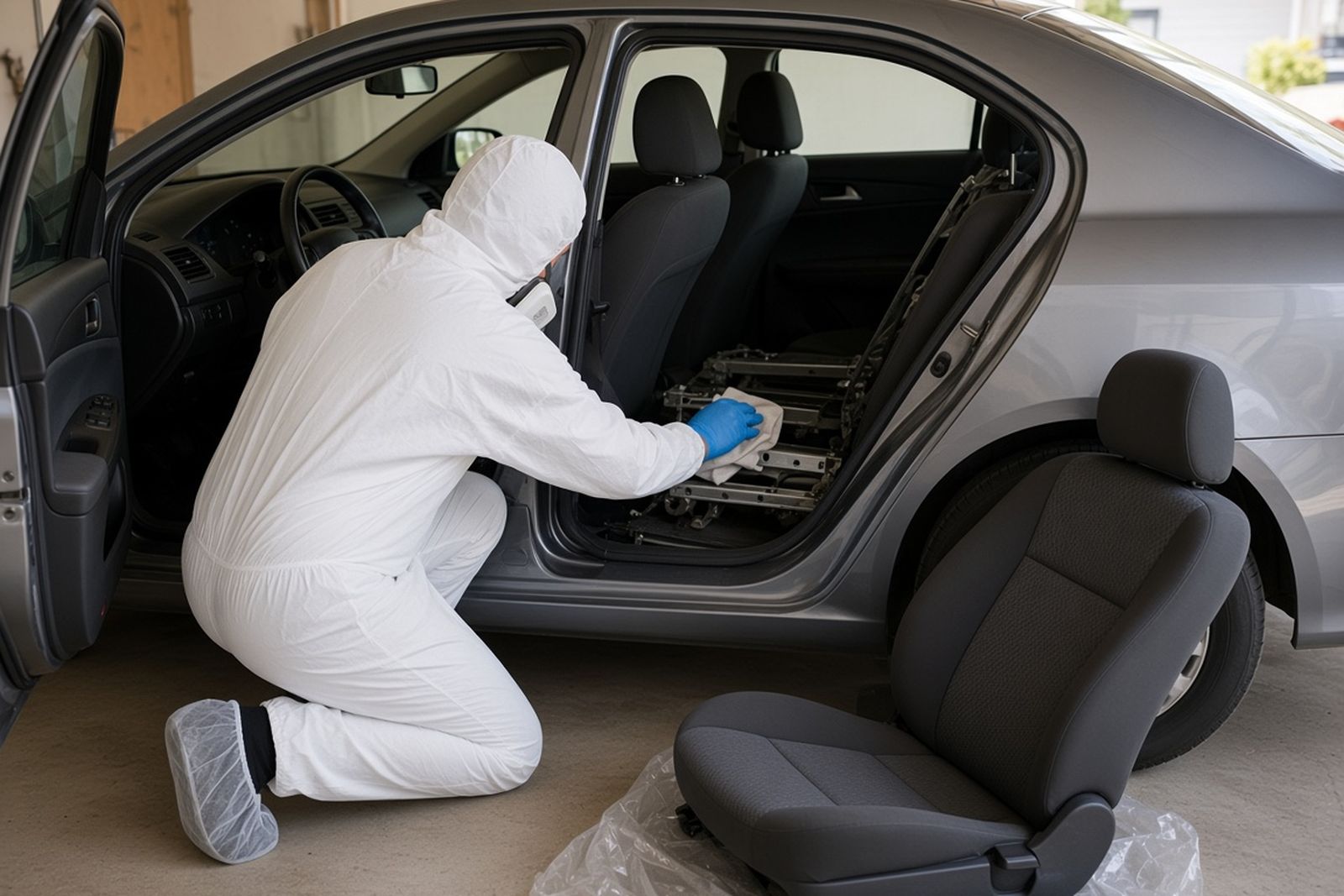
An experienced vehicle biohazard technician knows how to remove seats and trim without damaging them, when to disconnect the battery before touching airbag-equipped components, and which items should be replaced by a qualified repair shop rather than cleaned and reinstalled. Contaminated seat belts and deployed airbags fall in that last group.
Ask the company how it handles seats with airbags or sensors, and whether it works with a repair shop for parts replacement. A provider that plans to cut out seat foam without mentioning wiring or airbags may be skilled at biohazard work but inexperienced with vehicles.
Electric and hybrid vehicles add another layer. High-voltage components and battery packs run under seats and floors in some models, and they should only be handled by people trained for them. A provider that works on these vehicles should explain how it avoids high-voltage areas and when it involves a dealer or specialist shop.
Records a qualified provider should give you
Records show what was done and protect you if questions come up later, whether from an insurer, a dealer, a lender, or a future buyer. A professional provider keeps a file for each vehicle.
That file usually includes the vehicle's identifying details, photos before, during, and after the work, a list of removed and discarded parts, the disinfectant used and its contact time, and a disposal record for regulated waste. If a follow-up check was done, that should be noted too.
Ask for copies. Many insurers and fleet managers expect them, and having your own set means you do not have to rely on the company keeping its files.
- Vehicle identification details and date of service
- Before, during, and after photos of each affected zone
- List of removed parts and materials
- Disinfectant name and contact time
- Disposal documentation for regulated waste
- Notes on parts referred to a repair shop
What training looks like on the job
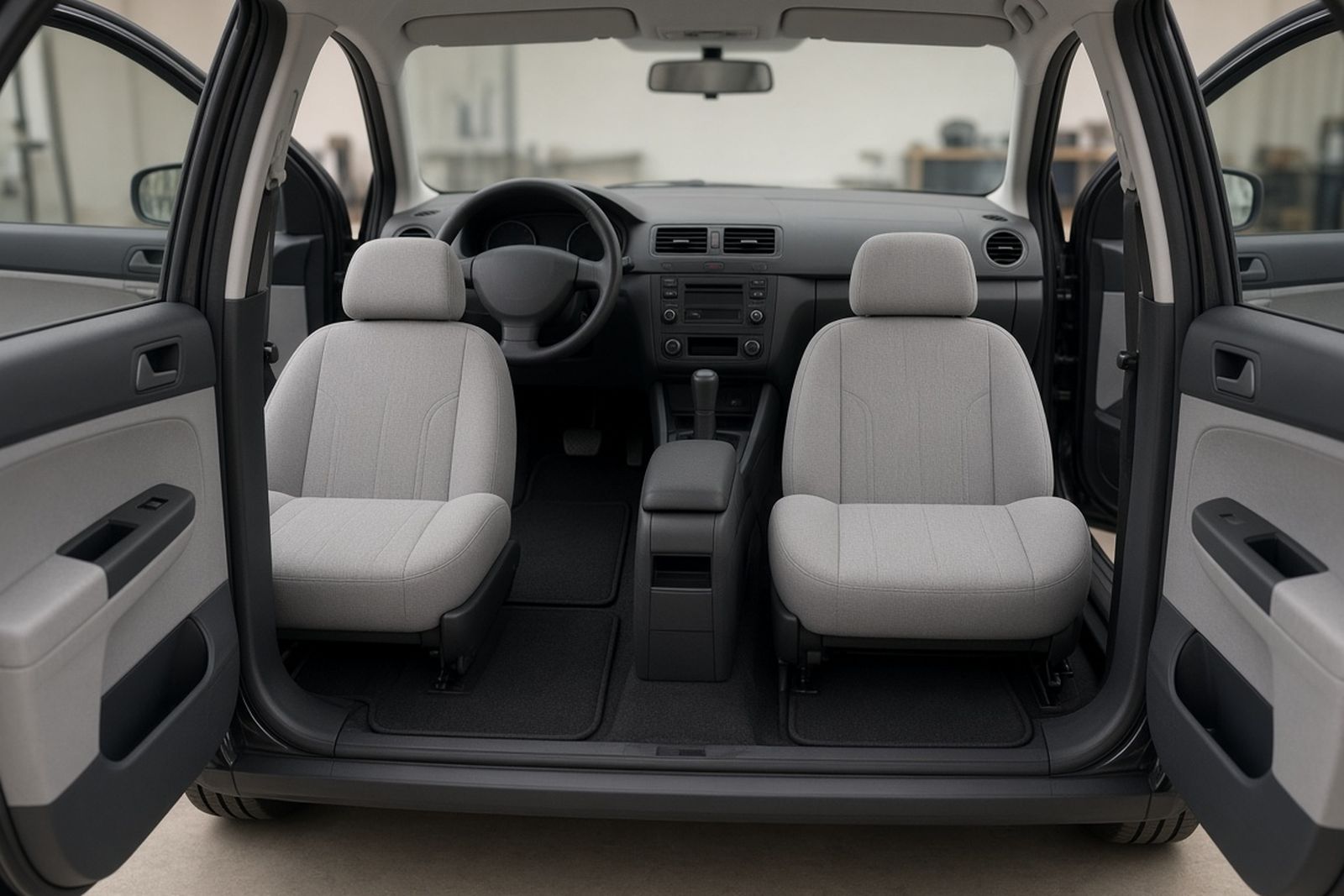
Training shows in the order of the steps. When blood and vomit have soiled a rear bench, floor mat, and door panel, a trained technician arrives in protective gear and photographs the cabin before touching anything.
She can then explain the plan in plain terms: the removable mat and any wet carpet under the seat will be bagged as regulated waste, the seat cushion will be removed and assessed if fluid soaked into the foam, and the hard door panel will be cleaned and then disinfected with a registered product kept wet for its label contact time.
She checks the seat belts, and if they were contaminated, recommends replacement by a repair shop rather than cleaning. At the end, the owner receives photos, a parts list, the product name, and a disposal record that can go to an insurer or a rideshare platform. What a trained technician chooses not to reuse says as much as what she cleans.
Checking training claims, and why they outweigh a low price
Start with direct questions. Ask who trains the technicians, when training was last completed, and whether the company has a written exposure control plan. You do not need to read the plan, but a real company can confirm it exists and describe what it covers.
Ask for a certificate of insurance showing general liability coverage, and ask whether the company carries workers compensation for its employees. Ask which licensed waste transporter it uses. If a company names a certification from a trade group or training provider, check with that organization directly.
Finally, ask for a sample job file with personal details removed. A company that can show you photos, parts lists, and disposal records from a past vehicle is showing you exactly what you will get.
An untrained cleanup can look fine on day one and still leave contamination in foam or seams. It can also leave you without the records an insurer, dealer, or buyer may ask for. Fixing either problem later usually costs more than doing the job properly the first time.
When you compare quotes, compare what each company will remove, how it will disinfect, how it will handle waste, and what paperwork you will receive. The provider that answers those questions clearly is usually the one whose training is real.
Training also protects the people doing the work. A crew that knows how to handle contaminated glass, fluids, and sharp trim safely is less likely to suffer an exposure on your job, which keeps the work on schedule and keeps an injury claim from becoming part of your situation.