Short answer
In vehicle biohazard cleanup, cleaning removes visible blood, body fluids, and residue from surfaces, while disinfection uses a registered product at its label contact time to inactivate pathogens on the cleaned surface. Porous parts such as seat foam and carpet padding often cannot be disinfected all the way through, so they are removed. A proper job cleans, disinfects, and removes in the right order and documents each step.
Why a clean-looking car is not necessarily a safe one
After a crash, medical emergency, or other event, the first goal is usually to make the interior look normal again. Visible stains are upsetting, and removing them brings real relief. But looking clean and being safe are two different outcomes.
Cleaning removes what you can see. It does not reliably inactivate bacteria and viruses left on surfaces, and it cannot reach fluids that soaked into foam or padding. Disinfection addresses the first problem. Removing and replacing materials addresses the second.
Understanding the difference helps you judge a cleanup plan. A provider that talks only about shampooing and detailing is describing cleaning. A provider that also names a disinfectant, explains contact time, and lists parts to be removed is describing biohazard cleanup.
There is a practical reason to care, too. Insurers, fleet managers, and rideshare platforms may ask how a vehicle was made safe before it returned to service. A record that shows cleaning, disinfection, and part replacement answers that question in a way a detailing receipt cannot.
What cleaning accomplishes inside a vehicle
Cleaning is the physical removal of blood, body fluids, vomit, and other soil from surfaces. Technicians use detergents or enzymatic cleaners, brushes, and absorbent materials to lift residue from hard plastics, glass, metal, vinyl, and leather.
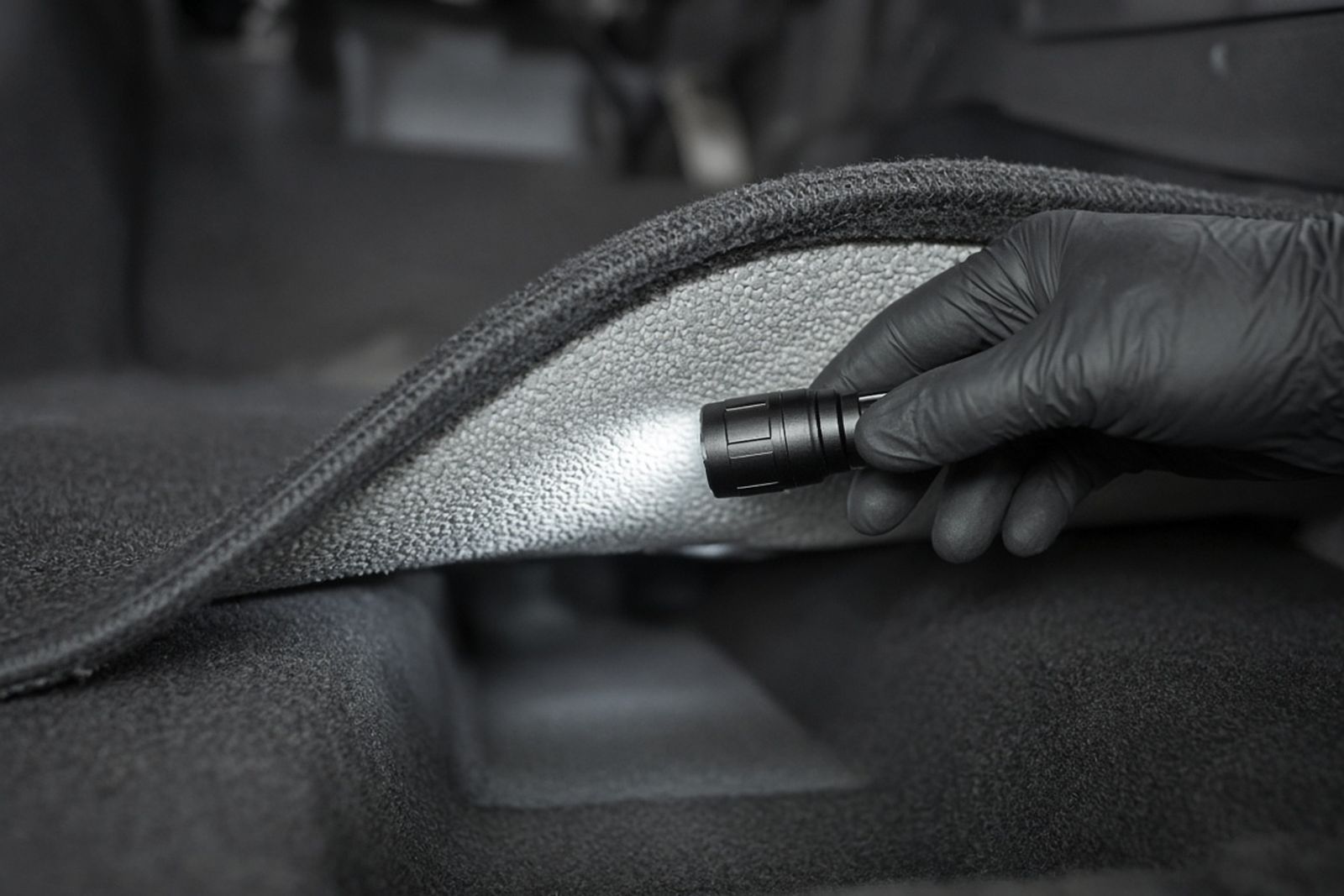
Vehicles are full of places where residue hides. Textured dashboards, seat tracks, seat belt buckles, cup holders, window switches, and the seams between panels all trap soil. A thorough cleaning pays attention to each of these, often removing trim or seats to reach them.
Cleaning is essential because it prepares surfaces for disinfection. Organic material can shield microorganisms and weaken many disinfectants. Skipping cleaning, or rushing it, makes the disinfection step less effective no matter how strong the product is.
Technicians also think about how they clean. Aggressive scrubbing or high-pressure spraying can splash contaminated material onto clean areas or into vents. Controlled methods, working from cleaner areas toward dirtier ones and from top to bottom, keep contamination from spreading while the work is underway.
- Remove visible blood and fluids with absorbent materials
- Clean hard surfaces with an appropriate detergent or enzyme cleaner
- Reach seams, tracks, buckles, and controls
- Rinse or wipe away cleaning residue before disinfecting
- Bag soiled cleaning materials for proper disposal
What disinfection adds, and how well it works
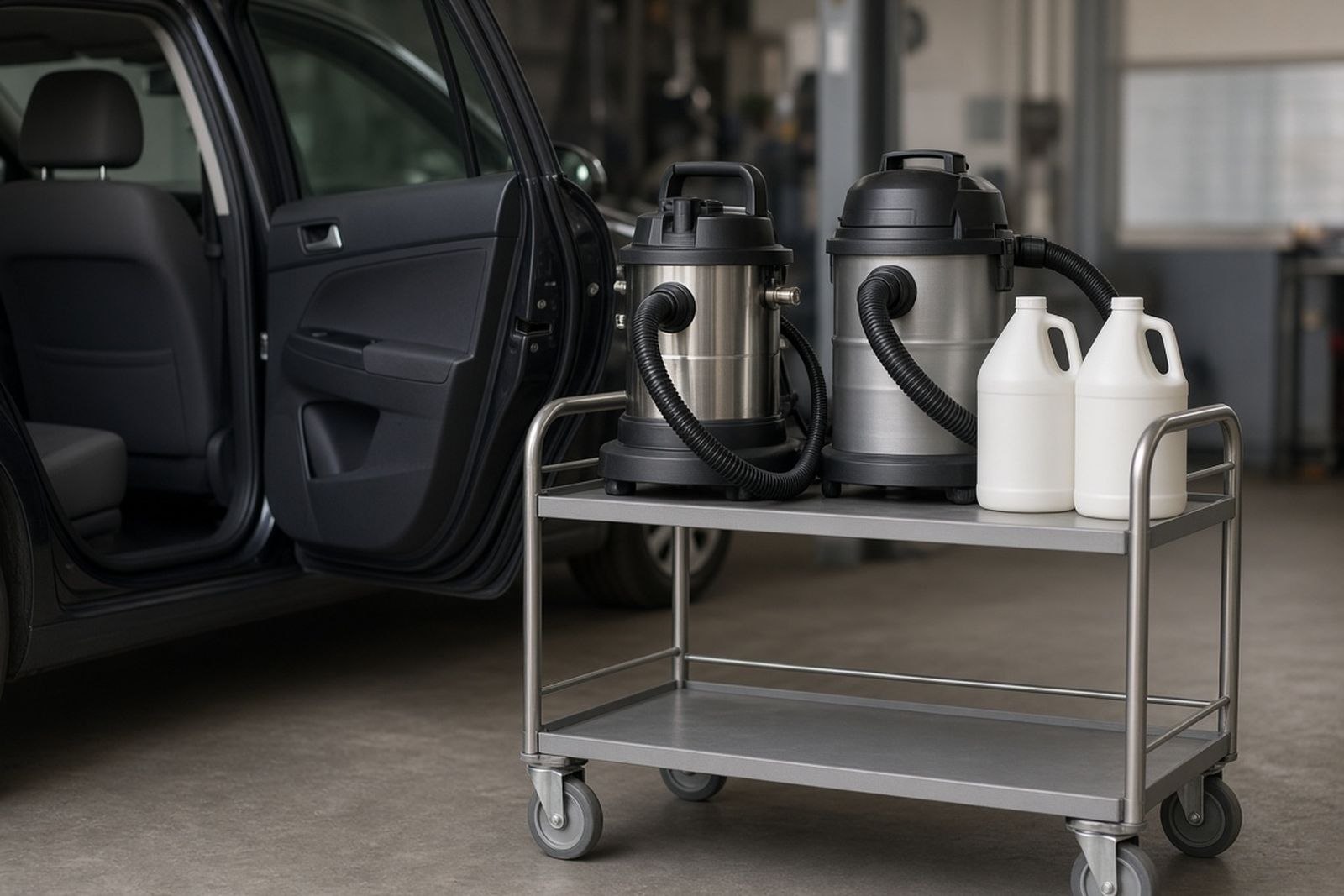
Disinfection uses a chemical product registered by EPA to kill or inactivate specific microorganisms on a surface. The product label lists which organisms it works against and how it must be used, including dilution and the contact time the surface must stay visibly wet.
For blood and body fluid cleanup, providers typically choose products with claims against bloodborne pathogens and other organisms of concern. If the event involved vomiting or diarrhea, norovirus may matter. CDC reports that about 2,500 norovirus outbreaks are reported in the United States each year, and that the virus can persist on surfaces for days or weeks and resists many common disinfectants, which is why product selection matters.
Contact time is often the weak point. A technician who sprays and immediately wipes may not meet the label directions. In a vehicle, with its many vertical and angled surfaces, keeping a surface wet for the full time can require reapplying the product or using a formulation designed to cling.
Material compatibility matters as well. Some disinfectants can discolor leather, cloud clear plastics on instrument clusters, or damage screen coatings. A careful provider chooses products that suit the surfaces in your vehicle, tests them in an inconspicuous spot, and uses gentler approved methods on electronics and displays.
Research on ambulances, which are cleaned far more often than private vehicles, shows how hard thorough decontamination can be. In a 2015 study by Valdez and colleagues, the existing decontamination process left 26 of 48 sampled sites tracer-positive, and an added hydrogen peroxide wipe protocol still left 19 of 48 sites tracer-positive.
Those results do not mean disinfection is pointless. They show that even trained crews miss surfaces, and that technique, coverage, and attention to high-touch areas matter a great deal. Adding a disinfection step improved results, but it did not replace careful work.
For a private vehicle after a biohazard event, the lesson is to expect a methodical process: clean everything that may have been touched or splashed, disinfect with the right product and contact time, and pay special attention to handles, switches, belts, and controls that hands reach without thinking.
When removal is the only safe option
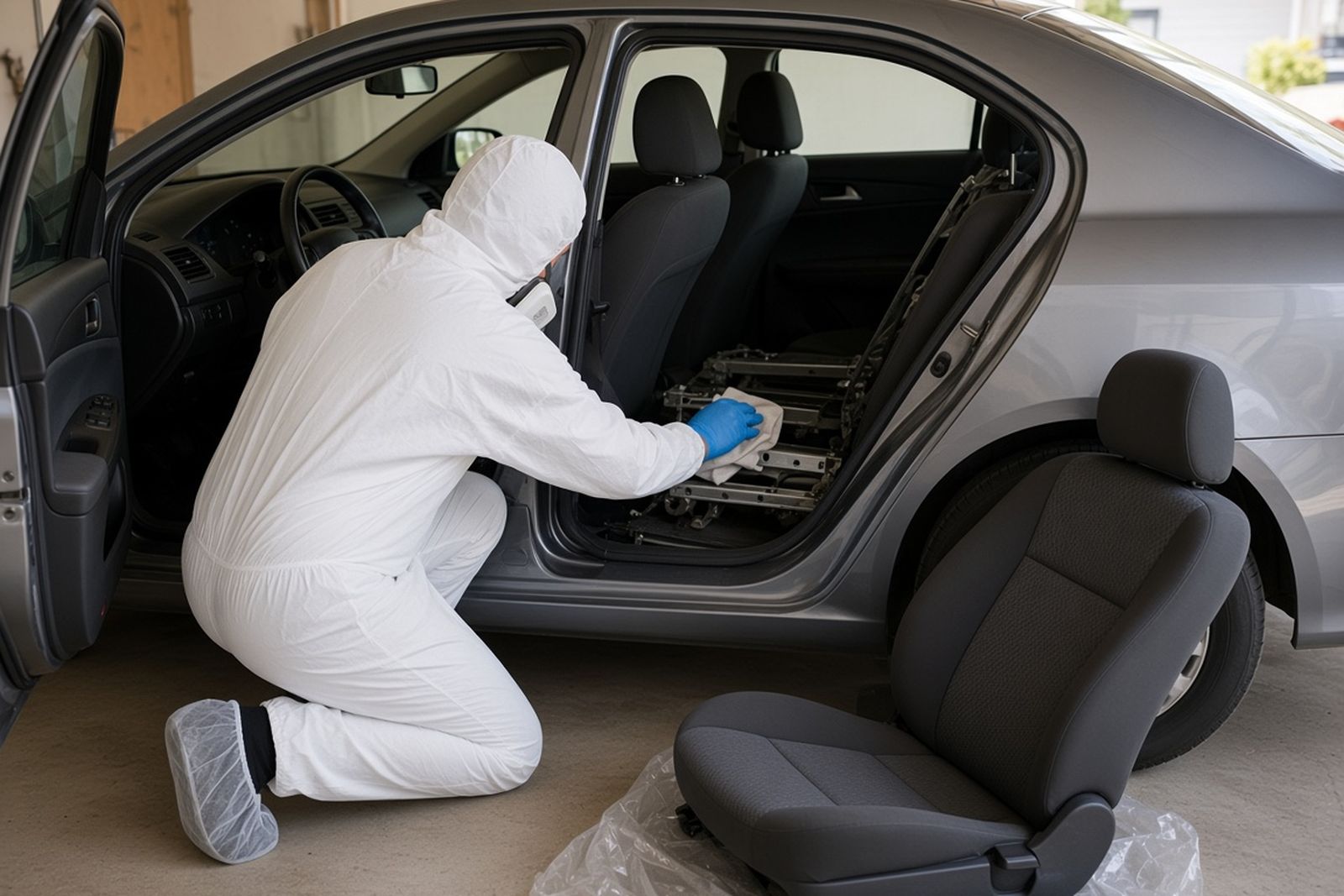
Some vehicle materials cannot be reliably cleaned or disinfected. Seat foam is like a sponge. When fluids soak into it, they spread through the interior where no cleaner or disinfectant can fully reach. Carpet padding, headliner backing, and some fabric door inserts behave the same way.
In those cases, removal is the safe choice. The affected cushion, carpet section, or panel is cut out or unbolted, bagged, and disposed of according to waste rules, then replaced. Surfaces underneath, such as the metal floor pan or seat frame, are cleaned and disinfected before new parts go in.
Seat belts deserve special mention. They are safety equipment, and cleaning chemicals can weaken webbing. If a belt is contaminated, a careful provider will recommend replacement by a qualified repair shop rather than disinfecting and reinstalling it.
Removal decisions should be made after cleaning reveals how far fluid traveled. It is common for the visible stain on a seat cover to be much smaller than the area soaked inside the cushion. A provider may remove the cover to inspect before deciding, and should explain what it found before discarding anything you may want to keep.
The right sequence, step by step
Take a common job: blood and vomit on a second-row seat, the floor, and a window switch. The first step is cleaning. A technician in protective equipment removes visible material with absorbent pads, cleans the hard surfaces and switch with a detergent, and lifts the floor mat.
Next comes assessment. Cleaning often shows that fluid soaked through the seat fabric into the cushion foam, or that the carpet beneath the mat is wet. Those sections are removed and bagged as regulated waste where the rules require it.
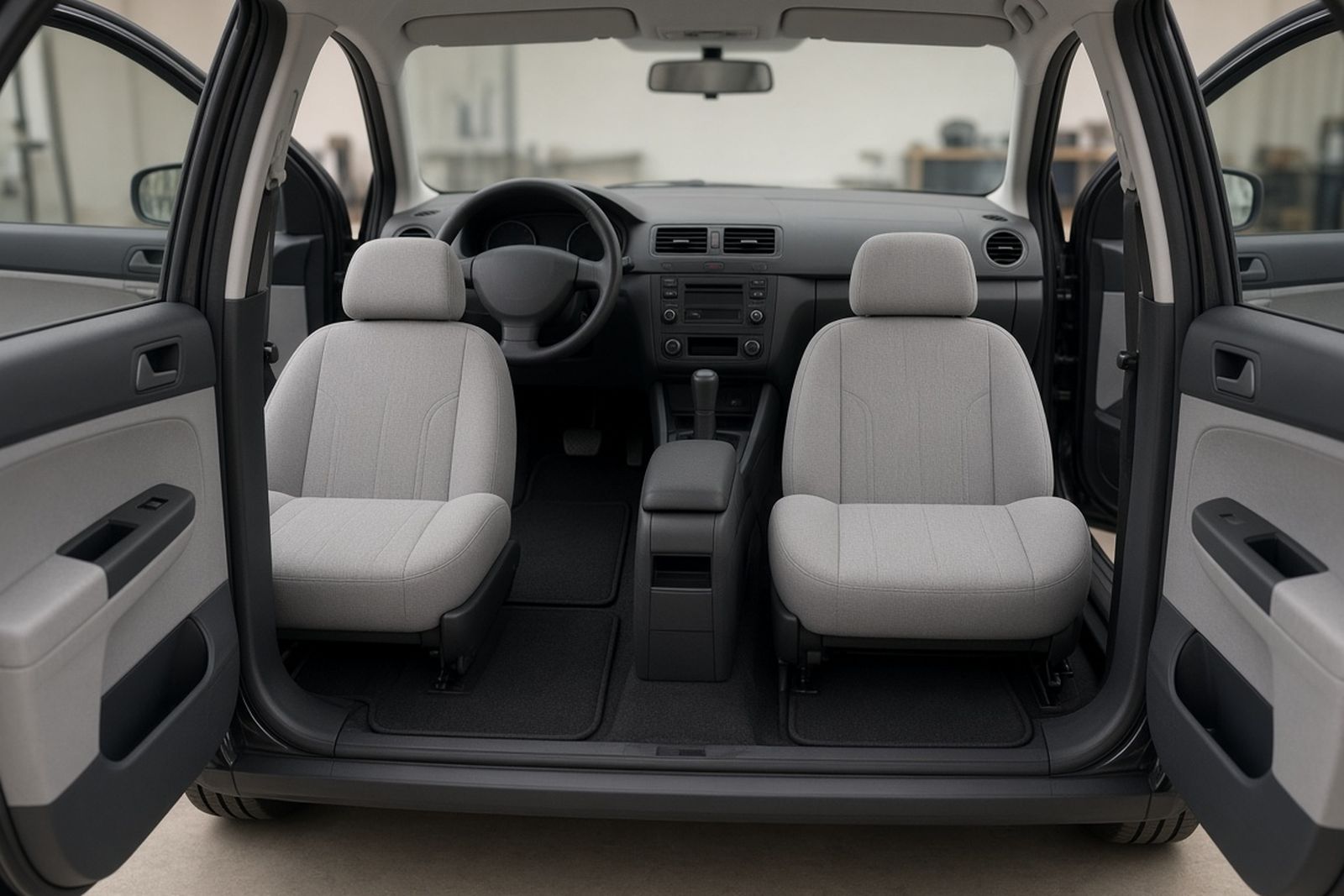
Then comes disinfection. Every cleaned hard surface, the exposed seat frame, and the floor pan are treated with a registered disinfectant that has claims against the organisms of concern, such as bloodborne pathogens and norovirus, and kept wet for the label contact time. Finally, a repair shop installs a new cushion and carpet section, and the owner receives photos, a parts list, the product name, and a disposal record.
Can fogging replace cleaning or disinfection by hand?
Fogging and misting devices can distribute a disinfectant through an enclosed cabin, and some providers use them as an added step. They can be useful for reaching surfaces that are hard to wipe.
Fogging cannot replace cleaning, because it does not remove soil. It also cannot reach inside saturated foam or padding. And some products are not labeled for fogging, so using them that way may not meet label directions.
If a provider proposes fogging, ask whether it comes after manual cleaning, which product will be used, whether that product is labeled for the method, and how long the vehicle must stay closed and then ventilated before anyone rides in it.
Ventilation afterward is part of the process. Many disinfectants leave vapors or residue that should clear before a driver or passengers spend time in a closed cabin, especially children or people with asthma. Ask how long the vehicle should air out and whether any surfaces need a final wipe with water.
Keeping the three steps straight
Ask the provider to describe its process in order. You should hear about cleaning first, then disinfection with a named product, and a plan for materials that need to be removed.
Ask which organisms the disinfectant is registered against and what its contact time is. Ask how the crew ensures surfaces stay wet long enough. Ask which parts will be removed and who will replace them, and what records you will receive at the end.
A provider that can answer these questions clearly understands that cleaning and disinfection are separate jobs, and that some materials need neither because they need to be replaced.
Cleaning takes away what you can see. Disinfection takes care of what you cannot see on the surfaces that remain. Removal handles what neither step can reach. In a vehicle biohazard job, all three usually work together, in that order, with a record of each step.
Keep that three-part picture in mind when you read a quote. If one of the three is missing, ask why before you agree to the work.