Short answer
To research waste rules for vehicle biohazard cleanup, sort the waste into streams: fluid-soaked upholstery and carpet, sharps and glass, used PPE and absorbents, automotive fluids, batteries, airbag components, and rinse water. Check your state's medical or trauma waste definitions for the biological materials, sharps disposal rules for needles, and separate automotive and hazardous waste programs for fluids, batteries, and undeployed airbags. Confirm local wash-water limits.
The waste that comes out of a contaminated vehicle
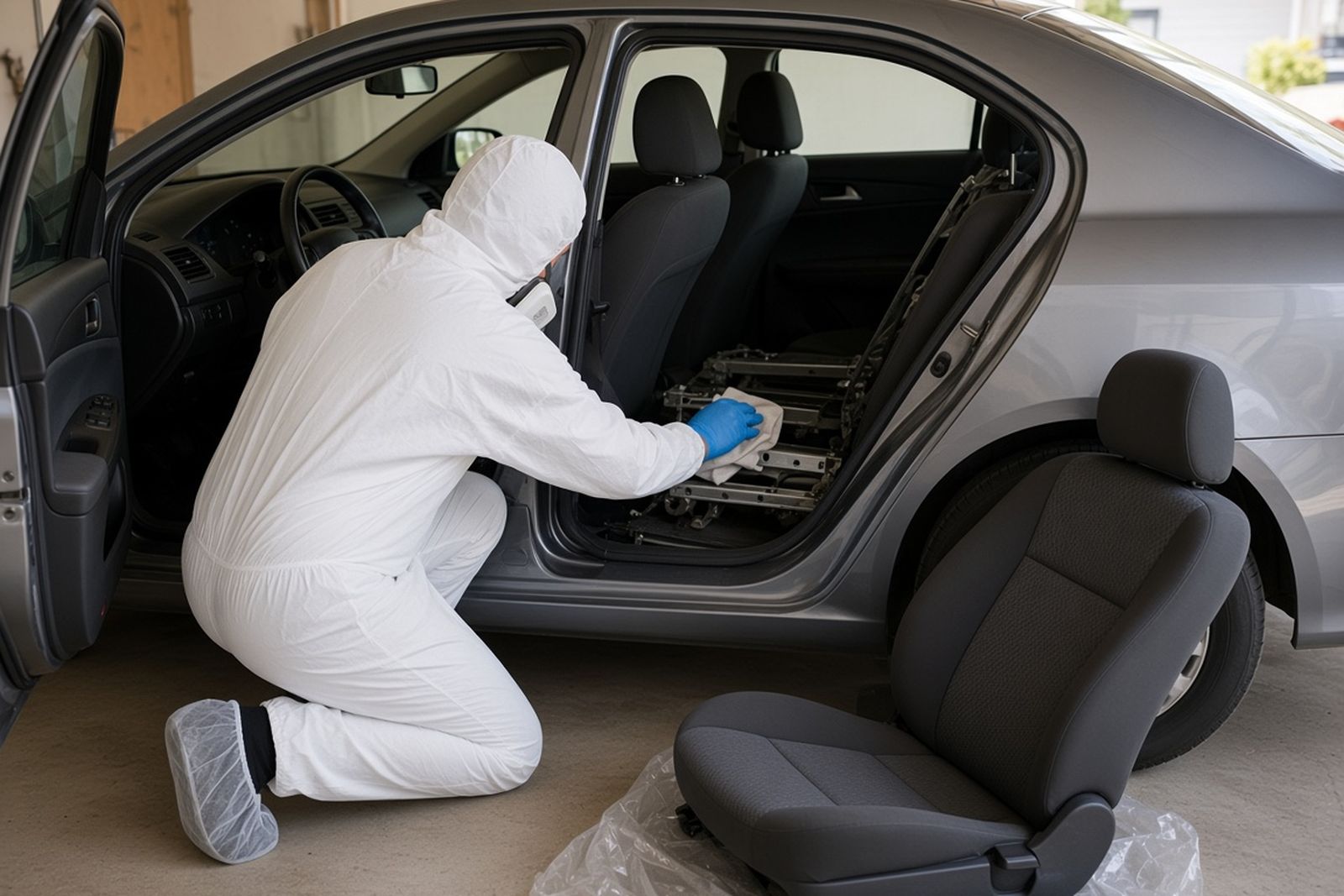
Cleaning a car, truck, or bus after a crash or medical emergency produces more waste streams than most people expect. Biological materials are the obvious one, but vehicles also contain automotive fluids, batteries, electronics, and safety devices, and a crash can release several of them at once.
Make a list before the work starts, or ask your cleanup provider to include one in its scope. Each item on the list may follow a different rule and go to a different place.
Pay attention to who will own the waste. If the vehicle is at a tow yard, a dealership, or a body shop, that business may already have contracts for medical waste, used oil, and battery recycling. Using those existing arrangements can simplify disposal, but only if each program actually accepts the material you are sending it.
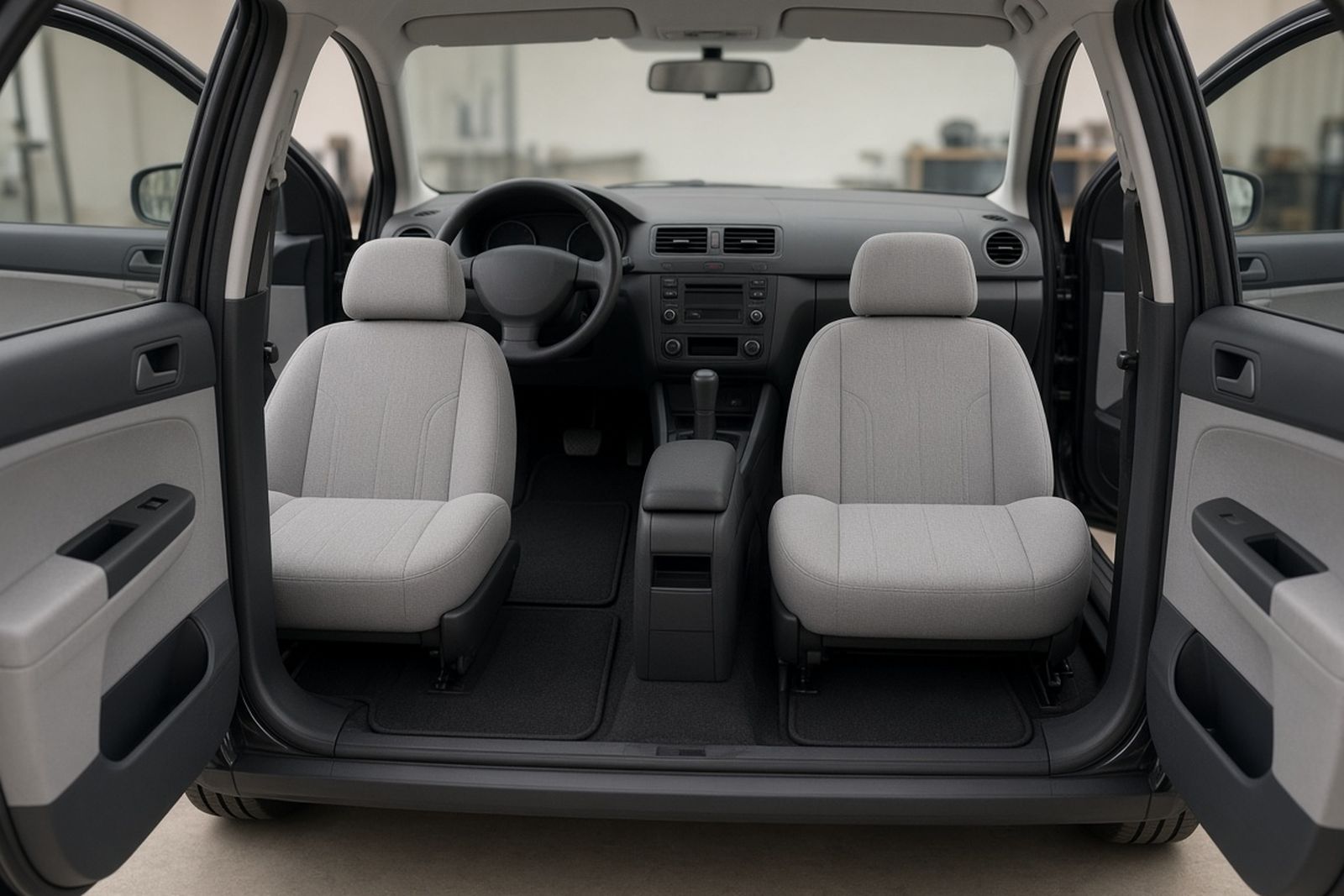
- Seat covers, foam cushions, and carpet soaked with body fluids
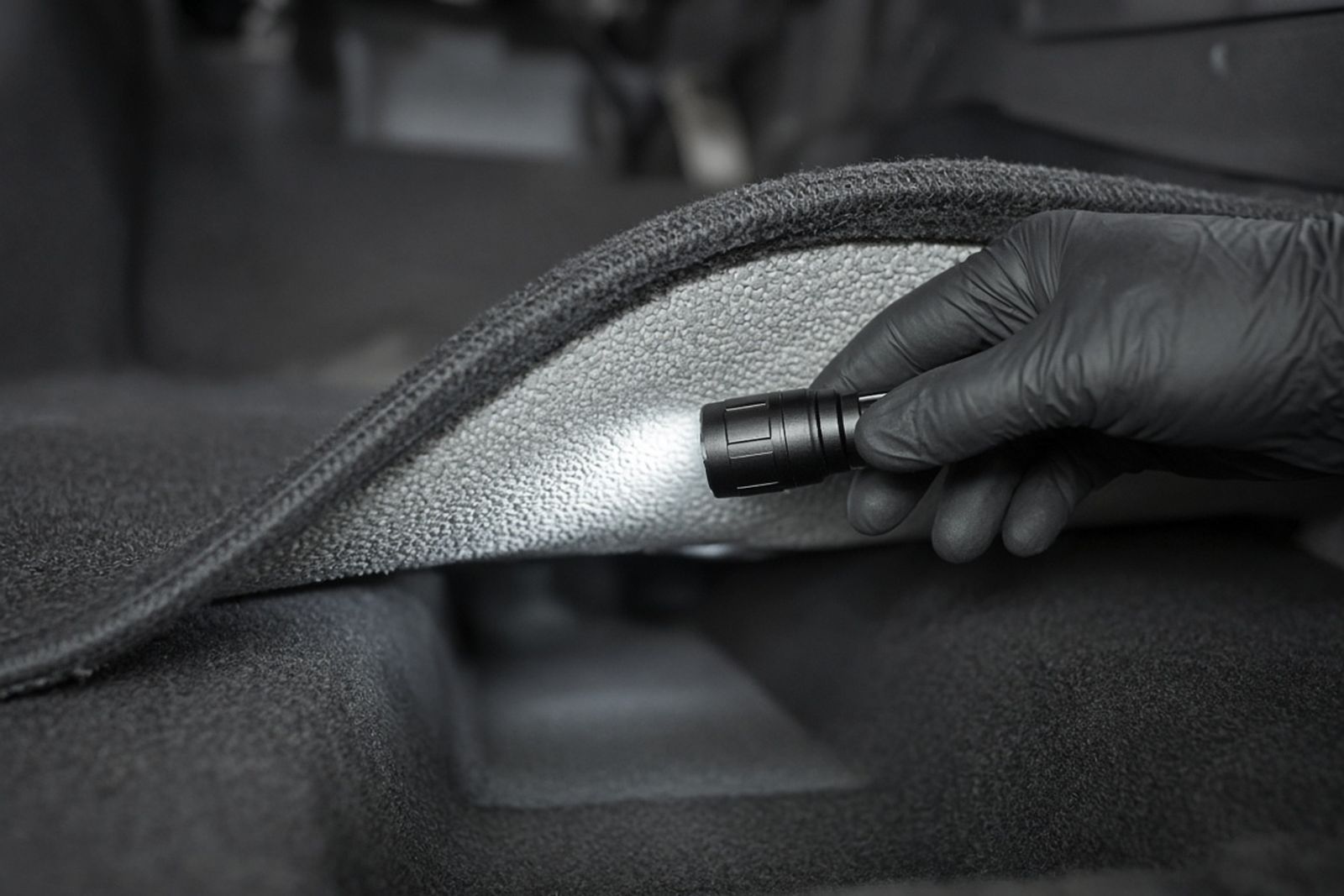
- Headliner, trim panels, and floor mats with contamination
- Seatbelts replaced after contamination
- Needles, lancets, and broken glass
- Absorbents, wipes, and used protective gear
- Leaked oil, coolant, fuel, or brake fluid
- Damaged 12-volt batteries and, on some vehicles, high-voltage battery components
- Deployed or undeployed airbag modules
- Rinse water from cleaning
Why vehicle waste is harder to classify than household waste
When a homeowner throws out a bloodstained towel, household waste rules usually apply. When a business removes contaminated upholstery from a vehicle, the waste may be treated as coming from a commercial activity, and different rules can follow. That is one reason professional cleanup companies are careful about how they package and document what they remove.
Vehicles also mix categories. A crash can leave blood on the carpet and coolant in the same footwell, or put broken glass and battery acid on the same seat. Waste that combines biological and chemical contamination may need to satisfy two sets of rules at once.
Finally, definitions differ by state. The same seat cushion can be regulated medical waste in one state and ordinary solid waste in another, depending on how saturated it is and how the state defines infectious waste.
Insurance and fleet policies can add requirements too. Some insurers want photos of removed materials before disposal, and some fleet operators require records showing where contaminated parts went. Check those expectations before the waste leaves, since it cannot be photographed once it is gone.
Researching whether upholstery and carpet are regulated medical waste
Start with your state's medical or infectious waste regulations, usually run by the environmental or health department. Read the definitions section closely. Many states, like OSHA's worker safety standard, focus on items that are saturated with blood or would release blood or other potentially infectious materials if compressed.
Some states also have rules specific to trauma or crime scene waste, which may explicitly cover vehicles. Where those rules exist, they may require the cleanup company to register, use specific containers, and use a permitted transporter.
If the definitions leave you unsure, contact the state program directly and describe the situation. Ask whether the materials must be handled as regulated waste, what containers are required, and whether a licensed transporter must take them.
When you read the regulation, look for the section on small generators or one-time generators. A private owner or a small business that rarely produces regulated waste may have simpler options than a clinic that generates it every day, such as using a licensed cleanup company's generator status or a one-time pickup service.
Sharps and broken glass
Needles and lancets found in a vehicle should go into a rigid, puncture-resistant sharps container. For a cleanup business, those containers are typically managed as regulated medical waste and picked up by a medical waste hauler or sent through an approved mail-back program.
Packaging rules for shipping medical waste are detailed. Federal rules reproduced by Cornell LII in 2024 cap plastic film bags of solid regulated medical waste at 175 liters (46 gallons), and bags placed in carts or bulk packagings at 10 kg (22 lb) when filled. Sharps go in their own containers, never loose in bags.
Broken glass without contamination is usually ordinary waste, though it should be packaged so it cannot cut anyone handling the bag. Glass with blood on it is often treated like other contaminated sharps.
Automotive fluids and batteries
Automotive fluids have their own disposal programs. Used motor oil is usually managed under used oil rules and can often be recycled at auto parts stores or service centers. Coolant, brake fluid, and fuel have separate handling requirements that vary by state, and absorbents soaked with these fluids may need special disposal.
Lead-acid batteries are widely recycled and are often banned from landfills. Damaged high-voltage batteries from hybrids and electric vehicles pose fire and chemical hazards and should be handled only by qualified personnel, typically through a dealer or specialized recycler.
Airbags and items that need special handling
Airbag modules deserve caution. Deployed airbags are generally less hazardous, but undeployed modules contain energetic materials and can be regulated as hazardous materials or hazardous waste. They should never be placed in ordinary trash or removed without proper procedures. Leave that task to a qualified mechanic, dealer, or salvage professional.
Some crash vehicles also carry cargo or personal items that create their own disposal questions, such as medications, household chemicals, or pesticides in a work truck. Set those aside for the owner or for a household hazardous waste program rather than mixing them into biohazard or automotive waste.
Does vomit or another non-blood fluid change the answer?
Vomit, urine, and feces are common in vehicle cleanups, especially in rideshare, transit, and ambulance settings. Many state medical waste definitions focus on blood and certain other materials, so waste contaminated only with vomit or urine may not be regulated medical waste. Check your state's definitions to be sure.
That does not make the waste harmless. Vomit and feces can carry hardy germs such as norovirus, so proper bagging and thorough disinfection still matter, even when disposal rules are simpler.
Some pathogens are less durable. CDC's 2024 guidance states that HIV does not survive long outside the human body, for example on surfaces, and cannot reproduce outside a human host. Even so, disposal rules for blood-contaminated materials still apply, and other bloodborne viruses survive much longer.
Where rinse water should go
Water used to clean contaminated interiors carries biological material and cleaning chemicals. It should go to a sanitary sewer, not a storm drain, parking lot, or gutter. Many cities prohibit discharging vehicle wash water to storm drains.
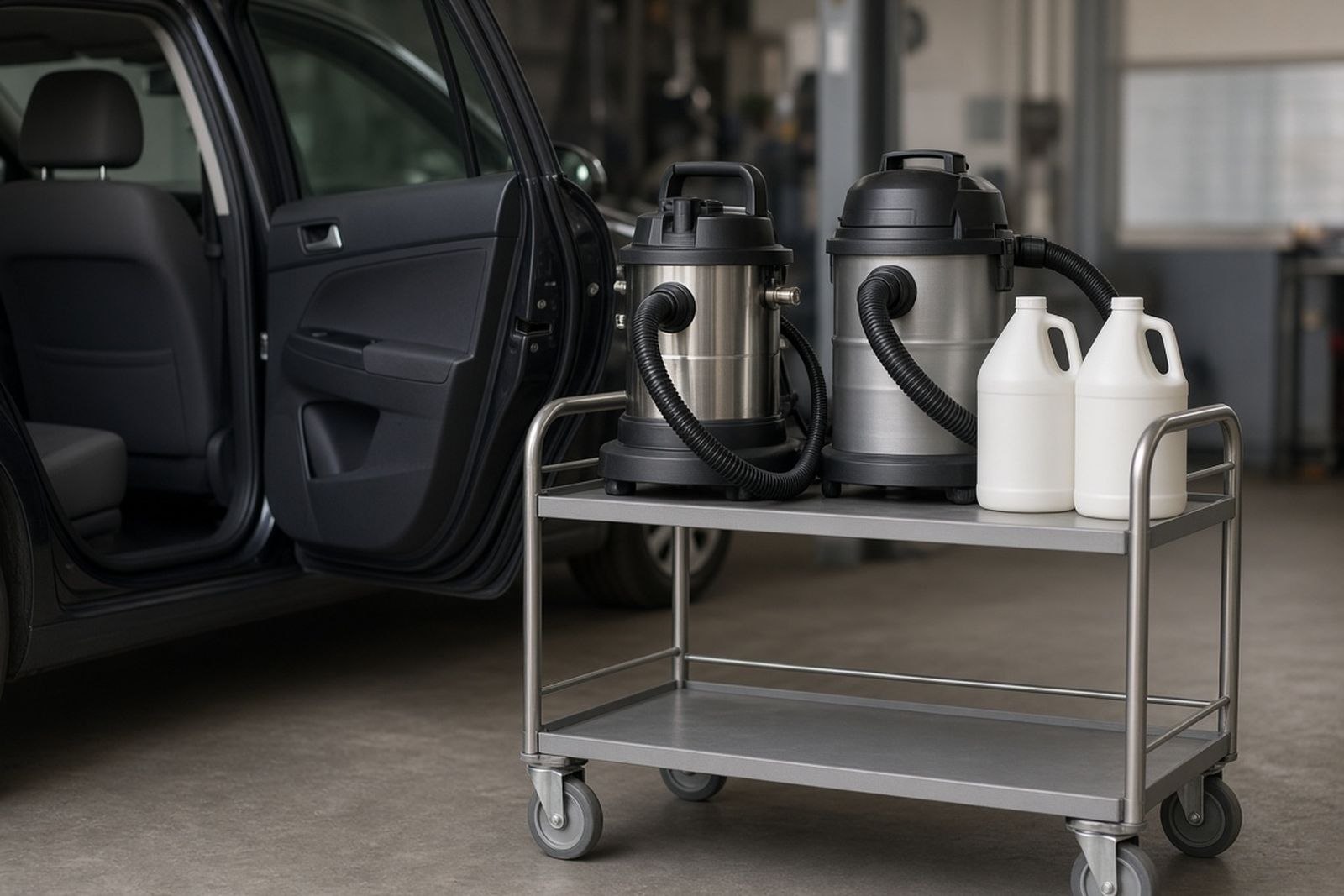
Mobile crews often capture rinse water with extraction equipment and dispose of it at their shop or another approved location. Ask the provider how it handles rinse water, especially if the cleanup happens at your home or business.
If you are using a commercial car wash or detail bay afterward, ask whether its drainage goes to an oil-water separator and sanitary sewer. Many do, but it is worth confirming before a contaminated interior is rinsed there.
Worked example: a trade-in at a used-car lot
One illustrative walk-through, built around an invented dealership, shows the method. Suppose a used-car dealer takes in a trade-in with a stained rear seat, a few syringes under the floor mat, and a cracked battery case that has leaked. The dealer wants the vehicle cleaned and reconditioned for sale.
The reconditioning manager lists the waste streams: the rear seat cushion and cover, the syringes, the carpet section under the mat, the battery, and absorbent used on the leak. He checks his state's medical waste definitions and finds that the seat materials, which are saturated, must be handled as regulated waste by a registered hauler.
The syringes go into a sharps container that the dealer's medical waste hauler collects. The battery goes to a recycler through the dealer's parts department, and the absorbent is handled under the dealer's existing program for automotive fluid waste.
He keeps the hauler's pickup record, the recycling receipt, and a short note on each decision. When the vehicle sells, the dealer can show exactly how the contaminated materials were removed and where they went.
Recording your findings
For each waste stream, record what it was, which rule applied, who took it, and where it went. Keep receipts, manifests, and correspondence with agencies together.
Keep the file even after the vehicle is sold or scrapped. Questions from insurers, buyers, or regulators sometimes arrive months later, and a few pages of records can answer them in minutes.
If you hire a cleanup company, ask for this documentation as part of the job. Rules vary by state and county; verify with the local authority.
- List each waste stream from the vehicle
- Check state medical or trauma waste definitions
- Confirm sharps disposal through an approved hauler or mail-back program
- Route fluids, batteries, and airbags through automotive programs
- Dispose of rinse water to the sanitary sewer only