Short answer
Vehicle biohazard cleanup is shaped by several layers. Federal rules cover worker protection, disinfectant labels, waste transport, and limits on disabling safety equipment such as seatbelts and airbags. States set rules on regulated waste, trauma cleanup registration where it exists, towing and storage, and title branding. Local agencies control wash water, mobile service permits, and impound lots. Police holds can delay everything.
Why vehicle cleanups fall between so many rulebooks
A contaminated vehicle is personal property, a piece of safety equipment, sometimes evidence, and occasionally a workplace, all at once. Each of those identities pulls in a different set of rules, and none of them was written with vehicle biohazard cleanup specifically in mind.
The volume of incidents is large. NHTSA reported that 39,254 people died in U.S. motor vehicle traffic crashes in 2024, down 4.3% from 41,025 in 2023, and many more vehicles are involved in crashes with injuries, medical emergencies, or other events that leave body fluids behind. Every one of those vehicles eventually has to be cleaned, repaired, or scrapped.
For owners, fleet managers, and families, the practical challenge is knowing who has authority over each step. The police may control when the car is released. The insurer may control whether it is repaired. State and local rules shape how the cleanup is done and where the waste goes.
Federal rules: workers, products, and safety equipment
When a business assigns employees to clean contaminated vehicles, OSHA's Bloodborne Pathogens standard applies to those workers. That covers biohazard cleanup companies, but it can also reach tow operators, auction staff, dealership technicians, and fleet maintenance crews, depending on their duties.
Disinfectants used in the cabin are regulated as pesticides under federal law and must be used according to their EPA-approved labels. The label sets the organisms the product is registered against, the surfaces it may be used on, and the contact time needed.
If contaminated seats, carpet, or other materials are shipped off as regulated medical waste, federal DOT rules govern packaging, marking, and shipping papers once the waste moves on public roads.
Seatbelts, airbags, and occupant sensors are federally regulated safety equipment. Federal law generally prohibits motor vehicle repair businesses, dealers, and certain others from knowingly making that equipment inoperative. A cleanup company that removes a contaminated seatbelt or disconnects a seat-mounted airbag needs a plan to restore it properly.
In practice, many biohazard cleanup companies partner with a mechanic or dealership for this work. Seatbelts exposed to large amounts of body fluids are often replaced rather than cleaned, because harsh cleaning can weaken the webbing. Airbag modules and sensors should be handled according to the vehicle maker's procedures.
Ask any provider how it handles safety equipment, and get the answer in writing. A vehicle that looks clean but has a disconnected airbag or a damaged seatbelt is not ready to drive.
Federal rules do not certify vehicle cleanup companies. There is no national license for this work, so the absence of a federal credential on a provider's website is not a warning sign by itself. What matters is whether the provider follows the federal rules that apply to its employees, its products, and its waste.
What state law may add
State rules vary widely, and several state agencies can be involved in a single vehicle. Environmental or health agencies govern regulated waste. Motor vehicle departments handle titles. Consumer protection offices may regulate towing and storage charges.
Some states register or license trauma scene cleanup companies. Where that system exists, check whether it covers vehicles as well as buildings, and confirm that your provider is listed.
Resale adds a final state layer. If an insurer declares the vehicle a total loss, the title may be branded under state law, which affects its value and how it can be sold. Some states also expect dealers to disclose certain prior damage to buyers. A thorough cleanup file, with photos and invoices, helps whoever sells the vehicle answer questions honestly.
- Whether removed upholstery and carpet count as regulated medical waste
- Registration or licensing for trauma or biohazard cleanup companies
- Towing, storage, and impound fee rules
- Title branding when an insurer declares a total loss
- Dealer disclosure requirements when the vehicle is resold
- State-run worker safety plans for employers
Police holds and evidence rules come first
After a crime, a fatal crash, or an unexplained death, law enforcement may hold the vehicle as evidence. During a hold, no one should clean, alter, or remove anything from the vehicle without permission from the investigating agency. That includes personal belongings.
Release procedures differ by agency. Some release the vehicle to the registered owner, others to a lienholder or insurer, and some require paperwork from a medical examiner or prosecutor. Ask the agency directly what is needed and whether the vehicle has been processed.
Storage fees may accrue while a vehicle is on hold, depending on local rules and the tow company's policies. Keep records of dates and fees in case you later seek reimbursement through insurance or victim assistance programs, where they apply.
When the vehicle was involved in a crime, the owner or family may be eligible for help through a state crime victim compensation program. These programs differ in what they cover and how to apply, and some include cleanup costs. The investigating agency or a victim advocate can usually explain the process and the deadlines.
Local rules for mobile cleanups
Many vehicle cleanups happen in driveways, parking lots, or tow yards rather than in a shop. That brings in local rules that owners rarely think about.
Wash water is the most common issue. Many cities and counties prohibit discharging wash water or cleaning chemicals into storm drains, which often lead straight to creeks and lakes. Mobile crews should capture and properly dispose of rinse water rather than letting it run off.
Mobile service businesses may need a local business license, and some cities regulate mobile detailing specifically. Apartment complexes, homeowner associations, and commercial landlords may have their own rules about vehicle work on their property. Impound lots may restrict who can enter and what work can be done on site.
If the cleanup happens at a tow yard, ask whether the yard has a designated area and drainage for this kind of work. Yards that regularly handle crash vehicles may already have a wash pad connected to an approved system.
Fleet and commercial vehicles
Fleets add employer duties. A delivery company, transit agency, rideshare operator, or ambulance service is responsible for protecting any employee who cleans or drives a contaminated vehicle.
Commercial vehicles may be subject to federal motor carrier inspection rules, and public transit systems often follow their own cleaning and reporting procedures. Rideshare and delivery platforms may have policies about cleaning fees and when a vehicle may return to service.
Fleet managers should write down who decides when a contaminated vehicle is taken out of service, who cleans it, and who approves its return.
How do the layers fit together on one car?
The sedan below is an invented case, used only to show how the layers stack up. Suppose a sedan is involved in an assault in an apartment complex parking lot. Police hold the car as evidence for several days, then release it to the owner, a college student whose parents help with the process.
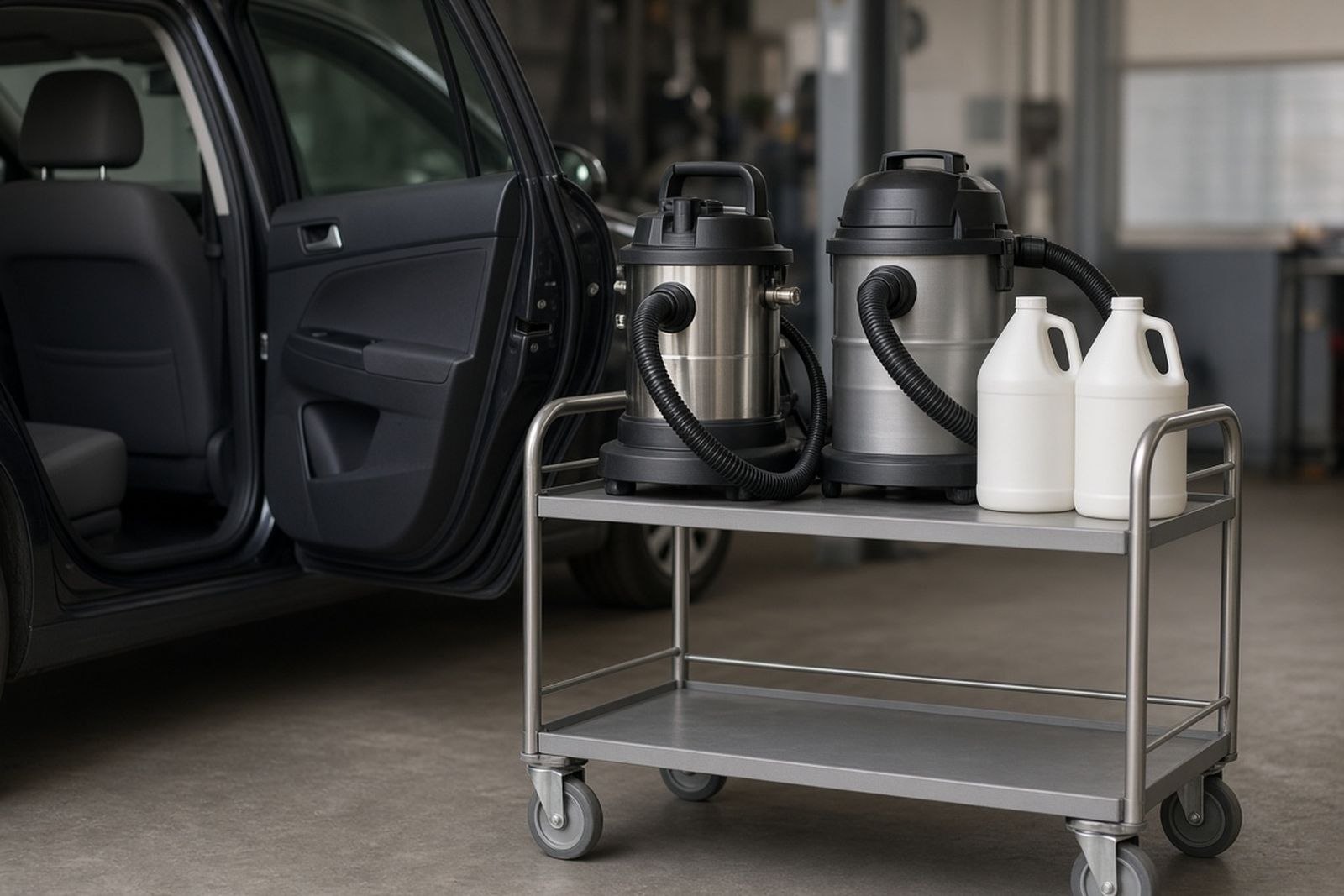
The family calls a biohazard cleanup company. Before the crew arrives, the complex manager tells them work may be done only in a specific corner of the lot and that no water may reach the storm drain. The crew brings containment mats and a recovery system for rinse water.
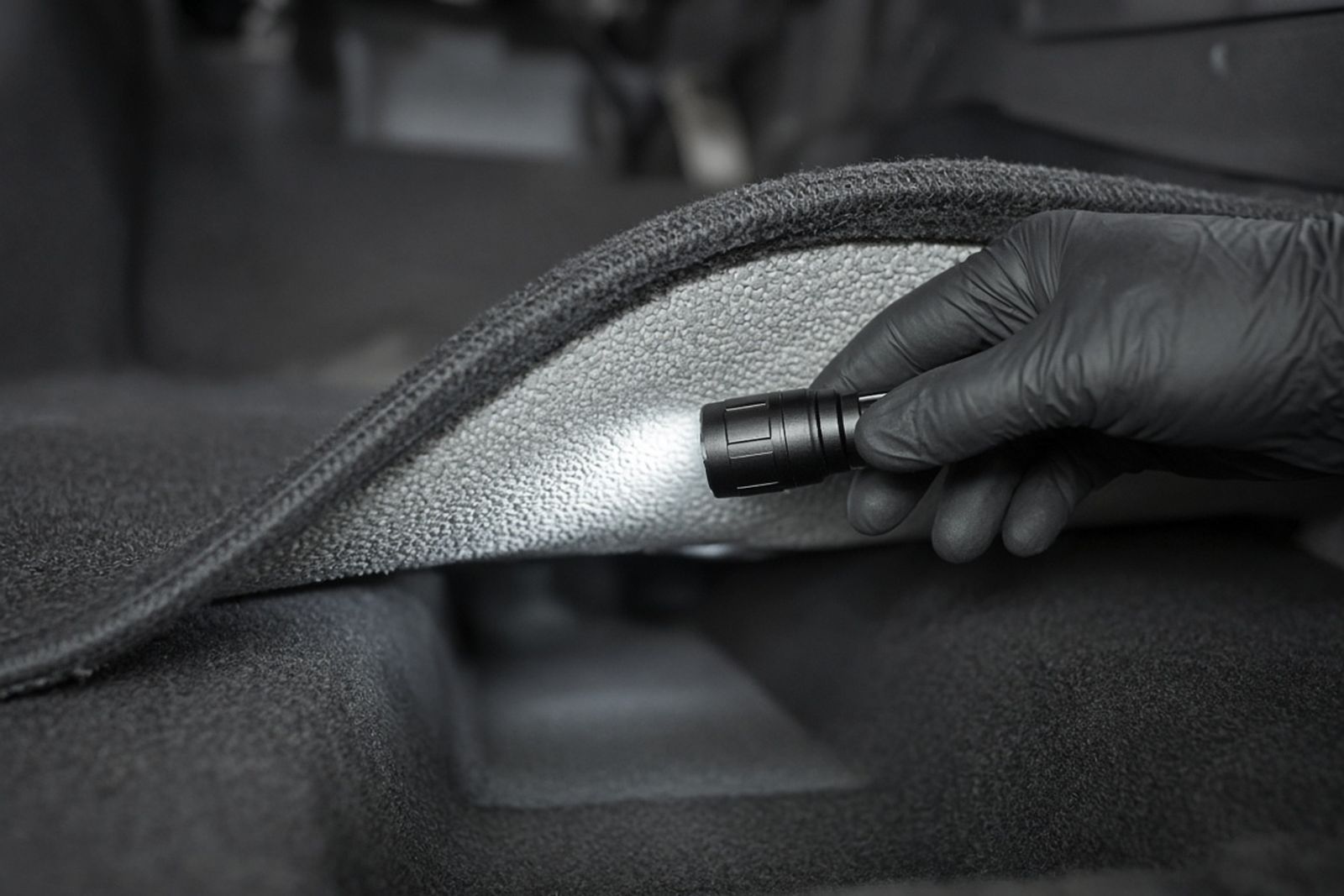
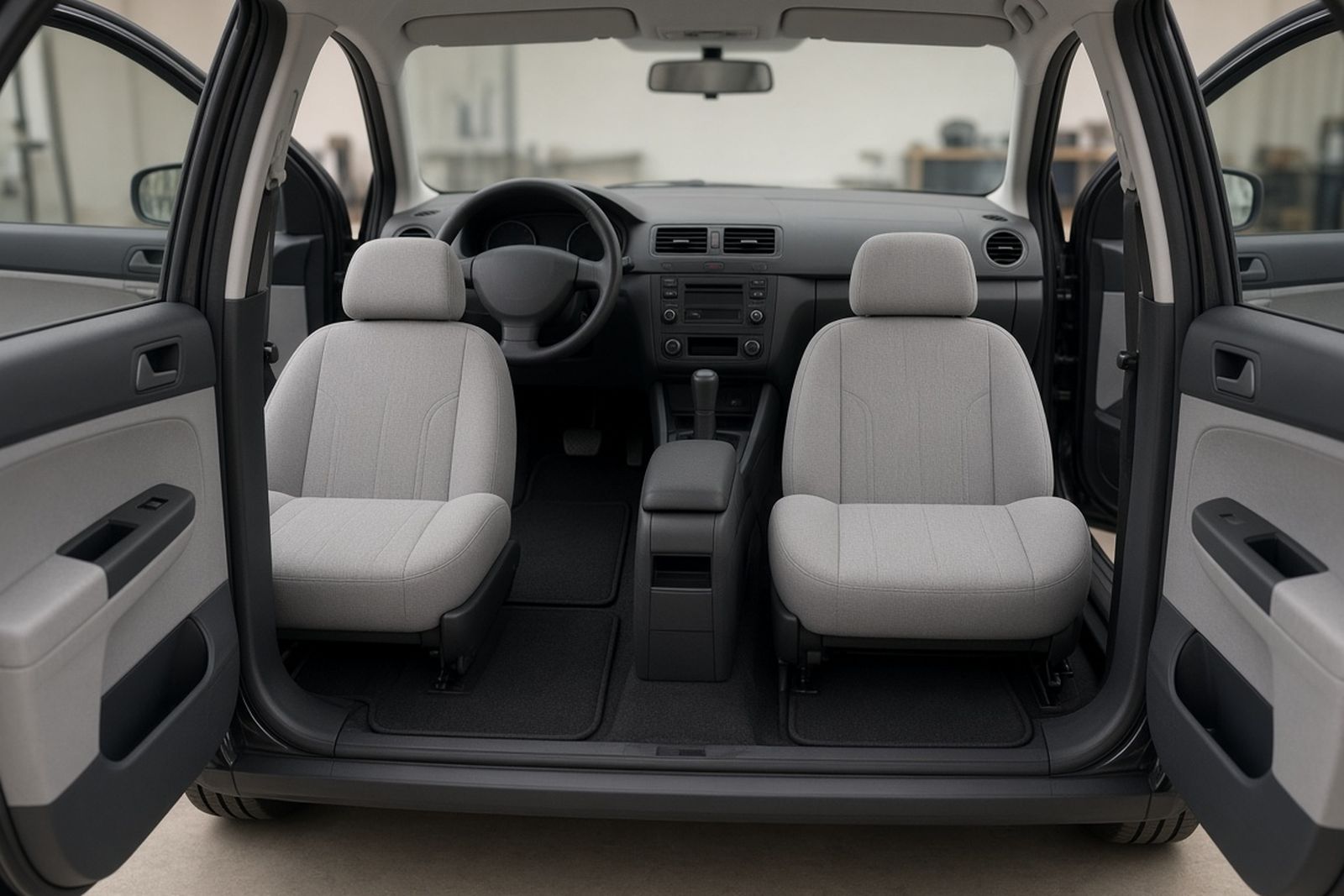
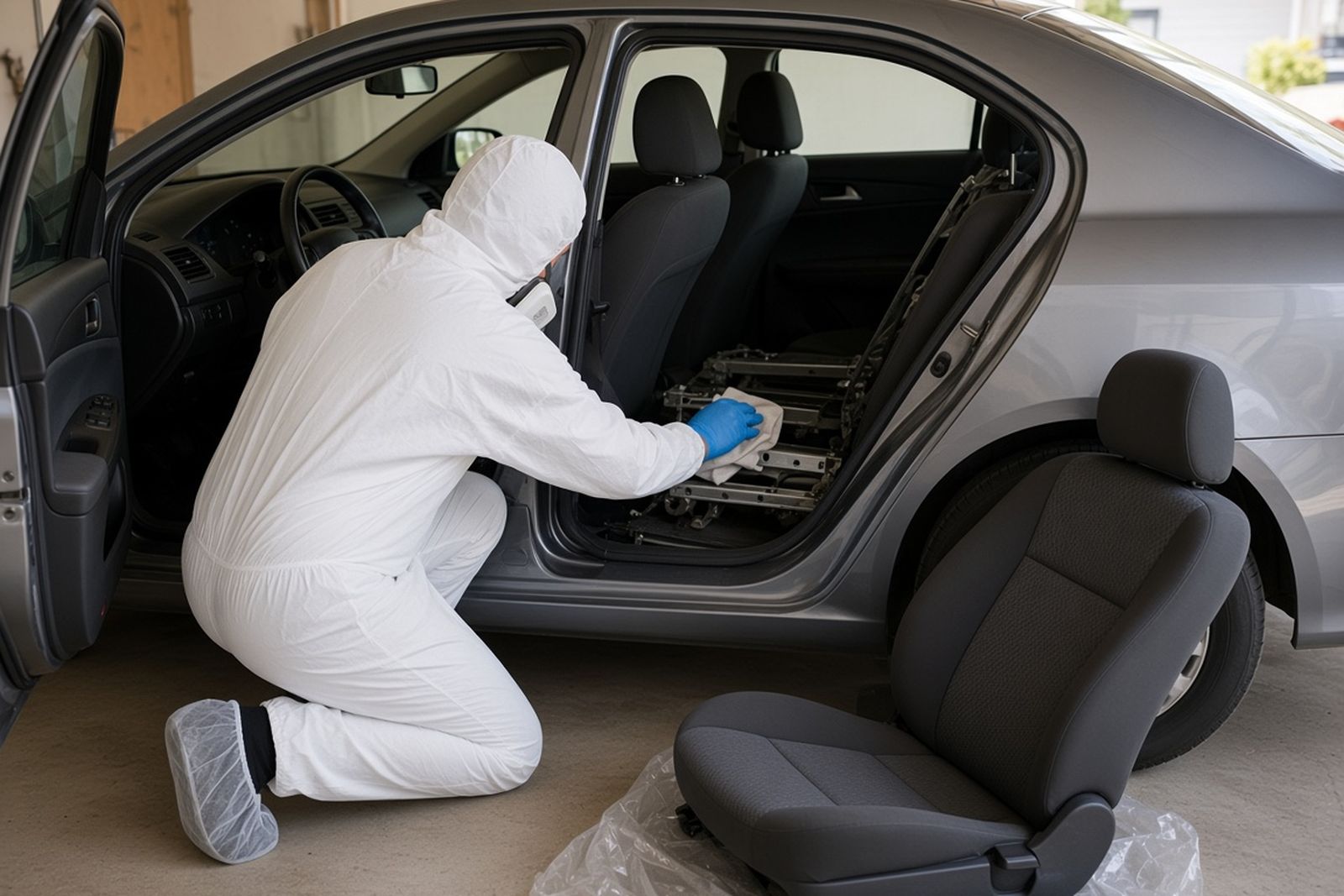
Blood soaked into the driver's seat and seatbelt. The crew removes the seat cover, foam, and carpet section, bagging them as regulated waste under the state's rules. It does not cut or remove the seatbelt. Instead, the provider arranges for the owner's mechanic to replace it and inspect the seat-mounted airbag, following the manufacturer's procedures.
The family's insurer reviews photos and invoices, and the car returns to service after the mechanic signs off. Police, the complex manager, the state waste program, federal safety equipment rules, and the insurer each played a role. Rules vary by state and county; verify with the local authority.
Checking the rules that apply to your vehicle
Start with whoever currently has control of the vehicle: the police, a tow yard, an insurer, or you. Then confirm with your provider how it handles safety equipment, waste, and wash water, and ask which state or local registrations it holds.
If the vehicle will be sold, ask a dealer or attorney about disclosure rules in your state before listing it.
If you are coping with a traumatic event connected to the vehicle, it is fine to hand these calls to someone you trust. The paperwork can wait a day while you take care of yourself and your family.
- Confirm the vehicle has been released by any investigating agency
- Ask your insurer whether it must approve the provider or inspect first
- Verify the provider's state registration or license, where required
- Confirm how seatbelts, airbags, and sensors will be handled
- Ask how waste and rinse water will be disposed of