Short answer
When a vehicle biohazard incident happens on property you manage, separate two jobs: the vehicle, which belongs to its owner and their insurer, and the parking surface, stall, or structure, which is your responsibility. Secure the area, wait for any police release, coordinate with the vehicle owner or tow company, and hire a qualified provider for the pavement and nearby surfaces with written documentation.
Why a property manager deals with vehicle biohazards at all
Parking garages, apartment lots, office decks, storage yards, and retail lots all hold vehicles, and sometimes something serious happens inside one. A resident may suffer a medical emergency in their car. An unattended death may go unnoticed in a long-term space. A crash at the garage entrance may leave blood on the vehicle and the pavement. A vehicle may be abandoned with contaminated contents inside.
In each case, you are not the owner of the vehicle, but you are responsible for the property around it. That split shapes almost every decision that follows, from who calls the tow company to who hires a cleaning provider and who pays.
Understanding the split early prevents two common mistakes. One is letting maintenance staff clean up fluids on the pavement without proper protection. The other is having the vehicle towed or moved before police or the owner's representatives have given permission.
The first hour
Safety and privacy come first. If emergency services are not already involved, call them. Once the scene is under their control, your role is to support access, keep residents and the public away, and avoid disturbing anything.
Close off the affected stalls with cones or tape and redirect traffic if the incident is on a drive aisle. Keep staff from touching the vehicle, its contents, or any fluids on the ground. Bloodborne pathogens can survive outside the body; CDC stated in 2024 that hepatitis B virus remains infectious on environmental surfaces for at least 7 days. That is reason enough to keep untrained hands off any visible residue.
Note the time, the stall number, any camera coverage, and the names of responding agencies. Hold onto any request from police about preserving footage. Do not post details on resident portals or social media, and ask staff not to discuss specifics with residents.
- Call emergency services if they are not already on scene
- Barricade the area and redirect vehicles and pedestrians
- Keep staff and residents away from the vehicle and fluids
- Log times, agencies, stall location, and camera coverage
- Keep details private and route questions to one contact
Who handles the vehicle, and who handles my property?
The vehicle belongs to its registered owner, a lessor, or an estate. Decisions about cleaning, towing, or salvaging it usually rest with the owner, their family, or their auto insurer. If law enforcement or the medical examiner holds the vehicle, nobody can clean or move it until it is released.
Your responsibility is the stall, the pavement, nearby columns and walls, drains, elevator lobbies if fluids were tracked, and any shared equipment such as parking gates or payment kiosks that may have been touched. Those surfaces need their own cleanup, often by the same type of provider but under a separate agreement.
Sometimes one provider handles both sides, with the vehicle billed to the owner or insurer and the property billed to you or your property insurer. That can be efficient, but insist on separate scopes and invoices so each party pays only for its portion. Coverage depends on the specific policies involved, and no provider can promise what an insurer will approve.
Cleaning a parking surface
Concrete and asphalt are porous. Fluids soak into the surface and settle into cracks, expansion joints, and oil stains. Hosing the area into a drain spreads contamination and may send it into stormwater, which many jurisdictions restrict.
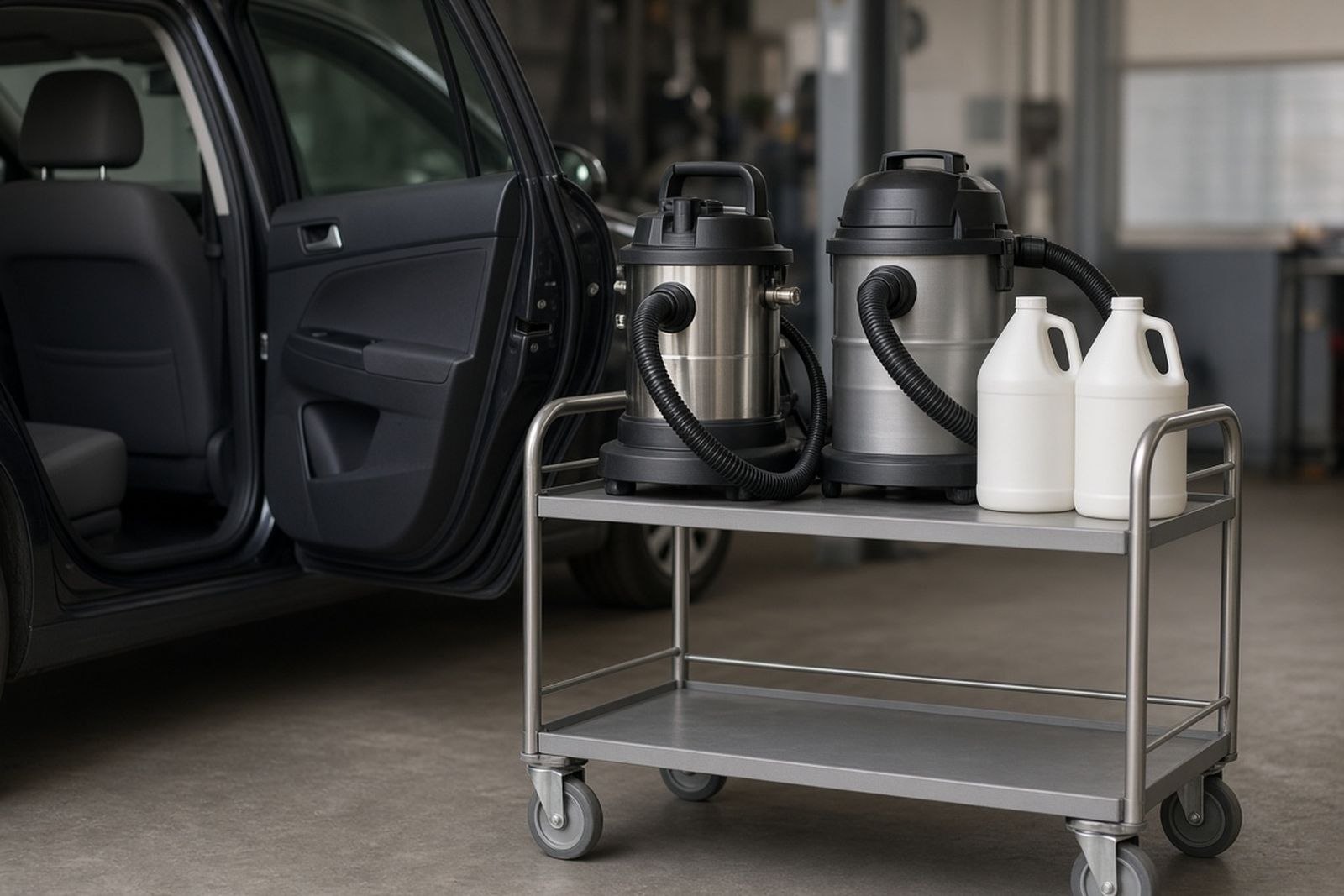
A qualified provider will contain the area, absorb and collect bulk liquids, and clean the surface with detergent before applying an EPA-registered disinfectant for the label contact time. Deeper stains may need repeated treatment or specialized equipment. Collected material and used absorbents are packaged as regulated waste where required.
Drains, curbs, wheel stops, and nearby walls deserve attention too. Splash and tracking often reach further than the visible stain. Ask the provider to walk the area and show you where they found residue before they start.
A provider should be able to explain how it handles wash water and how its waste will be transported and documented, and your local public works or stormwater office can confirm discharge rules.
Vehicles left on the property
If the owner has died or is hospitalized, the vehicle may sit in your lot for days or weeks. Contact the next of kin, the estate representative, or the lessor through appropriate channels. Your towing policy and local abandoned-vehicle rules decide how long you must wait before removal, and those vary by state and county.
If the vehicle holds a biohazard and is producing odor, keep it closed and avoid opening doors to ventilate. Opening the vehicle releases odor into the structure and increases exposure. A tow company used to transporting contaminated vehicles can move it to a secure location once the owner or their representative agrees.
Let the owner's side hire the vehicle cleanup provider unless you have a written agreement to do so on their behalf. That keeps responsibility clear and avoids disputes over authorization.
A well-managed incident, step by step
Most well-handled garage incidents follow the same arc. A resident has a medical emergency in a car and is taken to the hospital, and the response leaves blood on the vehicle and on the concrete beside it, sometimes tracked toward a stairwell or elevator.
The attendant blocks the stall and any affected doors, notifies the manager, and keeps residents away. The manager confirms that police are not holding the scene, then reaches the vehicle owner or a family member, who contacts the auto insurer about the car.
The manager hires a biohazard provider for the property surfaces. The crew contains the area, cleans and disinfects the concrete, nearby columns, door handles, and any tracked path, and documents the work with photos and a waste record. If the owner's side, with its insurer's approval, uses the same provider for the car, that work goes on a separate invoice.
Once the area reopens, a brief notice that maintenance work was completed, without personal details, is usually enough, and the documentation goes into the incident file.
When the property owns the vehicle
Some properties run their own vehicles: a resident shuttle, a golf cart used by security, a maintenance pickup, or a leasing office car. When a biohazard incident happens in one of those, the property is both the vehicle owner and the site owner, so both sides of the cleanup land on your desk.
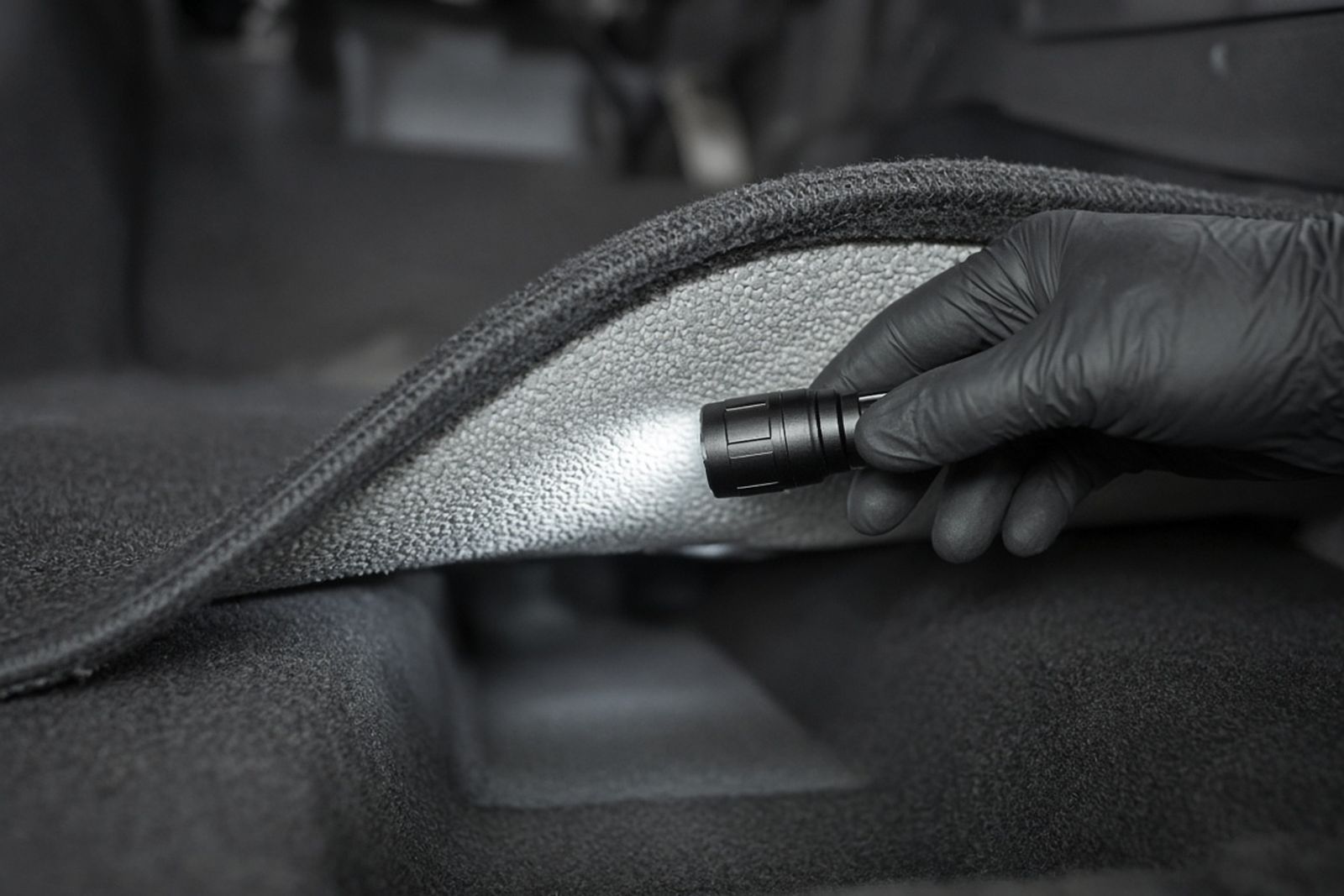
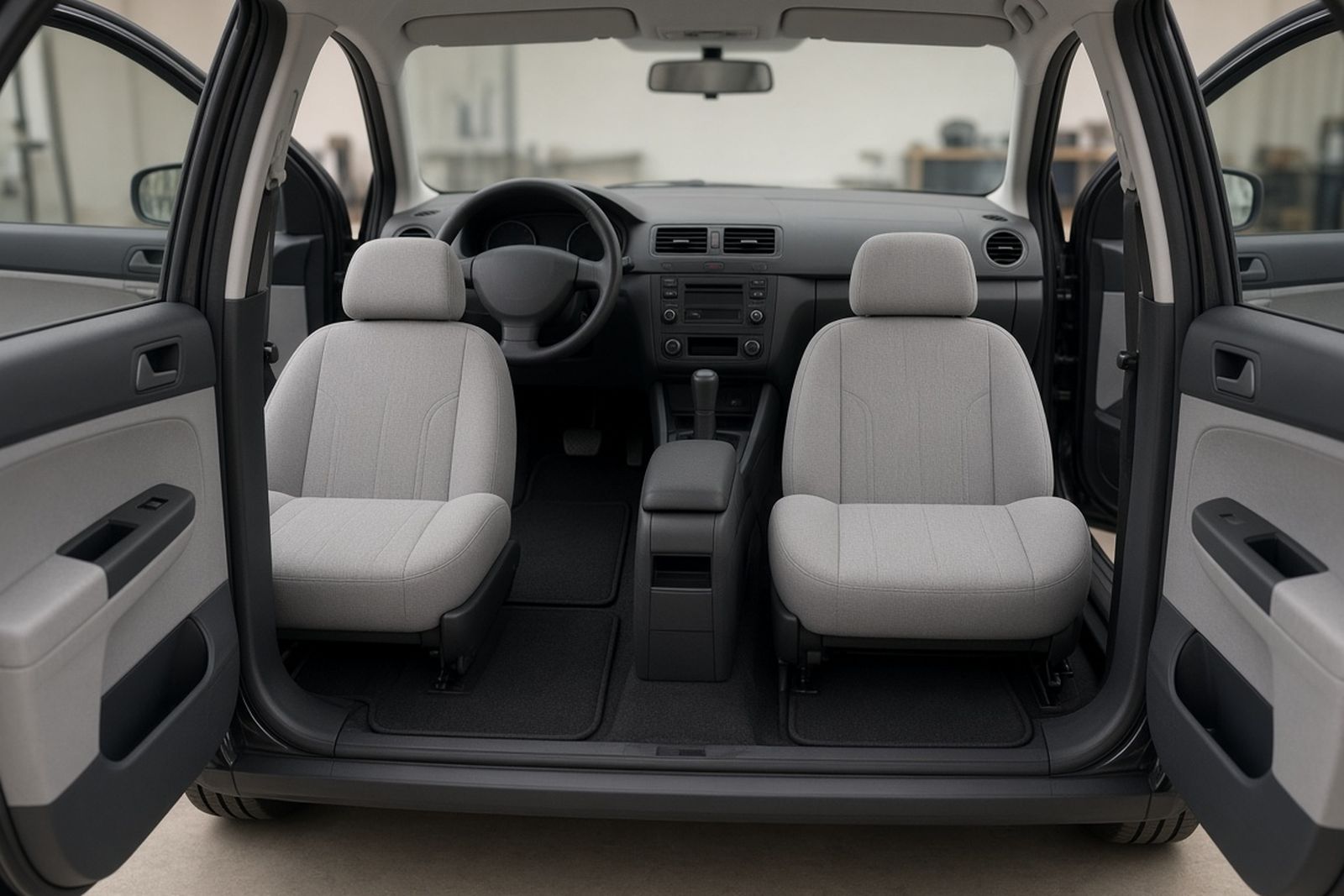
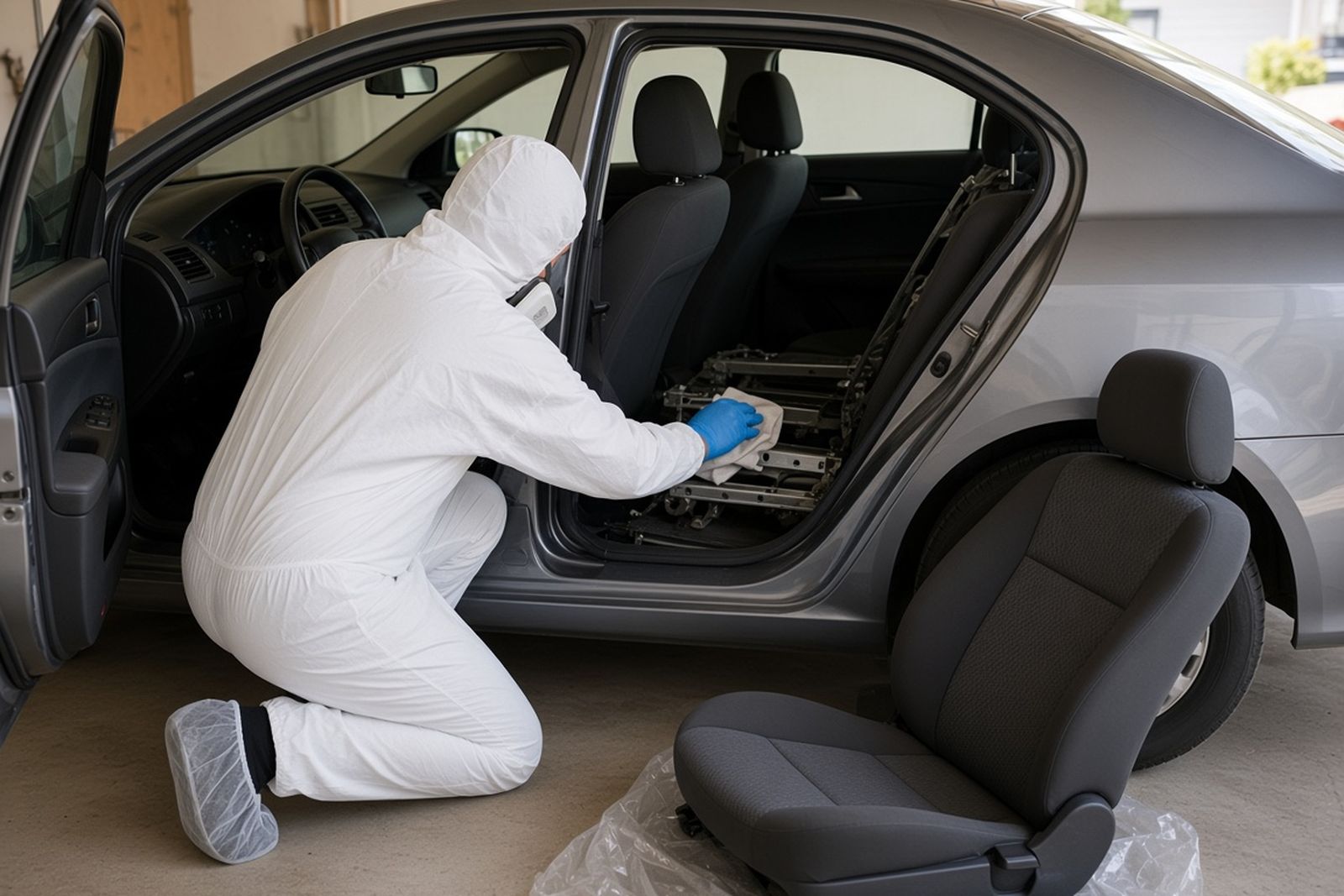
Take the vehicle out of service right away and keep it closed. Hard surfaces, seats, floor coverings, and the ventilation system in a shuttle or van can all hold contamination, and a quick wipe by staff rarely reaches seams, seat tracks, or the underside of seat cushions. A provider experienced with passenger vehicles will know how to remove and inspect those components.
Notify your commercial auto carrier early and ask whether they want to inspect before any parts are removed. Keep the vehicle off the schedule until the provider documents completion, and record the out-of-service dates in case you need to support a claim for a replacement vehicle or lost use.
If drivers or attendants were present during the incident, check on them. Offer time off where you can and make any employee assistance resources easy to find.
Documentation and preparation
Good records protect you with insurers, owners, and residents. Keep the incident log, police report number if one exists, photos before and after cleanup, the provider's scope and invoice, waste documentation, and any communication with the vehicle owner or their representatives.
Store the records with restricted access. They may contain health information or details about a death, and they should be treated with the same care you give to resident files.
Review each incident afterward. Ask whether barricade supplies were easy to find, whether staff knew who to call, and whether the resident communication struck the right tone. Small adjustments make the next response smoother.
Write a short procedure that covers vehicle incidents in parking areas. Include who to call, how to barricade, what not to touch, and how to route questions from residents or media. Keep a basic kit with cones, caution tape, and signage in each garage.
Maintenance staff who might encounter blood or other potentially infectious materials as part of their job fall under federal bloodborne pathogens rules if your organization expects them to respond, which brings written-plan and training duties. Many managers choose instead to make it clear that staff barricade and call, rather than clean.
Identify a qualified provider before you need one. Ask whether they handle both vehicles and parking structures, how they document work, and how they coordinate with vehicle owners, tow operators, and insurers.
When an incident involves a death, including a suspected suicide, respond with care. Residents who knew the person may be affected. Sharing information about the 988 Suicide and Crisis Lifeline, available by call or text, alongside a brief, respectful notice can help without revealing private details.