Short answer
PPE for vehicle biohazard technicians should follow a walkaround hazard assessment of the specific car, truck, or bus. Most jobs call for layered gloves that resist both fluids and cuts, eye and face protection, fluid-resistant coveralls, and knee protection for cramped work. Respirators become necessary when agitating dried material, removing upholstery, or using strong cleaners and treatments in a closed cabin. Damaged electric vehicles need specialist clearance first.
Why one kit cannot cover every vehicle job
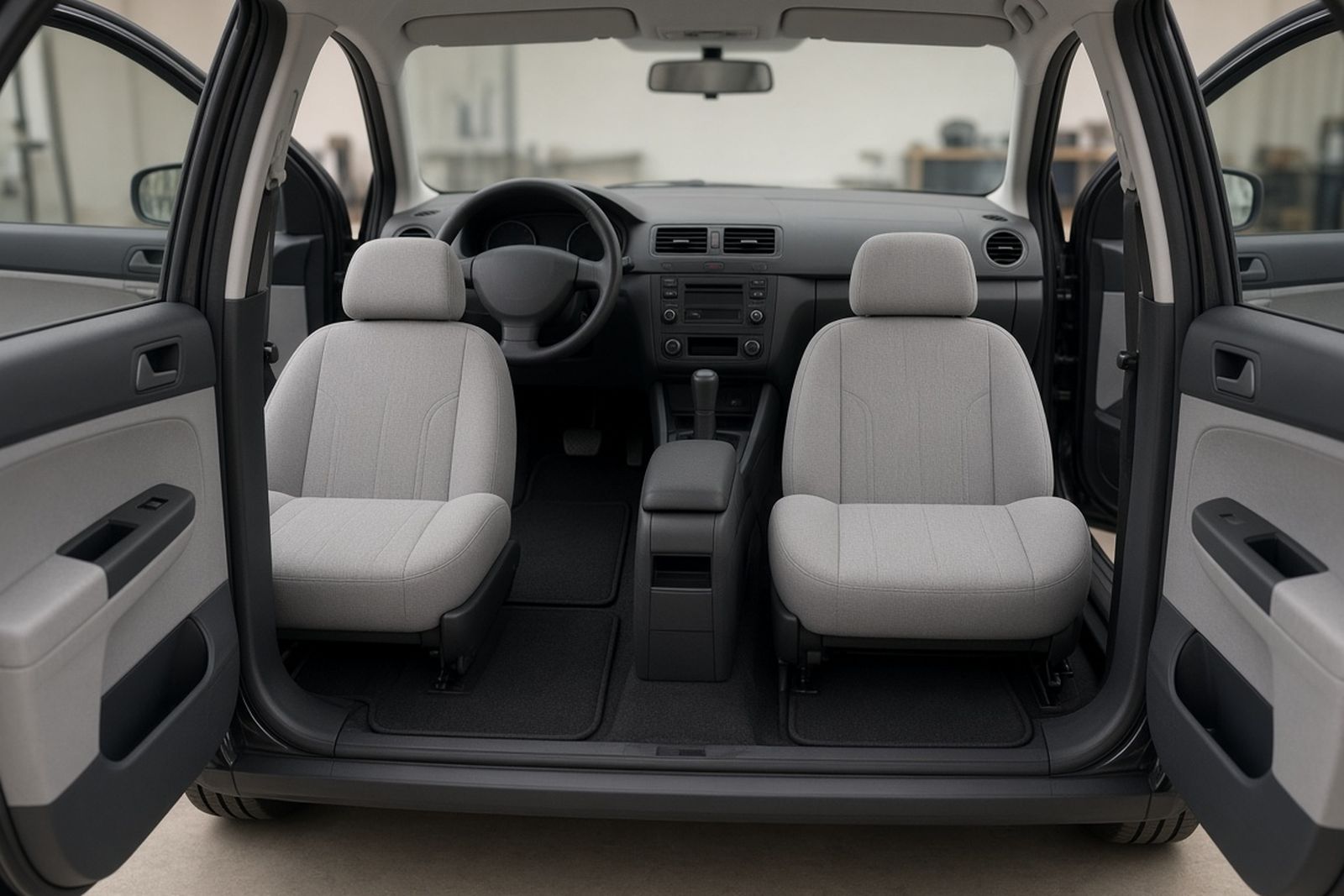
A vehicle interior is a small room built out of foam, fabric, plastic, glass, metal, and electronics, and every model packs them together a little differently. A compact hatchback after a nosebleed, a pickup truck after a serious collision, a transit bus after a passenger's medical emergency, and a sedan left closed for days after a death are four very different workspaces.
The hazards vary as much as the vehicles. Some jobs involve a small amount of dried blood on vinyl. Others involve saturated seat cushions, shattered glass throughout the carpet, deployed airbags, leaking fluids from a damaged engine bay, and summer heat that turns a parked cabin into an oven.
That is why the hazard assessment, which OSHA's general PPE standard requires employers to perform and certify in writing, should happen at the vehicle rather than only in the office. A technician who walks around the car, opens each door, and looks before touching can tailor protection to what is actually there.
The walkaround before anyone climbs in
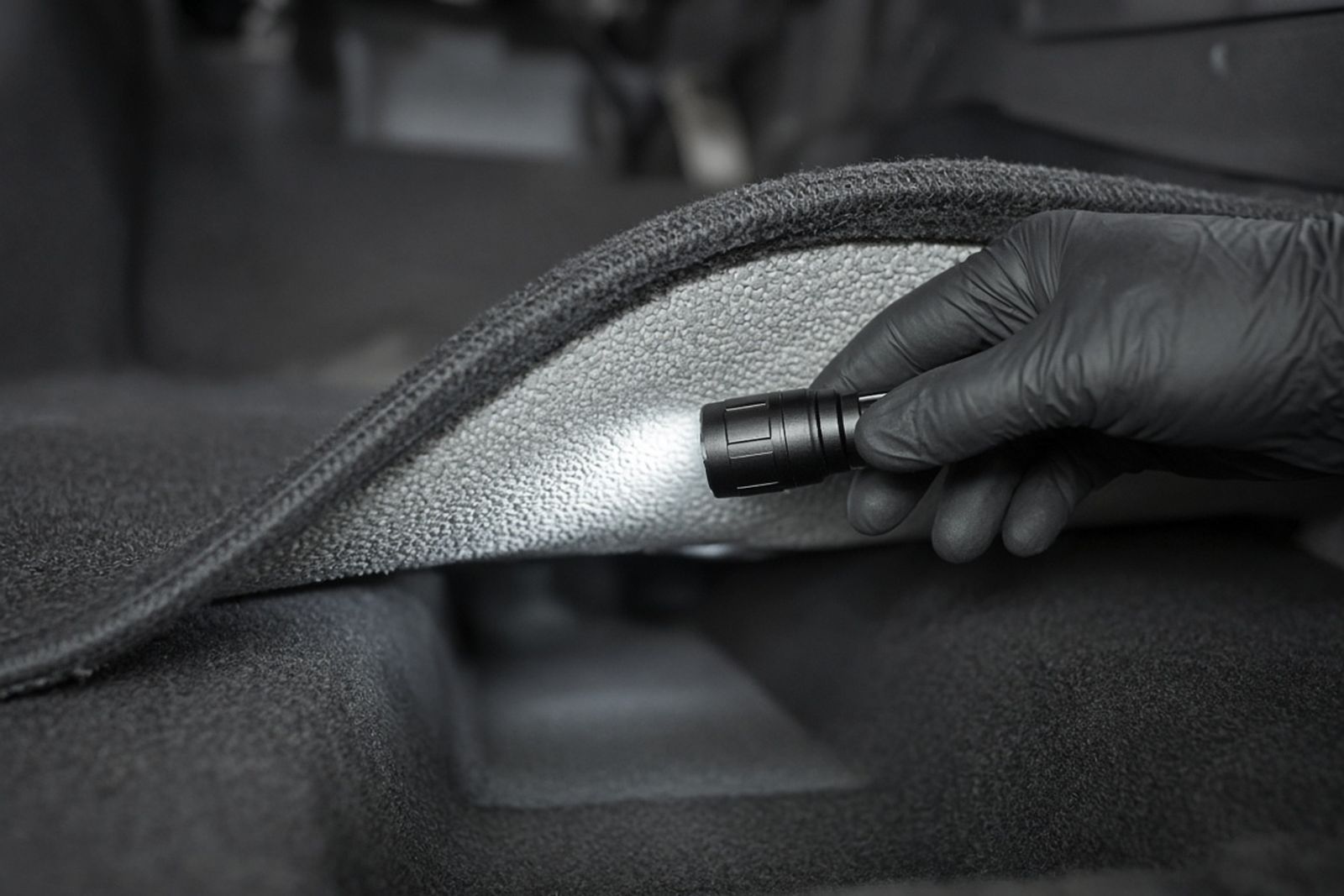
The walkaround is a slow lap around the vehicle with a flashlight, a notepad or phone, and gloved hands kept to the sides. The technician notes what is visible, what might be hidden, and what could harm them before the cleanup even begins.
Any sign of damage to a hybrid or electric vehicle's high-voltage battery or orange high-voltage cabling is a stop point. Technicians should not work inside or around that vehicle until someone qualified has confirmed it is safe, since damaged batteries can overheat, vent gases, or reignite well after a crash.
- Extent and location of blood, vomit, or other body fluids
- Broken glass on seats, carpet, and door pockets
- Needles, lancets, or other sharps in crevices and consoles
- Deployed airbags and the powdery residue they leave
- Leaking fuel, coolant, oil, or battery fluid
- Damage to high-voltage components on hybrids and EVs
- Cabin temperature, odors, and signs of mold
- Personal belongings that must be preserved for the family or owner
Gloves and sleeves that hold up inside a cabin
Hands do nearly all of the work in a vehicle, often in spaces where the technician cannot see their fingers. That makes glove choice a two-part problem: stopping fluids and stopping cuts.
A common approach is to wear a disposable nitrile glove as the fluid barrier, a cut-resistant glove over or under it, and a second nitrile layer on the outside that can be changed often. Extended-cuff gloves or disposable sleeves protect the forearms, which rub against seat backs and door panels during most reaching tasks.
Even with layered gloves, sharps call for tools. Technicians should use tongs or forceps to lift needles and glass, a flashlight to look into seat tracks before reaching, and a puncture-resistant container kept within arm's reach rather than on the ground outside the door.
Time matters too. Bloodborne viruses can stay infectious on dry surfaces long after a spill, so a car that has been parked for weeks should get the same glove discipline as one fresh from the scene.
Eye and face protection
Splashes happen more often in vehicles than in rooms because technicians work close to the surface and at awkward angles. Extracting fluid from seat foam, spraying cleaners into seat seams, and pulling apart trim panels can all send droplets upward. Safety glasses with side shields are a minimum, and a face shield over them is wise during extraction and heavy cleaning.
Respiratory protection and ventilation
Airway protection depends on the task. Agitating dried material, brushing carpet, and vacuuming glass fragments can put particles into the air, so a fit-tested particulate respirator makes sense for those steps. Strong disinfectants and cleaners used in a closed cabin can build up vapors that call for combination cartridges.
Deployed airbags leave a fine powder that can irritate eyes, skin, and airways, which is one more reason to keep eye protection and a respirator on during early cleanup of a crash vehicle. Ventilation helps: open every door, run fans from outside, and work in shade or a well-ventilated bay.
Body protection and positioning gear
Technicians spend much of a vehicle job kneeling on door sills, lying across seats, or twisting into footwells. Fluid-resistant disposable coveralls protect clothing and skin from contact with seats and carpet, and shoe covers keep contamination from being tracked back to the service truck.
Knee pads and a padded mat laid over the door sill reduce pressure and keep the technician from kneeling on glass. Short work intervals and stretching breaks help prevent back strain, which is one of the most common injuries in this work even though it gets little attention.
- Fluid-resistant coveralls or sleeves
- Shoe covers and a dedicated floor mat for the service truck
- Knee pads and a sill pad or mat
- Cooling breaks and shade for summer work
Heat is part of the hazard assessment
Heat deserves a line in the assessment. A closed car in summer can become hot enough to cause heat illness quickly, especially under a disposable suit. Airing out the cabin before starting, working early or late in the day, and planning water breaks are part of the PPE plan in practice.
How PPE changes when seats, carpet, or headliners come out
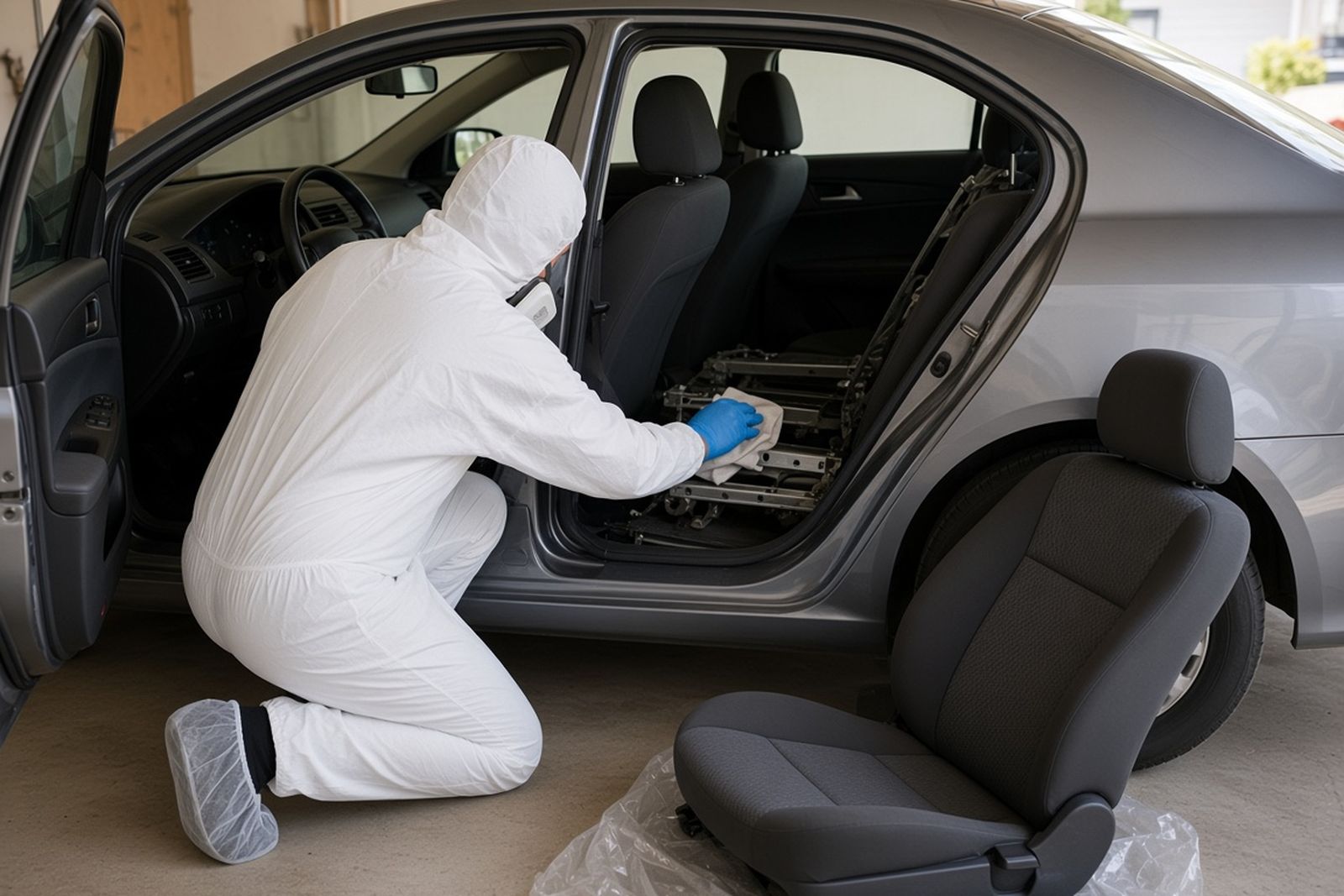
When contamination has soaked through upholstery into foam or padding, surface cleaning will not be enough, and the job shifts to removal. Unbolting seats, cutting out carpet, and dropping a headliner increase contact with saturated materials and release far more dust and debris.
For removal work, technicians usually move to a higher level of skin protection, with hooded coveralls and taped glove cuffs, and they keep a particulate or combination respirator on throughout. Removed materials are wrapped or bagged inside the cabin before being carried out, which keeps drips off the ground and out of the technician's path.
Removal also exposes wiring, seat-mounted airbag connectors, and sensors. Technicians should follow the vehicle maker's guidance or work with a qualified mechanic, both to protect the vehicle and to avoid accidental deployment or electrical hazards.
Finishing without spreading contamination
Surfaces can look clean and still carry organisms. In a 2026 study, Schaps and colleagues found that 60% of ambulances labelled service-ready had at least one targeted pathogen, a reminder that appearance is not a measure of cleanliness. The same is true in private vehicles, especially on steering wheels, door handles, seatbelt buckles, and window switches.
PPE removal should follow a set order at a designated spot beside the vehicle: outer gloves first, then face shield and eyewear, then coveralls rolled inward, then inner gloves, followed by hand hygiene. Used disposable gear goes into a lined container, not the back seat of the service truck.
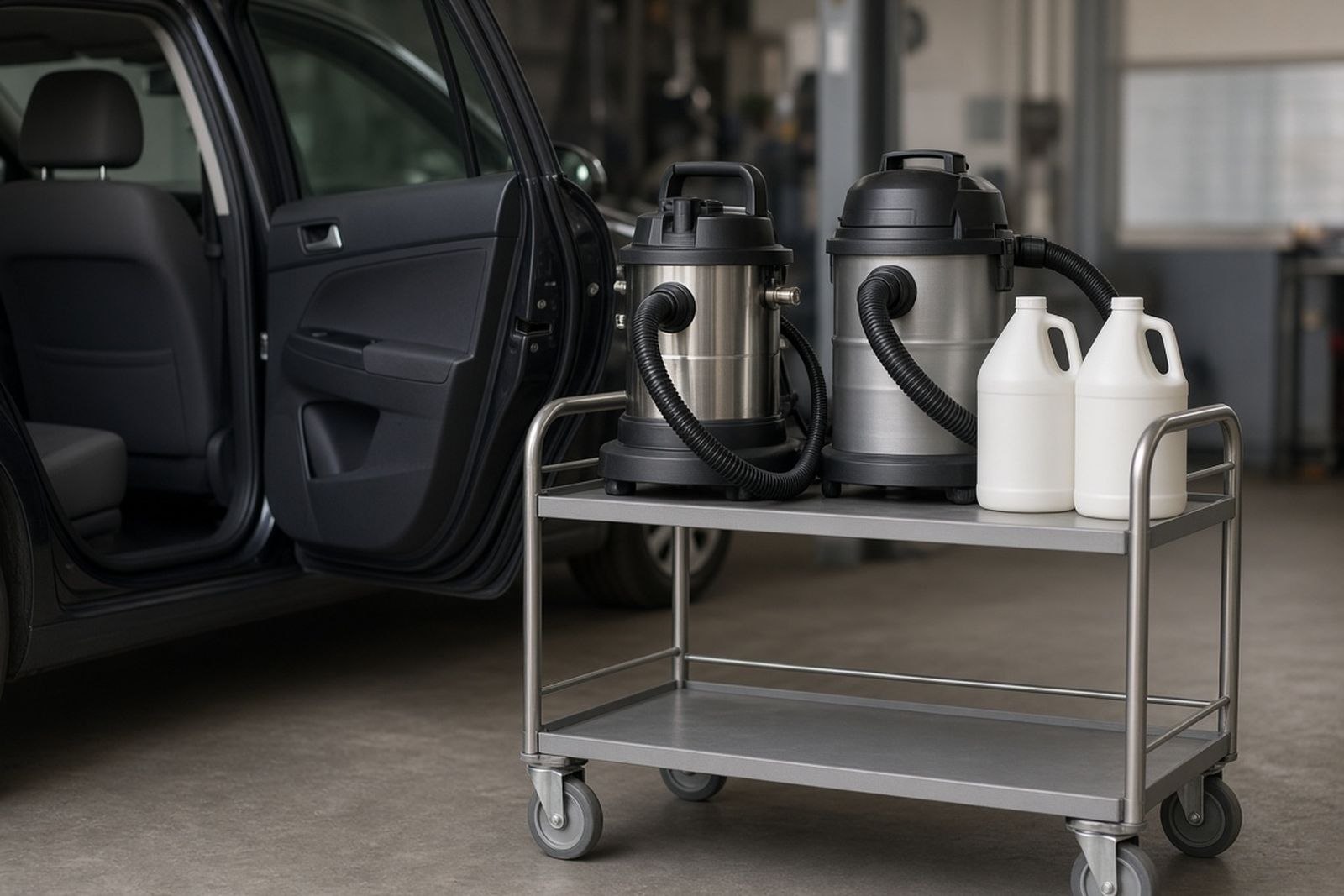
Reusable tools, extraction wands, and tongs need their own cleaning step before they return to the truck. Otherwise the technician's next job starts with contaminated equipment.
PPE in a driveway: a worked example
The driveway job below is a teaching example, not a record of a real call. A rideshare driver calls after a passenger suffered a medical emergency in the second row of her minivan. The passenger was taken to the hospital, and the driver parked the van at home. There is vomit and some blood on a captain's chair and the carpet, and the day is hot.
The technician arrives in the morning and does a walkaround. The fluids are limited to one seat and the surrounding floor. No sharps are visible, but the flashlight reveals a used lancet in the seat track, likely from an earlier passenger. The cabin is stuffy and warm.
He opens all the doors to air it out, puts on coveralls, knee pads, nitrile gloves over cut-resistant gloves, safety glasses, and a face shield, and lifts the lancet into a sharps container with tongs. The seat foam is saturated, so he wears a fit-tested respirator with combination cartridges while extracting and cleaning, and he bags the removed carpet section inside the van before carrying it out.
After disinfecting the hard surfaces according to the product label and cleaning the high-touch areas throughout the cabin, he removes his gear in the planned order beside his truck, sanitizes his hands, and walks the driver through what was removed. Every piece of equipment he wore was chosen because of something he found during the walkaround.
What should owners and fleet managers ask about technician PPE?
Ask how the provider assesses each vehicle before starting, how its crew handles hidden sharps, and whether its technicians are fit tested for the respirators they wear. Fleet managers should also ask how the provider handles EVs and hybrids after crashes.
If your vehicle will be cleaned at your home or workplace, ask where the crew will stage its gear and remove its protective clothing. A provider that brings its own mat, waste containers, and handwashing supplies is planning to leave your driveway or parking lot as clean as the car.
Clear answers suggest a company that protects its people, which usually means it takes equal care with your vehicle.