Short answer
OSHA rules apply when an employer assigns someone to clean blood, body fluids, or sharps out of a vehicle. The Bloodborne Pathogens standard sets the core duties: an exposure control plan, training, hepatitis B vaccination, protective equipment, and safe handling of contaminated materials. Hazard communication and respirator rules cover disinfectants and treatments. A private owner cleaning their own car is outside OSHA, but the same hazards remain.
Who OSHA covers when a vehicle needs cleanup
OSHA regulates workplaces, so the question is always who employs the person holding the scrub brush. After a crash, an assault, an overdose, or a death inside a car, the vehicle may pass through many hands: a towing company, a storage yard, an insurance auction, a dealership service bay, a rental or fleet operator, and eventually a cleanup contractor.
Every one of those businesses is an employer. If any of them assigns a worker to remove blood-soaked materials, pick up a syringe from under a seat, or wipe down a steering wheel after a medical emergency, OSHA's worker protection rules follow that assignment.
The rules do not reach a private owner who cleans their own car, a family member retrieving belongings, or a neighbor who helps out. Those people are not employees doing a job. The hazards are identical, though, which is why the practices OSHA requires of employers are a useful guide for anyone.
Public agencies are a special case. Police, fire, and EMS personnel who handle contaminated vehicles may fall under a state-run OSHA plan or a separate public-employee program, depending on where you live. The underlying duties are similar, but the enforcing office differs.
When does the Bloodborne Pathogens standard apply to vehicle work?
The trigger in 29 CFR 1910.1030 is reasonably anticipated occupational exposure to blood or other potentially infectious materials. For a biohazard cleanup company, that is the whole job. For a tow operator or a lot attendant, it depends on whether the employer expects them to deal with contaminated interiors as part of their duties.
A useful test is to look at what actually happens at your business. If yard staff routinely remove personal items from crash vehicles, if detailers are asked to handle stained seats before a car goes to auction, or if fleet drivers are told to clean up after a sick passenger, exposure is reasonably anticipated and the standard applies to those roles.
If your policy is that no employee touches a contaminated interior and every such vehicle goes to an outside specialist, write that down, train staff to recognize contamination, and enforce it. A policy that exists only on paper while workers quietly clean cars will not protect them or you.
Why a car interior is harder to clean safely than a room
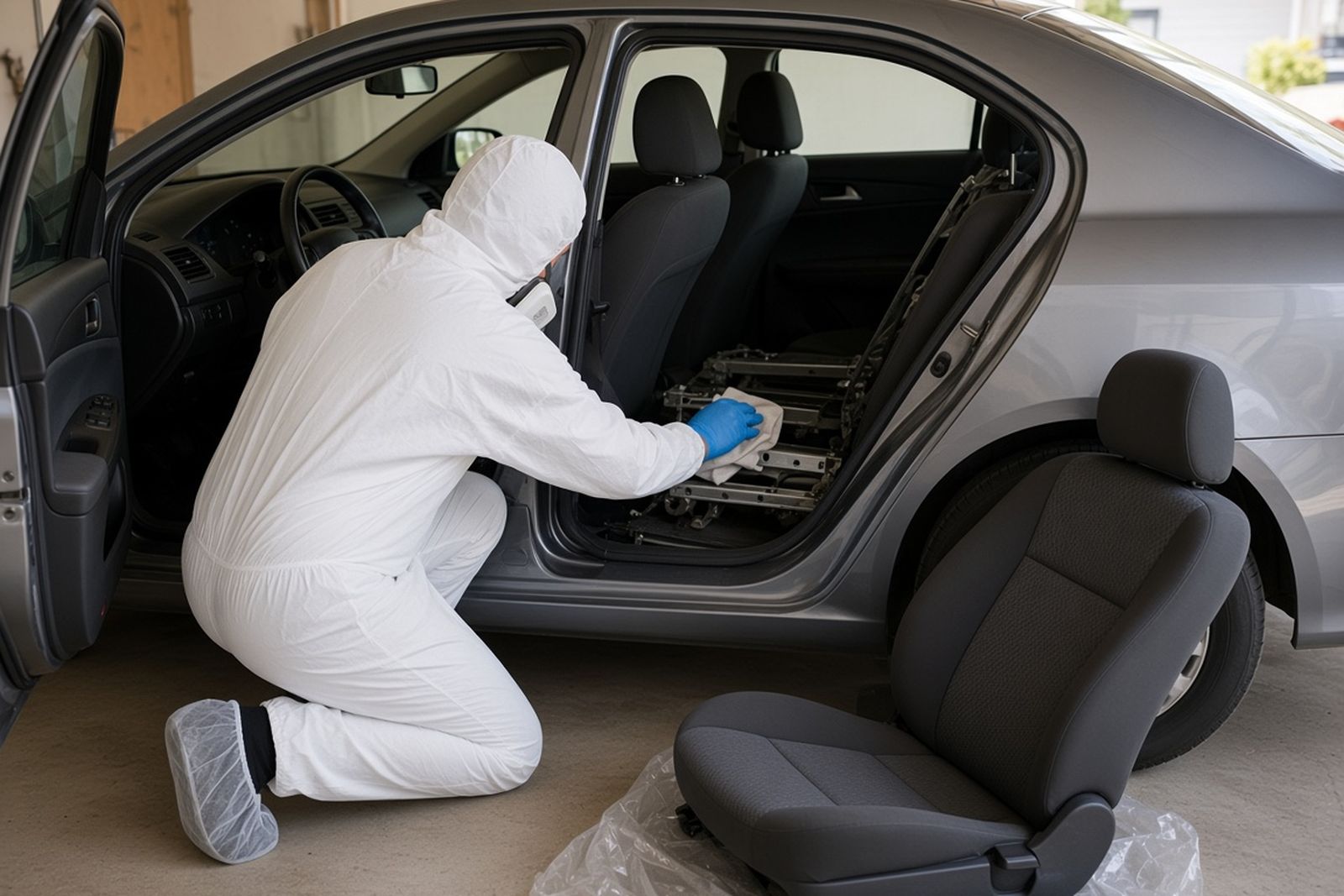
Vehicles pack porous, layered materials into a tight space. Seat foam absorbs fluids like a sponge. Carpet sits over sound-deadening pads. Seat tracks, console gaps, seatbelt retractors, and air vents trap material where hands cannot see it. Broken glass and sharp trim add cut hazards to every reach.
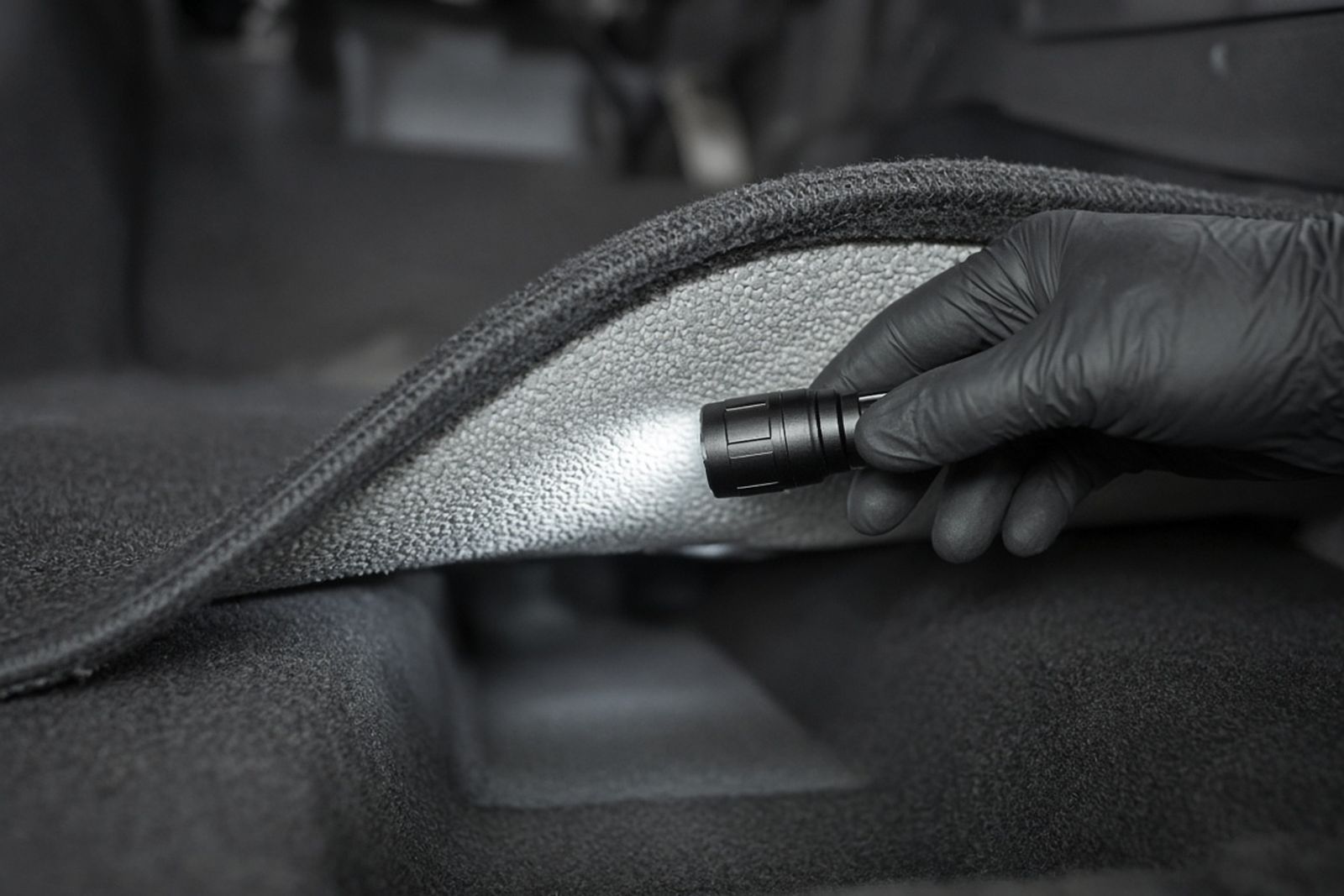
Hidden sharps are a particular concern. Needles and broken glass tend to slide into seat crevices and under floor mats. OSHA's approach to sharps favors engineering and work practice controls over reliance on gloves, so a sound procedure uses tongs, flashlights, and puncture-resistant containers rather than blind hand sweeps.
Time does not make a vehicle safe on its own. CDC's 2024 clinical overview notes that hepatitis B virus remains infectious on environmental surfaces for at least 7 days. A car that sat in an impound lot for a week should still be treated as contaminated until it is properly cleaned and disinfected.
Vehicle design adds another layer. Seat-mounted airbags, wiring harnesses under the carpet, and heated-seat elements mean crews cannot simply cut and pull materials without thinking. A trained technician checks what sits beneath a panel before removing it, both to avoid damaging the car and to avoid a shock or accidental deployment.
Disinfectants and hazard communication
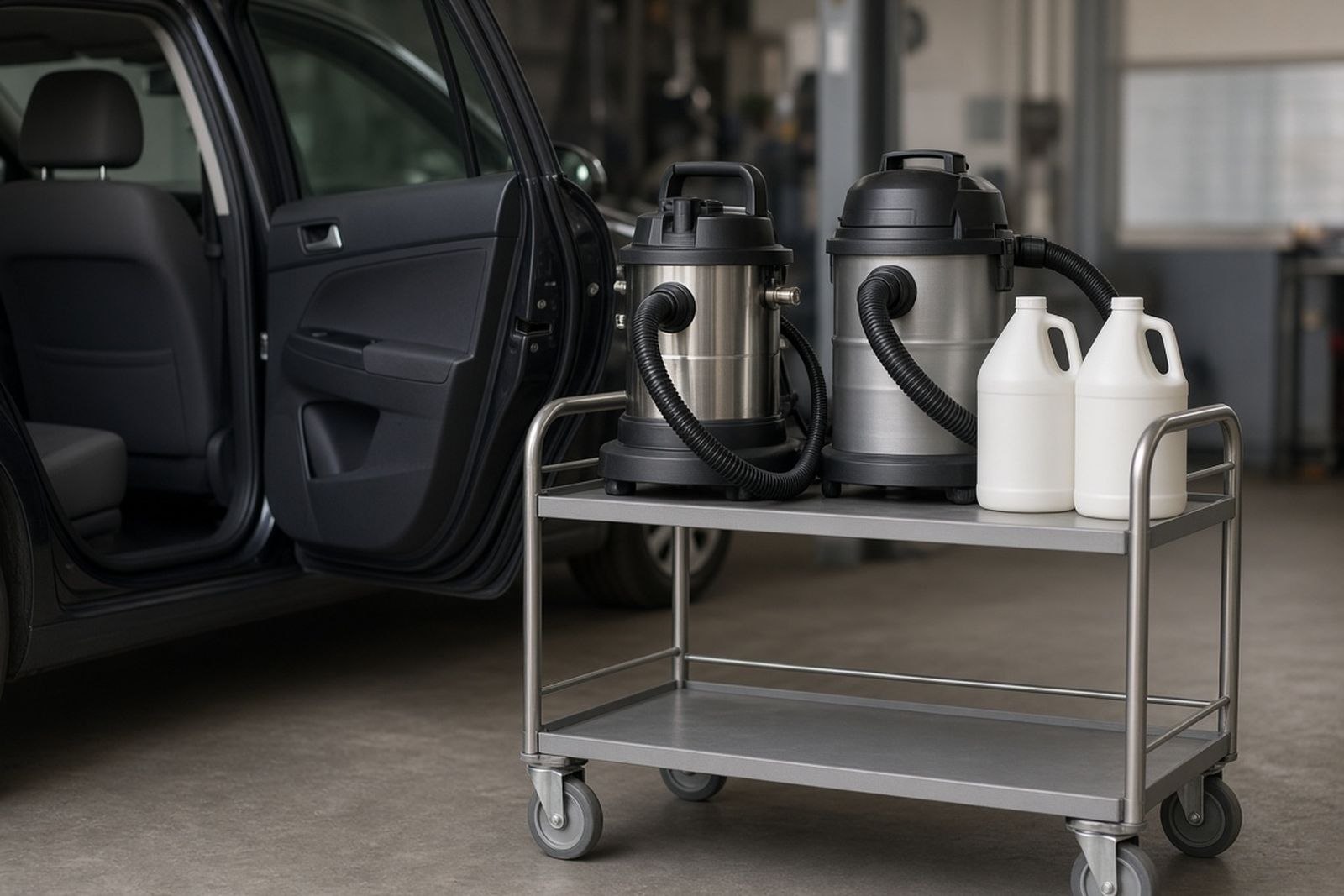
Vehicle cleanup relies on chemicals: enzyme cleaners for protein-based stains, disinfectants for hard surfaces, and deodorizing treatments for lingering smells. Every product used by employees falls under OSHA's Hazard Communication standard, which requires labels, accessible safety data sheets, and training.
Choosing the right disinfectant is both a safety and a compliance issue. EPA organizes registered disinfectants into lists by the germs they are tested against, including List H for MRSA and VRE, List G for norovirus, and List S for bloodborne pathogens. The label, not the brand name, tells you what a product is registered to kill and how long the surface must stay wet.
Enclosed cabins concentrate vapors, so ventilation matters. Crews should open doors, work in a well-ventilated bay, and avoid mixing products. A chlorine-based product and an ammonia-based glass cleaner used in the same small cabin can create an irritating gas.
Some odor and disinfection treatments used in cars also leave residue on steering wheels and door handles, the surfaces the next driver will touch most. A final wipe-down with clean water or a neutral cleaner, where the product label allows it, keeps the next person from contacting concentrated chemicals.
Protective equipment and respiratory protection
OSHA's PPE rules require the employer to assess the hazards of each task and pick equipment to match. For vehicle interiors, that usually means disposable nitrile gloves, sometimes doubled or worn under cut-resistant gloves, eye protection or a face shield, and fluid-resistant coveralls or sleeves, since so much of the work happens while leaning across seats.
Respiratory protection enters the picture when tasks create aerosols or airborne dust, such as agitating dried material, using extraction equipment, or cutting out upholstery. It is also relevant when deodorizing treatments are used. Ozone, for instance, is sometimes run inside sealed vehicles, and no one should be in or leaning into the cabin while it operates.
When respirators are required, the Respiratory Protection standard calls for a written program, medical evaluation, fit testing for tight-fitting models, and training. Knee pads and back-friendly work positions are worth planning for too, because cramped cabins lead to strain injuries.
- Nitrile gloves, with cut-resistant layers near glass or trim
- Eye protection or a face shield for splash and debris
- Fluid-resistant coveralls or sleeves
- Respirators when aerosols, dust, or treatment gases are present
- Tongs and puncture-resistant sharps containers for hidden needles
The training and written plan an employer needs
An employer covered by the Bloodborne Pathogens standard needs a written exposure control plan that lists the jobs with exposure, the procedures that reduce it, and the steps to take after an incident such as a needlestick. Covered employees must be trained before their first assignment and offered the hepatitis B vaccination series at no cost.
The plan is meant to stay current. OSHA's 2024 standard requires employers to review their written exposure control plan at least annually and retrain exposed workers at least annually. Changes in equipment, products, or the kinds of vehicles you handle are good reasons to review sooner.
Post-exposure procedures should be concrete. Employees need to know whom to tell, where to go for medical evaluation, and that follow-up is confidential. Contaminated materials removed from the vehicle, including upholstery and floor coverings, must be handled as regulated waste where your state's rules call for it.
At a towing company: an illustration
The towing yard in this section is fictional, but the situation is common. Take a family-run towing and storage business. Its lot holds a sedan from a serious crash on the interstate. A relative of the injured driver calls, asking for a phone, a wallet, and a child's car seat from inside the car. The owner asks a newer yard employee to grab the items and give the seats a quick wipe so the car looks less upsetting.
The employee finds dried blood on the driver's seat, broken glass across the floor, and an insulin pen wedged beside the console. None of that was part of the training they received, and the company has no exposure control plan because retrieving items was never considered a cleanup task.
Under OSHA's framework, the owner's request created reasonably anticipated exposure. A better approach would have been a written policy that yard staff retrieve belongings only with gloves, eye protection, and tongs, never attempt cleaning, and flag the vehicle for a trained cleanup provider.
The owner decides to adopt exactly that policy, trains the two employees who handle releases, and keeps a small kit of protective gear and a sharps container in the office. The family gets their belongings, handed over in clean bags, without the employee being put at risk.
Questions for a vehicle biohazard cleanup provider
Whether you manage a fleet, run a dealership, or are a private owner, asking how a provider protects its crew tells you how carefully it will treat your vehicle. Good companies answer readily and in detail.
Keep in mind that OSHA compliance is about the provider's employees. Waste handling, disposal, and any licensing for biohazard work are set separately at the state and local level. Rules vary by state and county; verify with the local authority.
- Can we see the date your crew's exposure control plan was last updated?
- How do you search for and remove hidden sharps in seats and consoles?
- Which disinfectants do you use, and what pathogens are they registered against?
- Do you use ozone or other treatments, and how do you ventilate afterward?
- How is removed upholstery packaged and disposed of?