Below are the four kinds of vehicle cleanup a provider may offer. Each covers who it fits, how the work goes, and what records you should get at the end.
Get an email reply about vehicular biohazard cleanup
Send a short message to the follow-up inbox. A coordinator can reply by email. This form does not send emergency help; call 911 first if anyone is in danger.
Why vehicles need their own kind of cleanup
A house has room to work and floors that can be cut out and rebuilt. A car has tight spaces, stitched seats, foam, and parts made for that one model. Replacement seats or trim may need to be ordered, which can add days. The crew also has to work around safety parts such as airbags and seat belt sensors.
Vehicles raise money questions that houses usually don't. A cleanup can come close to what an older car is worth, so the insurer's decision shapes the plan. Leases, loans, fleets and rental agreements add other people who may need a say before work starts.
The services, one by one
Blood & Bodily Fluid Vehicle Cleanup
Who it is for: Owners and drivers after an injury, assault, medical emergency or crash left blood, vomit or other fluids inside the vehicle.
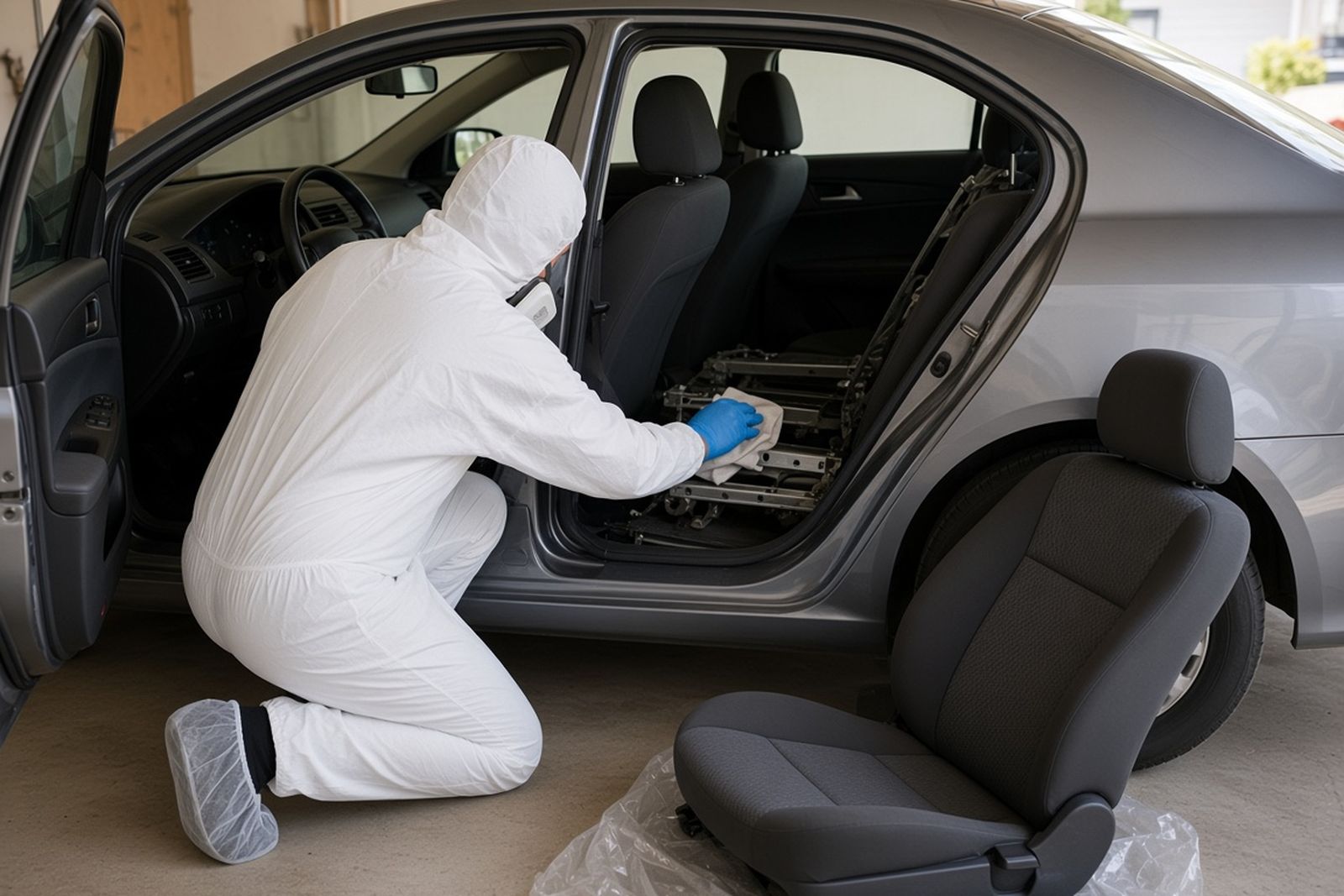
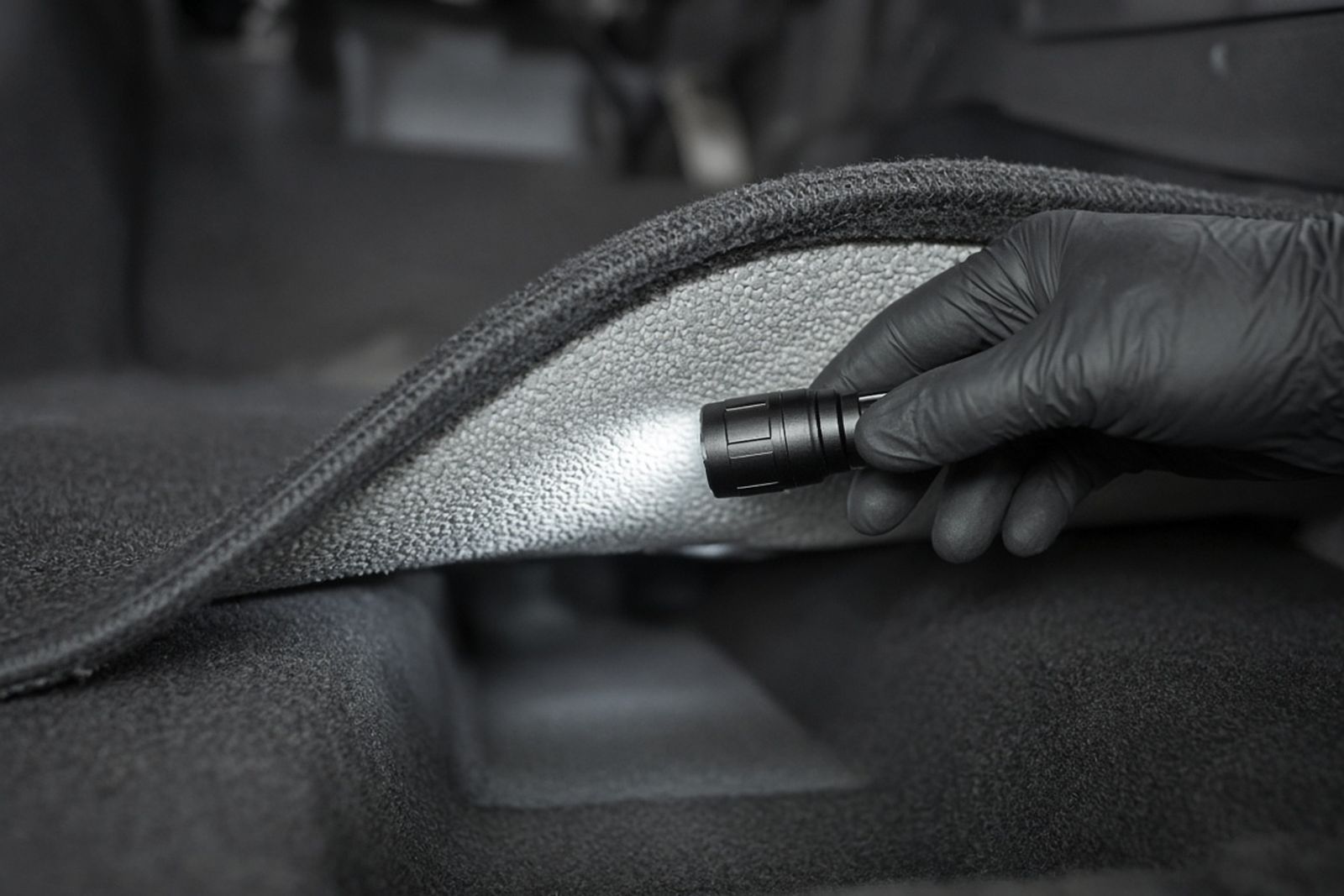
The crew traces every place fluids reached, including under the seats and inside belt slots. Soaked covers, foam or carpet are removed and packed as medical waste. Hard surfaces are cleaned, then disinfected. Parts go back in or are replaced, and the cabin air filter is changed.
What you should get: Before-and-after photos, a list of removed and replaced parts, and a waste disposal record to send your insurer.
Decomposition Vehicle Cleanup
Who it is for: Families, lenders or estates after someone died in a vehicle and was not found for some time.
This is slow, careful work. Fluids may have reached the seat frames, floor pan and sound padding, so more of the interior comes out. After cleaning and disinfecting, any leftover odor is treated with the vehicle empty and closed. The crew then checks on a warm day to be sure the smell is gone.
What you should get: A written summary that helps the insurer choose between cleanup and total loss, which you can also share with the estate.
Commercial Fleet Biohazard Services
Who it is for: Companies with buses, vans, taxis, ambulances or delivery trucks that sometimes carry people who are sick or hurt.
The provider and the company agree on a plan ahead of time: who calls, where the vehicle goes, and how it is tagged out of service. Each cleanup follows the same steps and products. The provider logs the vehicle number and when it was cleared. Medical or food vans get extra steps suited to their interiors.
What you should get: A dated record for each vehicle showing when it was cleaned and cleared to return to work.
RV & Camper Sanitization
Who it is for: RV and camper owners after a death, injury, illness or sewage backup inside the living space.
An RV is part car, part home. The crew checks the bed, couch, carpet, cabinets and the small heating and cooling units. Sewage from the holding tanks is cleaned up separately from blood and body fluids. Mattresses and cushions that soaked up fluids are usually replaced.
What you should get: A list of what was removed and cleaned in each area, plus notes on any plumbing repair still needed.
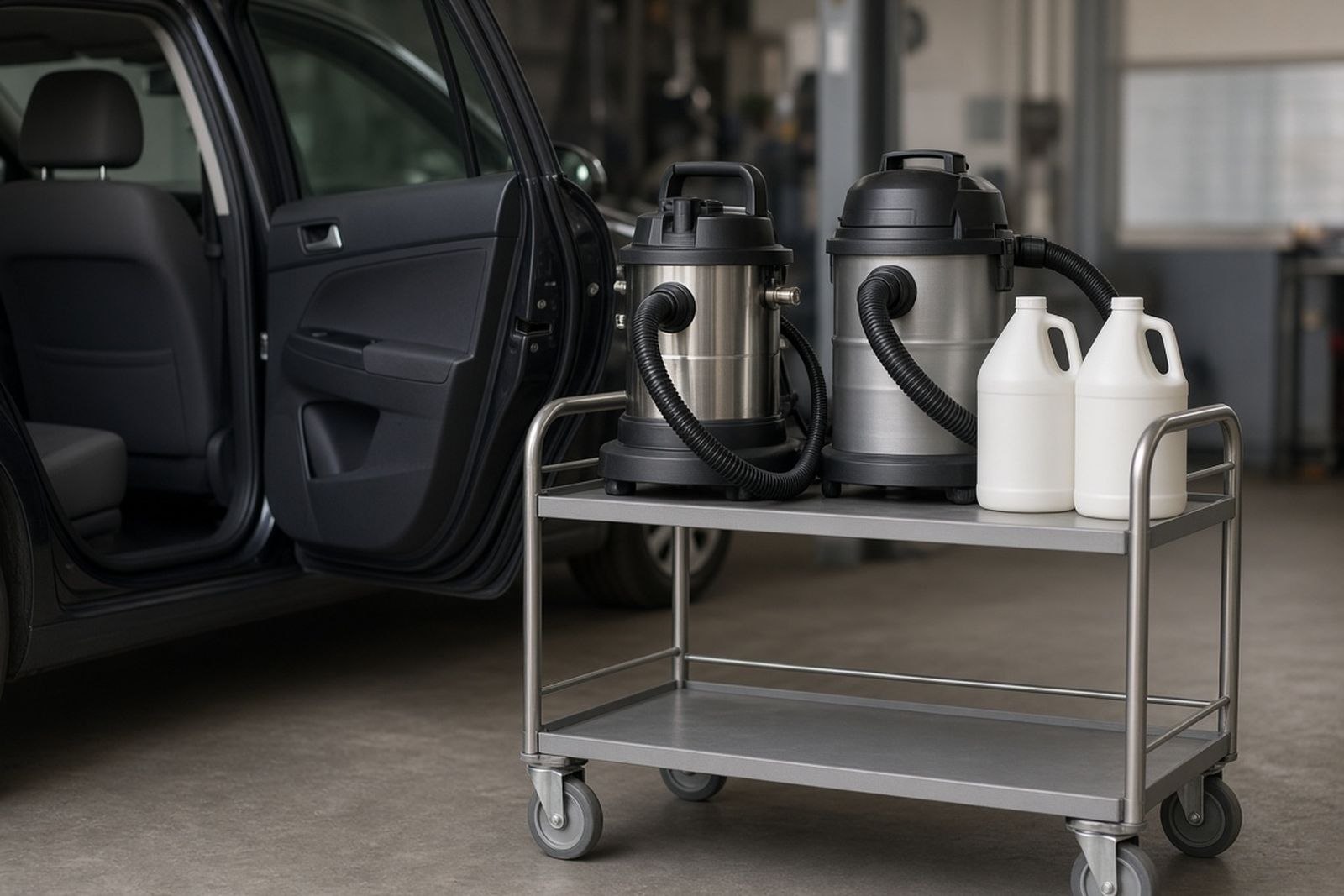
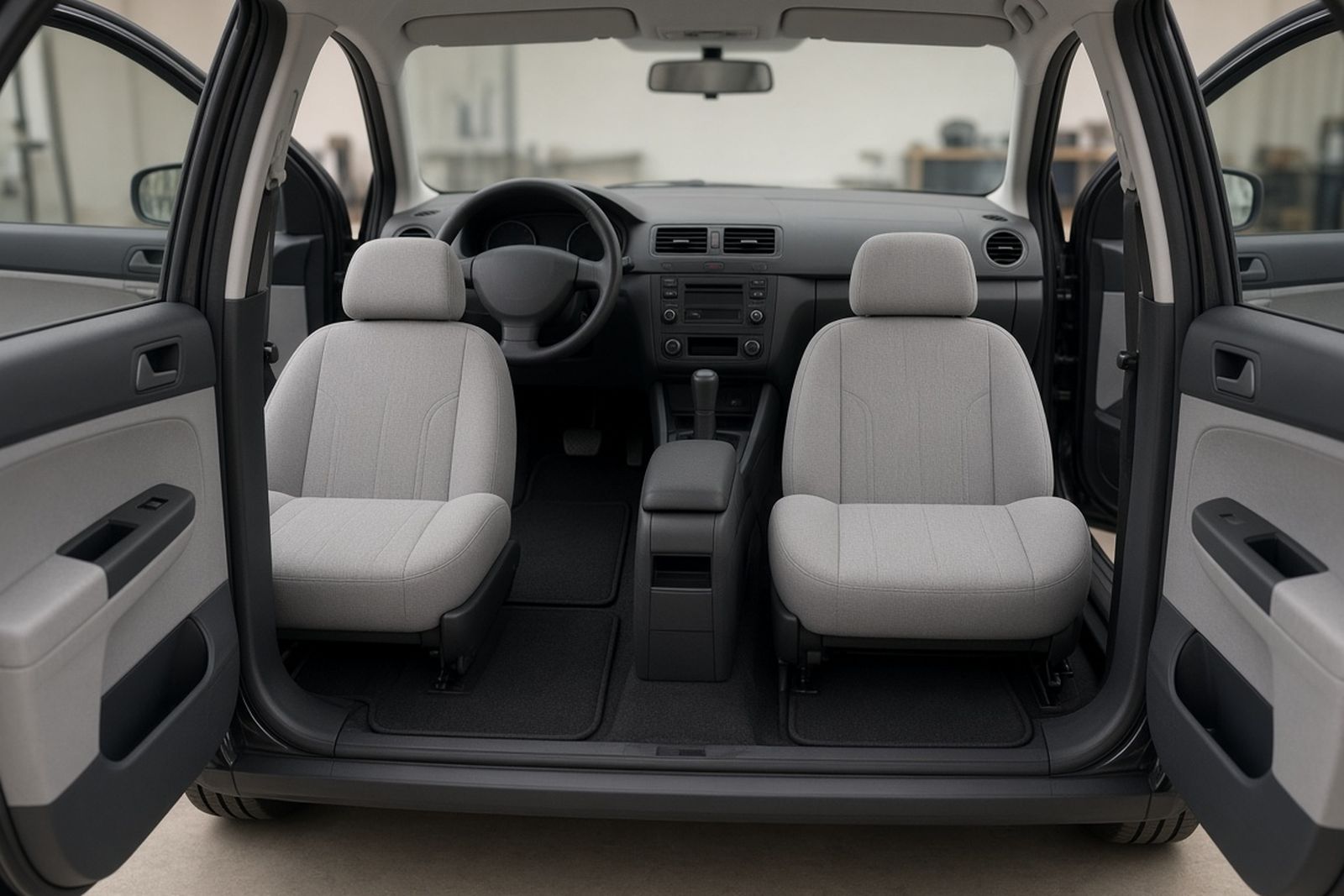
Illustrative photo, not a job record. Two wet vacuums and disinfectant jugs on a rolling cart beside an open car door.Illustrative photo, not a job record. Reassembled car interior with clean seats and floor, doors open to air out.
Vehicular Biohazard Cleanup in numbers
2,500
About 2,500 norovirus outbreaks are reported in the United States each year, and the virus can persist on surfaces for days or weeks and resists many common disinfectants.
Read with care: Reported outbreaks undercount true illness burden.
Source: CDC (2024)United States, reported outbreaks per year
$400-$600/hour
Crime scene and after-death cleanup is priced at roughly $400 to $600 per hour, while unattended-death cleanup runs $200 to $300 per hour.
Read with care: Cost-guide estimate; vehicle jobs vary by upholstery saturation and whether seats or carpet are replaced.
Source: Fixr (2025)United States, consumer cost guide updated January 2025
13 lists
EPA maintains 13 active lists of registered disinfectants, including List H for MRSA and VRE, List G for norovirus, and List S for bloodborne pathogens.
Read with care: Lists are not exhaustive; products must be used per label contact times.
About one in three people carry Staphylococcus aureus on their skin or in their nose, according to CDC.
Read with care: Carriage of staph is not the same as MRSA carriage or infection.
Source: CDC (2024)General population, United States
These figures are public research and agency data, not this network's own job records. Keep each number with its population, year and limits; none of them predicts cost, timing or outcome at a specific property.
What vehicle cleanup does not cover
Mechanical or body repair after a crash. A body shop or mechanic handles that work.
Replacing airbags that went off. A dealer or qualified repair shop installs new ones.
Deciding whether the car is a total loss. Your insurer and adjuster make that call.
Finding out how the injury or death happened. Police and the medical examiner handle that.
Questions about the estate, the loan or a lawsuit. A lawyer can help with those.
After the vehicle comes back to you
Drive with the windows cracked for the first few days and notice whether any smell shows up on hot afternoons. If one does, have the crew return for another look. Keep all records with the title. If you later sell or trade in the car, you may be asked about past damage, and these papers help you answer clearly.
Getting back into a car after something painful happened there can be hard, even when it looks new. Some people sell or trade the car for that reason, and that is a fair choice. If sadness or fear doesn't ease, talk with a doctor or counselor. The 988 Suicide and Crisis Lifeline also takes calls and texts.
Findings from published studies of people and properties in situations like this one. They describe what researchers observed in a specific group; they are not predictions for your case.
Observed transfer patterns implicated responders' hands.
Every count is a real visitor vote; nothing is seeded or padded. One vote per poll per device, and you can change your answer.
Your experience
If a passenger became ill in your car, what would you most likely do first?
No visitor votes yet
Safety
Would you keep driving a vehicle where blood reached the seat foam if it looked clean afterward?
No visitor votes yet
Cost
Which cost would you find hardest to accept after a vehicle incident?
No visitor votes yet
Before you hire: vehicular biohazard cleanup questions
Can the crew clean the car at a police lot or tow yard?▼
Often, yes, if the lot allows it. Ask the police for a written release first, since the car can't be touched until then. Tow yards charge storage fees that add up each day, so tell your insurer where the car is right away. Some crews prefer to tow the car to their own covered space to work.
What if replacement seats for my model are hard to find?▼
Seats for older or less common models can take time to get. Options include new parts from the maker, clean used seats from a salvage yard, or having a trim shop rebuild the seat with new foam and covers. Ask the crew which choice they suggest and how each one affects the timeline and your insurance claim.
How can a fleet keep drivers safe until a vehicle is cleaned?▼
Take the vehicle out of service right away and hang a clear tag on the steering wheel. Remove the keys, park it away from other units, and keep doors closed. Tell drivers not to wipe anything themselves. Keep a short incident note with the date, vehicle number and what happened, so the cleanup record matches.
Can I stay in my RV or camper while it is cleaned?▼
No. The crew needs the whole space empty to take out soaked materials and disinfect safely. If odor treatment is part of the job, no people or pets can be inside until it is aired out. Plan to stay somewhere else, and ask the crew for the day you can move back in.
Why is the cabin air filter replaced every time?▼
The filter catches whatever the fan pulls through the car, including tiny bits of fluid and the smell that comes with them. Cleaning around it does no good if the old filter stays in place. It is a low-cost part in most vehicles, so swapping it is an easy step that keeps the air in the cabin fresh.
Will removing the seats affect my warranty?▼
Ask your dealer before work starts. Warranties often depend on parts being put back the way the maker intended. Some owners have the dealer reinstall the seats to be safe. Keep the crew's notes on what was removed and how it went back, in case you need them for a warranty claim later.
Should I tell the tow driver or body shop about the fluids?▼
Yes. Let them know before they open the doors so they can protect themselves. Ask them not to wipe, vacuum or clean anything inside. Well-meant cleanup by a tow yard or shop can spread fluids and make the real job harder. Keep the windows up and the doors shut until the cleanup crew arrives.